Of all the men who walked and ministered alongside Jesus, Mark may have been the most overlooked. He was a disciple, yet he was not an apostle. He provided the upper room where Jesus instituted the Lord’s supper, was present at the arrest of Christ, and remained with the apostles after the crucifixion and resurrection of Christ.
Mark’s failures are recorded in scripture, and only twice do we see his successes in the faith. The book of Acts records how Mark accompanied Paul and Barnabas on the first missionary journey. However, Mark left the journey prematurely and returned home. His abandonment of the first missionary journey created a rift between he and Paul, and when Barnabas suggested that they take Mark on the second missionary journey, Paul vehemently objected. That conflict led to the breakup of Paul and Barnabas as a missionary team.
When Jesus was arrested, instead of trying to fight the temple guard as Peter did, Mark fled, not even taking the time to collect his garments.
Yet, despite all of this, Mark was a mighty man of God. He provided the upper room for the last supper. He remained with the apostles following the crucifixion and resurrection of Christ, taking part of a missionary journey with Paul, and ministering alongside Barnabas after that.
In his final days, the Apostle Paul wrote a letter to Timothy we now know as II Timothy. In it, he asked Timothy to come to Rome, and to bring Mark with him, because as Paul put it, he was profitable in ministry.
The Mark of II Timothy was a man who had grown from his failures in faith and his moments of weakness, and had become a mighty man of the Gospel.
We don’t know what prompted Mark to write his account of the Gospel, aside from the inspiration of the Holy Spirit. There doesn’t seem to be a specific occasion or audience. We do know that his work was an effort to record the crucial actions of Jesus leading up to the cross.
Matthew demonstrated how Christ fulfilled the Old Testament prophecies concerning Christ. Luke put together a comprehensive anthology of the actions and teachings of Christ. John recorded seven key miracles that demonstrated the divinity of Christ.
But Mark focused on an abridged collection of key actions and teachings from Jesus leading up to the Gospel.
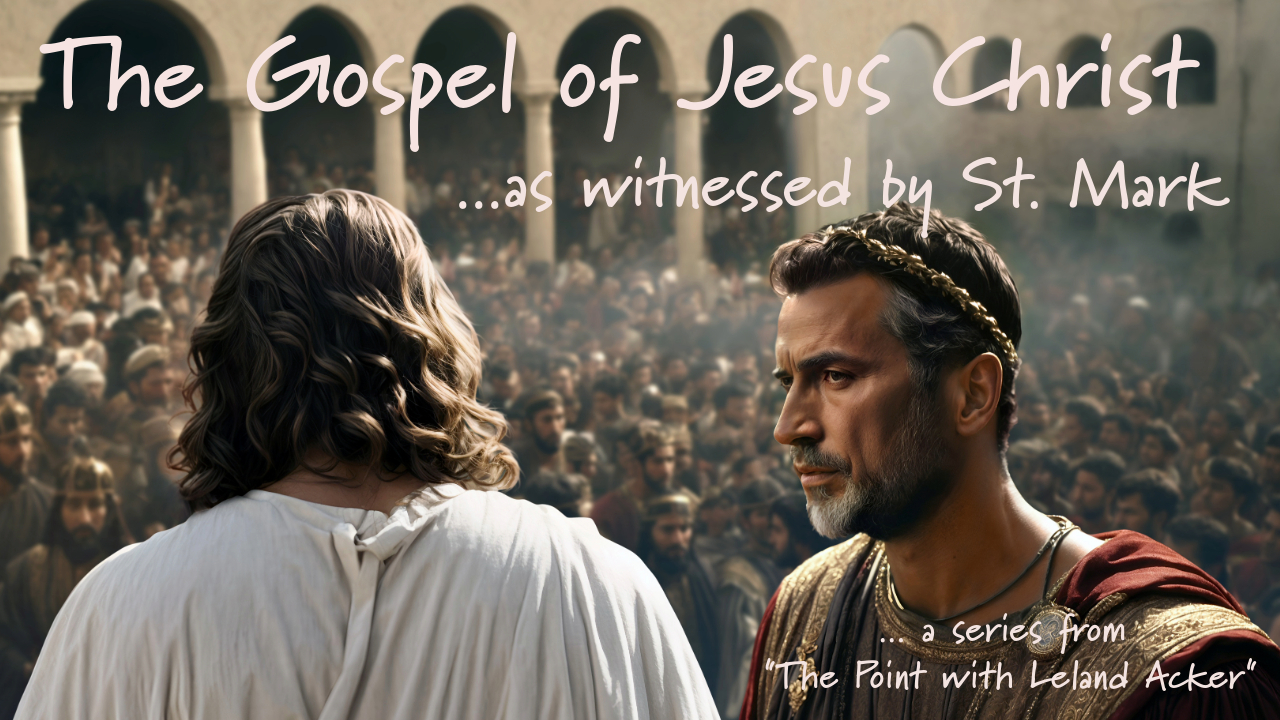
Mark’s account of the Gospel is believed to have been the first written, and many scholars believe that Luke referenced his Gospel when writing his own. Mark’s Gospel demonstrates Who Jesus is so we can know Him, and knowing Him we can believe. The ultimate goal of Mark is to build our faith in the Lord.
Please understand, our efforts to provide historical and cultural context to books of the Bible should in no way lead the reader to think that these books are anything less than inspired scripture, thus being the actual word of God. It is through the historical and cultural context of these scriptures that we are able to hone in on what God was actually saying, and get the true message of the Bible.
So, as Mark opens his account of the Gospel, he provides us an introduction to Christ. He begins by showing the fulfillment of the scriptures, particularly pertaining to John the Baptist. John’s status of a prophet was almost universally accepted among the Jews and Judeo-Christian believing gentiles of the day. Mark showed through Old Testament prophecies that John’s ministry was to identify the Christ for us, and to prepare us to meet Him.
Mark then demonstrated that the ministry of John the Baptist was all about Jesus, preparing the people to meet Him and identifying Him as the Christ. He showed how John lived up to that prophetic purpose.
Mark then showed how God Himself witnessed to the identity of Christ at the Baptism of Jesus, saying “This is my Beloved Son, in Whom I am well pleased.”
Through these words, and through the rest of the writings in the Gospel of Mark, one must come to the conclusion that Jesus of Nazareth was indeed the Christ, the Savior, the divine Son of God Who gave His life for the sins of the world, so that man could be forgiven, saved from wrath, and redeemed into the Kingdom of God.
 The Point...