The Christian faith is the fabric with which Western literature is woven. Great writers like Andrew Klavan and philosophers like Jordan B. Peterson clearly see it.
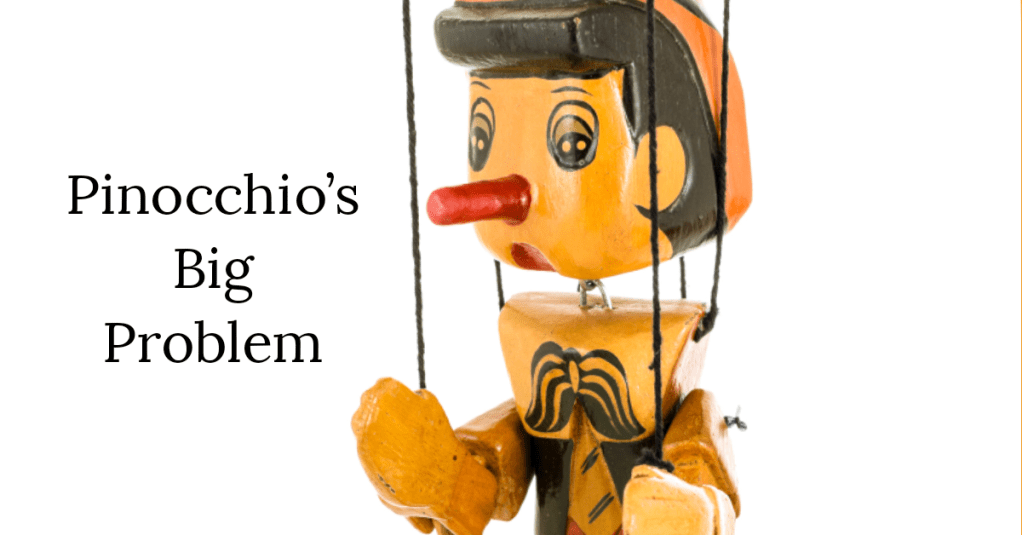
The classic, Pinocchio, is no different. The classic 1940 Disney animated movie, based on a classic novel, centered on Pinocchio, a wooden puppet who was given life at the request of his creator, Geppetto.
Geppetto loved Pinocchio, and Pinocchio loved Geppetto. At the very outset, you see a parallel with scripture, where God created Adam and gave him life. God loved Adam and Adam loved God.
Had Pinocchio been content to be loved by Geppetto, and to find his value there, Pinocchio’s story would have been one of endless bliss. Alas, Pinocchio wasn’t satisfied with Geppetto’s love.
Pinocchio had an intense desire to become a real boy. This desire, coupled with his desire to be like all the other boys, would lead Pinocchio down a path of misadventures which would separate him from Geppetto and create unnecessary suffering.
The first misadventure happened when Pinocchio was lured away from his walk to school by a character named Honest John, who persuaded Pinocchio to join his puppet show. Pinocchio’s decision to follow John’s temptation landed him in the show, but also a bird cage, and set up a chain of events that would see Pinocchio on a ship to Pleasure Island.
On Pleasure Island, Pinocchio befriends Lampwick and begins to indulge in bad behavior on the false promise that there would be no consequences for such behavior. When Jiminy Cricket tries to intervene, Pinocchio spurns him, prompting Jiminy Cricket to leave.
However, once Cricket discovers the horrible truth of what is going on at Pleasure Island, he returns to deliver Pinocchio right as the curse was beginning to turn him into a donkey.
At this point, Pinocchio realizes he had it good all along and sets out to reunite with Geppetto, a journey that takes him back home, and even into the belly of a whale. (Shadows of Jonah in that scene.)
What we learn from Pinocchio is that our downfall is often caused by unthankfulness, our desire to find meaning and pleasure apart from our creator, and our misplaced pride in ourselves.
Pinocchio loved Geppetto, but wanted more. Likewise, Adam and Eve loved God, but didn’t want to live under His authority. Their decision to seek their own divine nature by eating the forbidden fruit saw them expelled from the garden, and rendered as mere mortals who would have to face death.
We also say we love God, but all too often we seek pleasure and fulfillment everywhere but God, and often, we wish to cast His authority off from our lives. Our consequence is destruction in this life, and absent from repentance and faith, eternal condemnation before God.
As Pinocchio faced excruciating consequences as a result of seemingly harmless choices, we often find ourselves in bad situations caused by seemingly insignificant choices that took us further from God’s presence. Thus, scripture compares us to sheep, saying that “all we like sheep have gone astray, we have turned every one to his on way, and the Lord hath laid on Him the iniquity of us all. (Isaiah 53:6)
And finally, as Pinocchio found healing and reunification by turning his heart back to Geppetto, we find healing and reconciliation with God by turning from our sinful ways and trusting Him for salvation.
The Christian faith really shapes Western Literature, and why shouldn’t it? Both Christianity and literature contain the stories of who we are.
So, when you find yourself dissatisfied with life and wanting more, be careful. Seek healing and fulfillment with God, and not from the pleasures of this world. Otherwise, you may turn into a donkey and find yourself in the belly of a whale.
But seriously, we forfeit so much peace and endure so much unnecessary suffering simply because we don’t trust God enough. Have faith. Turn to the Lord. And find fulfillment in Him.
 The Point...