In Genesis 32, Jacob is following God’s direction to return to the Promised Land, however, there’s just one problem… Esau. The last time Jacob heard from Esau, Esau wanted to kill him. No doubt Esau still lived there, but the question was whether Esau was still angry. Despite God showing his favor upon Jacob in a very favorable way, Jacob still acts as if he is doomed once he sees Esau. That struggle in his faith sparked an epic wrestling match that continues to have implications today. Listen to our latest episode of The Gospel Expedition, on YouTube, or on Soundcloud.
Gospel
This is Your Time
As Jesus entered Jerusalem on Palm Sunday, he stated that now is the judgment come, and now is the prince of this world cast out.
In essence, Jesus was saying that now is the moment, and this was Israel’s time. Time to see their Christ and Deliverer, time to turn to the Lord. However, they didn’t.
The reason Israel missed their moment is that, while they were looking for a messiah, they weren’t looking for God. In fact, they didn’t want God. They wanted their own kingdom.
Often, we make the same mistake. We miss heavenly opportunities because we don’t desire God. Rather, we desire our own kingdoms, and we desire God to bless our kingdoms.
Listen to today’s message as Pastor Leland Acker calls us to faith, and calls us to lay it all on the line for our Lord.
New Episode: Jacob Have I Loved…

One of the most amazing things about God, and one of the unique things about the Christian faith, is how God can take a deeply flawed individual and transform him, using him in an amazing way. One of the most iconic stories in the Bible about this is the story of Jacob.
Jacob lived his entire life under God’s favor. God had favored him from the time he was conceived, and throughout his life, Jacob was reminded by God and others of the Lord’s favor upon him. Yet, Jacob continually lived as if he had to work it out on his own. That lack of faith led to some of Jacob’s biggest sins and mistakes, and cost him dearly.
However, by the end of his life, we find Jacob trusting and worshipping God. Take a listen to “Jacob Have I Loved,” from the Gospel Expedition Podcast, via Soundcloud or YouTube, below:
Cain vs. Abel
In Genesis 4, Cain and Abel both brought offerings to the LORD. Scripture tells us that Cain brought of the fruit of the ground, which makes sense because he grew crops for a living. Abel, on the other hand, brought one of the firstlings of his flock, which also makes sense as Abel kept sheep for a living.
Now, Genesis 4 tells us that God had respect for Abel’s offering, but not Cain’s. As a result, Cain became very upset. God confronted Cain about his attitude, saying, “If you do well, won’t you be accepted? And if not, sin lies at the door.”
Cain did not do well, however. As he and Abel worked in the field, Cain vented his frustration on Abel, resulting in a fight that led to Cain killing Abel. Cain was subsequently banished, leading him to found a godless society. Adam and Eve had another son, who fathered the Godly lineage in the pre-flood world.
Such set the stage for the downfall of mankind, leading to the flood in Genesis 6-9.

In taking all of this into consideration, the question is often posed, “Why did God respect Abel’s offering, but not Cain’s?”
One answer commonly given is that Abel offered a blood sacrifice, while Cain did not. While this explanation harmonizes with the Gospel pattern of the shedding of blood for the remission of sins, the fact is that there is little Biblical evidence for it, especially when you consider that grain offerings were a completely legitimate part of the temple system of worship in the Old Testament.
The explanation with scriptural evidence is actually much simpler. Abel offered his sacrifice by faith, whereas Cain did not.
Hebrews 11:4 says, “By faith Abel offered unto God a more excellent sacrifice than Cain, by which he obtained witness that he was righteous, God testifying of his gifts: and by it he being dead yet speaketh.”
Abel offered his sacrifice by faith. He knew God was God, trusted in His goodness, and rested in His grace.
On the other hand, Cain lacked this faith. He obviously knew God existed, but did not trust God’s goodness and grace. For Cain, the offering was more of an obligation than an offer of thanksgiving or worship. Thus, God rejected it.
Scripture is very clear, and the point is driven home in Hebrews 11. What pleases God is faith, that simple trust in His existence and grace. While that faith motivates action, the fact is without that faith, the most righteous acts in the world will not please God.
So, with all that in mind, do you have faith. Do you believe that God is? And do you trust in His goodness and grace? (Hebrews 11:6)
And if so, are you living by that faith? May God grant you clarity as you reflect on your faith.
Christ is Glorified in the Gospel
During an annual meeting of the Missionary Baptist Association of Texas, Pastor Bobby Sparks of Emmanuel Baptist Church of Greenville, Tex., preached that the glory of Christ is in the cross.
That statement drew dozens of “amens” from the congregation of pastors, deacons and church representatives, but it also prompted me (Leland) to study what glory is, and how the Gospel glorifies Christ.
The word “Glory” is translated from the Greek word, Doxa, which means to make renown, to cause to be well-known and well though-of, to magnify and to be great.
In this message, I discuss how the cross (and the Gospel as a whole) brings glory to the name of Christ, and how it should bring us glory as well.
No More Hidden Agendas
John 12 records the powerful moment that Mary anointed the feet of Jesus with the expensive spikenard ointment, which John records was worth about 300 pence, approximately a year’s wage for a laborer.
Why would Mary pour such an expensive ointment on Jesus’ feet? That was the question posed by Judas, who noted that the ointment could have been sold and the proceeds given to the poor. While John notes that Judas was being dishonest about his intentions, Jesus answers the question.
“Against the day of my burying has she done this.”
This is Mary, the same Mary who sat at the feet of Jesus as He taught, while her sister Martha served dinner. This is Mary, who fell at the feet of Jesus when Lazarus died. And here is Mary, anointing the feet of Jesus.
It seems that every time we see Mary in the scripture, she is at the feet of Jesus. And why wouldn’t she be?
Jesus had given her hope. Jesus had given her redemption. Jesus had lifted her from a life of want, hopelessness and despair to a life of hope, fulness and meaning. Mary was truly living now that she met Jesus, even though her social and financial situation hadn’t changed.
So, since Jesus gave Mary everything that was dear to her, and since He became everything she was about, it makes sense that she worshipped Him with everything that she was, and everything that she had.
Do we see Jesus the same way that Mary does? And do we look to Him for hope, fulfillment and meaning? Or are we still looking to ourselves?
Check out Pastor Leland Acker’s sermon, posted above via YouTube, or below via Soundcloud, and reflect on whether you have the love and faith toward Jesus that Mary had, or whether you are looking for something for this world like Judas was.
What is the Gospel?
“Gospel” is a buzzword that is widely circulated in Christian circles. There’s Gospel music, Gospel preaching, spreading the Gospel and standing for the Gospel.
There are full Gospel churches and Gospel revivals.
With all this talk about the “Gospel,” what is it really? What is “The Gospel?”
Some say that the Gospel is the entire word of God from Genesis to Revelation. However, while the scriptures contain the Gospel from Genesis to Revelation, the scriptures themselves are not the definition of the Gospel.
The Gospel is defined in 1 Corinthians 15:3-4, which states that Paul delivered unto the saints at Corinth how Christ “died for our sins according to the scriptures, that He was buried, and that He rose again the third day according to the scriptures.” Thus, the Gospel is the death, burial and resurrection of Jesus Christ for our sins according to the scriptures.
By giving His life on the cross, our Lord endured God’s punishment for sin, thus removing the condemnation of sin from us. We have been forgiven because our sins have been paid for, and it was Christ that made that payment.
By rising from the grave, Christ defeated death, and brought eternal life to all who believe.
This is the central message of the Bible, and the theme that runs through all the scriptures. The deeper you dig into scripture, the deeper an understanding you gain of the Gospel.
It is through the Gospel that we have salvation. It is through the Gospel that we find peace, and we find deliverance from shame and regret.
In His messages of repentance, Christ urged the people to believe the Gospel. By believing the Gospel, your faith is placed squarely on Christ and you will have salvation. With that salvation, you have the blessed assurance that you will spend eternity in Heaven.
To explore the theme of the Gospel throughout the Bible, check out The Gospel Expedition, posted via YouTube or Soundcloud below:
Gospel Expedition Podcast Expands to YouTube
As part of our ongoing effort to promote the Gospel across all platforms, we are adding the Gospel Expedition podcast to our YouTube channel. By adding the Gospel Expedition to the YouTube platform, the podcast will be available to more listeners and will be readily available to users on an app that is often pre-installed on their smart phones. If you haven’t checked out the Gospel Expedition, give it a listen and let us know what you think.
Demystifying Faith
Here’s a challenge for you… go to any Bible study, Sunday School class, or online Bible forum, and ask the question, “What is faith?”
You will get a variety of answers. One common answer is, “Faith is the substance of things hoped for, thge evidence of things not seen.” That answer is a quotation of Hebrews 11:1. Your next step is to ask, “What does that mean?”
The tragedy of modern Western Christianity is that salvation comes by grace through faith (Ephesians 2:8-9), but most don’t even know what faith is.
So, what is faith?

If we don’t know what faith is, how can we be saved? If we don’t understand faith, can we truly experience redemption and reconciliation?
In John 3, Jesus is approached by Nicodemus, who recognizes that Jesus was sent by God, but the Lord’s radical teaching of repentance and faith did not always line up with the religious traditions that Nicodemus followed.
Nicodemus, unlike his fellow Pharisees, wanted the truth. Recognizing that Jesus came from God, and that what Nicodemus believed didn’t line up with what Jesus taught, Nicodemus came to Jesus to reconcile his personal belief system with what God actually wanted.
Jesus knew this, which is why Jesus said that a man “must be born again” in order to be saved.
The rest of the conversation in John 3 is about how to be born again, that is, how to be saved, or how to be redeemed and reconciled to God. John 3 is one of the most important passages of scripture, because it is here that Jesus, the only Begotten Son of God who went to the cross to pay for our sins, tells us how to be saved.
These instructions on how to be saved are as valid and true to us today as they were to Nicodemus. Nothing has been added or changed since, for if it were, this passage would not have been recorded in scripture.
In John 3, telling us how to be born again, Jesus tells us that “whosoever believeth in Him should not perish but have everlasting life.” And just in case we confuse ourselves on what it means to believe, Jesus tells us (and Nicodemus) and Old Testament Bible story.
In John 3:14, Jesus said, “And as Moses lifted up the serpent in the wilderness, even so must the Son of Man be lifted up, that whosoever believeth in Him should not perish but have eternal life.”
In this verse, Jesus references an incident from the book of Numbers, where Israel complained and rebelled against God. Because of the severity of their rebellion, the LORD sent what the King James Version refers to as “fiery serpents” into the camp. Fiery serpents were more than likely poisonous snakes, as the scripture described how they bit the people, and the people began dying.
As they died, they cried out to Moses for help. Moses prayed to God, and God told Moses to make a bronze serpent, place it on a pole, and set it up in the middle of camp. If anyone is bitten, they can look at that bronze serpent and live.
Being saved from the snake bites in Numbers was as simple as looking to that serpent on the pole. No sacrifices, no offerings, no religious works. Just a simple look.
In John 3, Jesus said in the same way, He was to be lifted up on the cross. And in the same way, if people look to Him on the cross, they will be saved. Looking to Jesus on the cross constitutes belief, because that is what you are depending on for your forgiveness and salvation. Because Jesus went to the cross, you know you have been redeemed and reconciled to God.
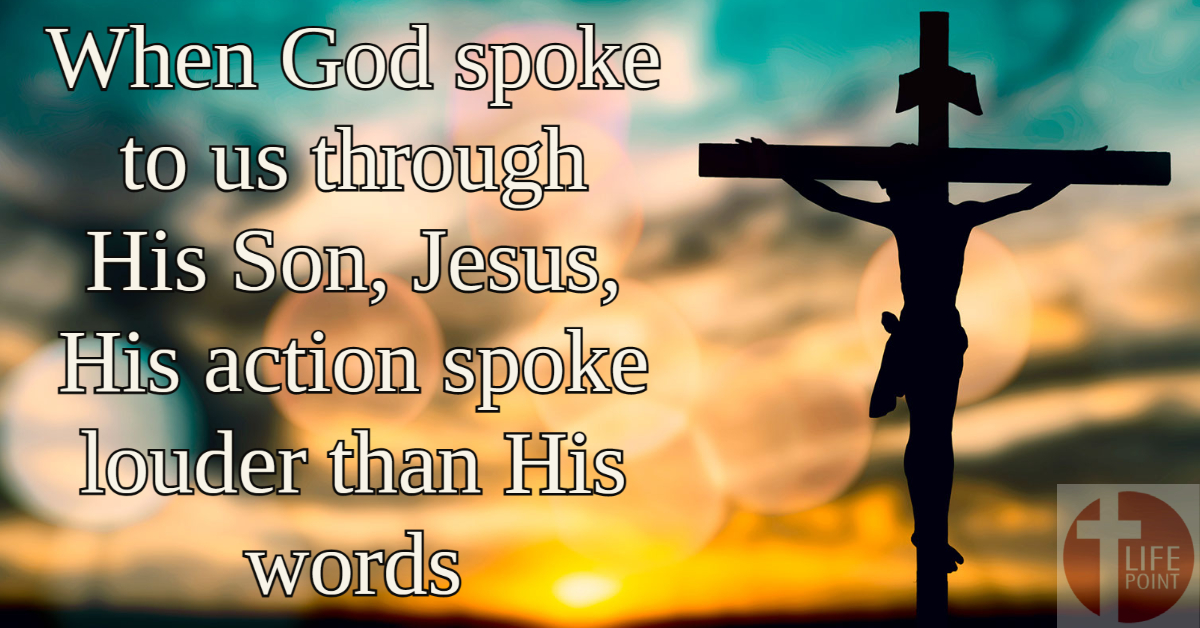
Belief in Jesus is as simple as looking to Jesus and remembering that He redeemed you through His death on the cross. And that belief is the ONLY condition that must be met in order to be saved.
Faith and belief are used interchangeably in the New Testament. They are both translated from the same Greek word. So, with that in mind, we conclude that faith simply means a belief, a trust in the Lord. We have faith because we believe that Jesus will receive us into Heaven, because He paid for our sins on the cross. That’s faith. Nothing more. Nothing less.
Faith is not a religious system. Faith is not an expression of religious works (on the contrary, your works reveal whether or not you have faith.) Faith is belief.
Do you believe in Jesus? Do you believe that He died on the cross for your sins? Can you look to Him on that cross and know that because of His death and resurrection, you are going to Heaven? If you can, and if you have done that, you have been saved, and you have become a Christian.
While that faith will change the way you live and think, please know and be assured that it is the faith that has saved you.
May God bless you.
The Great Invitation
How’s everything working out for you?
Are the things you are doing bringing you peace and fulfillment? Do you find purpose in those things, and are they rewarding? If not, why do you continue to do those things?
It is those questions and more that the Lord poses as He issues a great invitation to Israel in Isaiah 55.
In Isaiah 53, the Lord showed how Israel’s sin led them astray, but how God would redeem and restore them through Christ, who would give His life as a sacrificial lamb to satisfy the judgment and wrath of God.
Following that message of salvation, the Lord calls the nation to break forth into singing, because He would bring in a time of everlasting blessing. That promise was made in Isaiah 54. In Isaiah 55, the Lord invites the people to come, and to inherit that blessing by repenting of their sins and trusting in Him for salvation.
The picture the Lord paints in Isaiah 55 is of a benefactor offering water, wine and milk to the thirsty, and food to the hungry. He then questions why anyone would work for, or spend their money on anything less.
In the message posted above, Pastor Leland Acker addresses God’s invitation, and discusses what it means to “come to the waters.”
 The Point...