Is it time?

Thus speaketh the Lord of hosts, saying, This people say, The time is not come, the time that the Lord‘s house should be built. Then came the word of the Lord by Haggai the prophet, saying, Is it time for you, O ye, to dwell in your cieled houses, and this house lie waste? Now therefore thus saith the Lord of hosts; Consider your ways.

-Haggai 1:2-5

In a debate between the Wiley College and Oklahoma City debate teams, as depicted in the 2007 film The Great Debaters, Samantha Booke argued against racial segregation in schools, noting how the state of Oklahoma spent five times as much on education per white student when compared to that spent on African American students.

Booke, a fictitious character based on Henrietta Bell Wells, then asked when the time for racial reconciliation, integration and justice would come. “Will it come tomorrow? Next week? In 100 years? No the time for justice, the time for freedom, the time for equality, is always, always right now!”

In the Jim Crow South in the 1930s, the argument against integration often centered around the feasibility of true racial reconciliation. The argument was that, with there being so much animosity between the races, it would be impractical, and downright destructive to try to effect change.

Thus, the one arguing against integration would wring his hands, and say, “You don’t deal with things the way they should be, you deal with things the way they are. It’s just not the right time for progress on this issue.”

Widespread societal opposition to doing the right thing has led to complacency in the wrong things often throughout human history, from the slavery in the antebellum South, to the exploitation of child-labor of the industrial north. As this complacency settled in, society languished in sin until being led into the light by a strong leader, oftentimes moved by their faith in God, to spark national repentance.

In Haggai 1, the prophet Haggai was moved by the Lord to prophesy a message calling on the nation to rebuild the Temple in Jerusalem. However, the Temple reconstruction faced opposition.

The tribes who had taken up residence in the Holy Land in Israel’s absence did not want to give their territory back to Israel. Therefore, Israel was accused of mounting an insurrection against the Medo-Persian Empire.

The accusation was serious. If the King were to feel threatened by the accusation, he could not only order the halting of the work, but use military force to pummel Israel into submission. For the King, the accusation meant that, by supporting the reconstruction of the Temple, he was funding the enemies of the empire.

The Israelites were pushed to complacency to assuage fears of rebellion. The king was pressured against supporting reconstruction to show loyalty to the empire.

Thus, as Haggai was being called to become a prophet, many people (including Jews and Gentiles) were saying that the time to rebuild the Temple had not yet come.

“It’s not time to rebuild.”

“The Persians will never accept it.”

“Rebuilding will provoke violence from our neighbors.”

“Maybe some day in the future, but not today.”

While all this was being said, the reconstruction effort for the city of Jerusalem continued, with homes and businesses being built. The people risked the political fallout of pursuing their own interest, but not God’s. Therefore, in Haggai 1:5, God says, “Consider your ways.”

There are three things to keep in mind from this passage.

(1) The time to repent and do the right thing is always right now. In Haggai 1, God was using the reconstruction of the Temple to further His agenda of ending sin and redeeming His people. By delaying the reconstruction of the Temple, Israel was actually working against God’s plan.

When we delay repenting of the sin in our lives, or our culture, we only further the destruction and ruin brought on by our sin.

(2) We need to value the things of God more than the things of man. Israel had no trouble building their own homes, but they weren’t willing to take the same risks in building the house of God. God did not say they couldn’t build their own homes, but God wanted them to build up His house as well.

God never called us to take a vow of poverty. He did call us to give tithes and offerings as He prospers us. He wants us to value His cause as much, if not more, than we do our own.

(3) We should consider our ways. This means to take stock of where we stand with God, and whether we are living our lives in accordance with scripture and His will.

We want to see God move in our society in a great and wonderful way. For that to happen, we must give God something to bless. In order to do that, we need to place importance and value on the things of God, and repent of the sin and wrong thinking that is in our own heart. May God bless you as you take these steps in your own life.

What’s it worth?

WP_20140810_002

And whosoever remaineth in any place where he sojourneth, let the men of his place help him with silver, and with gold, and with goods, and with beasts, beside the freewill offering for the house of God that is in Jerusalem.

-Ezra 1:4

She stared at the huge chunk of rusted metal that sat on her husband’s flatbed trailer.

“You paid how much for that?” She asked.

“$900,” he replied.

“I wouldn’t have paid 50-cents,” she responded.

Such is the life of a couple where the husband collects classic cars, and the wife knows how to drive a car.

The rusted chunk of metal on the flatbed trailer was one of the first 1964 1/2 Mustangs to roll off of Ford’s assembly line in Detroit. Knowing this, the husband valued the car in its current state at $750, but wound up paying $900 after being bid up at an auction.

Why pay more? Because he knew that, after he sanded the rust, applied primer, painted, reupholstered, and rebuilt the engine and drive train, that newly restored Mustang would be worth at least $20,000 to a collector. You see, the value of anything is determined by what you are willing to pay for it.

In Ezra 1, the Lord stirred the spirit of King Cyrus, who called upon the people of Israel to return to Jerusalem to rebuild the Temple. To finance this project, he ordered the return of the gold and silver vessels taken from the Temple during the Babylonian captivity, and called upon the people to contribute financially to the project. Ezra 1:6 says the people did just that:

 And all they that were about them strengthened their hands with vessels of silver, with gold, with goods, and with beasts, and with precious things, beside all that was willingly offered.

The rebuilding of the Temple was so important to King Cyrus that he gave the gold and silver vessels that were handed down to him from a previous invasion to be used for the Temple. The Bible says there were 5,400 vessels made of precious metal handed over.

While the argument is valid that those vessels belonged to the Lord in the first place, it was still a huge transaction for a pagan king who had not been raised in the faith. Just as God stirred Cyrus to make this contribution, He stirred the hearts of the people to financially donate to the rebuilding of the Temple as well.

From this, we learn that if God has stirred your heart, it will affect your pocketbook. If you have been moved by God’s grace in your life, you will want to see that happen in the lives of others. That will motivate you to financially support ministries that carry out the Gospel.

Whether you give, and how much you give, will be determined by how much you value seeing God move in the lives of others. Again, the value of anything is determined by what you are willing to pay for it.

When we began this post, we noted the difference in value of an old Mustang based on who was looking at it. The wife, who had no interest in classic cars, saw an old hunk of metal, and assessed no value to it. Her car enthusiast husband saw the value of the restored classic, and assessed a higher value to it, and thus was willing to pay more.

In the Spiritual life, there are two types of individuals: those who see the church as a milquetoast institution with a pastor who works two days a week, and those who see the potential lives changed through the missionary efforts of that church. The one who sees the latter will value the church more, and thus will be a more faithful financial supporter.

In which camp do you find yourself today?

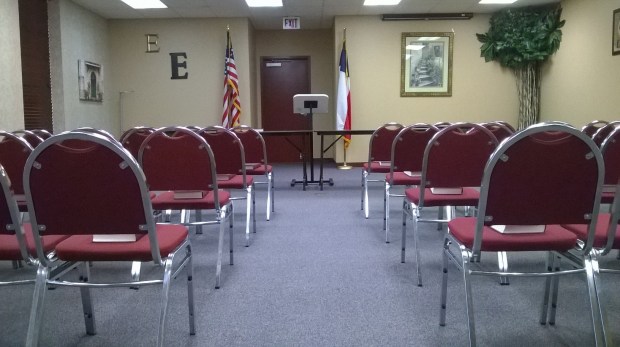
Leland Acker has served as the pastor of Life Point Baptist Church since its inception in 2008. Life Point meets for Sunday School at 10 a.m., Sunday Worship at 11 a.m., and meetings are held at the Early Chamber of Commerce/Small Business Incubator Facility at 104 E. Industrial Dr. in Early, TX, pending the construction of a new worship facility.

Who is there among you?

Jerusalem Reconstruction

Who is there among you of all his people? his God be with him, and let him go up to Jerusalem, which is in Judah, and build the house of the Lord God of Israel, (he is the God,) which is in Jerusalem.

-Ezra 1:3

The Persian king Cyrus had no ties to Jerusalem. There was no sentimentality on his part. He had probably never even been to Jerusalem. Yet, when God stirred his spirit, he was moved to rebuild the house of God at Jerusalem.

Knowing that God’s will was to revive Israel, Cyrus understood that if the reconstruction of the Temple was to truly accomplish its purpose, the Israelites would have to be the ones to rebuild it. Therefore, he challenged God’s people. “Who is there among you of all his people? His God be with him.”

Over the past 9 years, I have seen signs posted along the highways of Texas urging residents to pray for our nation. On more than one occasion, our nation has been mentioned as a prayer request during morning services.

And then there’s 2 Chronicles 7:14:

 If my people, which are called by my name, shall humble themselves, and pray, and seek my face, and turn from their wicked ways; then will I hear from heaven, and will forgive their sin, and will heal their land.

We pray for our nation often. We pray that our nation will remain safe, prosperous, that our children and grandchildren will be able to enjoy the same lifestyles we did. More importantly, we pray that God would bring a revival in America. More than a cultural revival, we pray that God would bring a spiritual revival to America.

We’re concerned about more than American traditions. We’re concerned about the soul of America. Historically, our nation has lived by Judeo-Christian values. In recent years, it seems that society is deliberately moving away from those values.

As a result, we see the increase in drug abuse and crime, child abuse, human trafficking, moral degradation and cultural rot. The solutions to these problems cannot be legislated. These are problems that can only be solved by a revival in America. These problems can only be solved by national repentance and a renewed interest in true Christianity. We pray for this to happen.

However, this revival will only be sparked if the people of God will stand up, speak His Gospel, minister to those who hurt, and reach out to those who are lost. If we are to see a spiritual revival in America, we need a generation of Christians to rise up and unabashedly do God’s work.

So, in the words of Cyrus, “Who is there among you of all his people? his God be with him.”

Rise up, reach out, and be the influence that leads your friends, family and neighbors to the Lord. Who knows? You may be the spark that ignites a revival in our country.

Leland Acker has served as the pastor of Life Point Baptist Church since its inception in 2008. Life Point meets for Sunday School at 10 a.m., Sunday Worship at 11 a.m., and meetings are held at the Early Chamber of Commerce/Small Business Incubator Facility at 104 E. Industrial Dr. in Early, TX, pending the construction of a new worship facility.

Once you realize this, your life has purpose

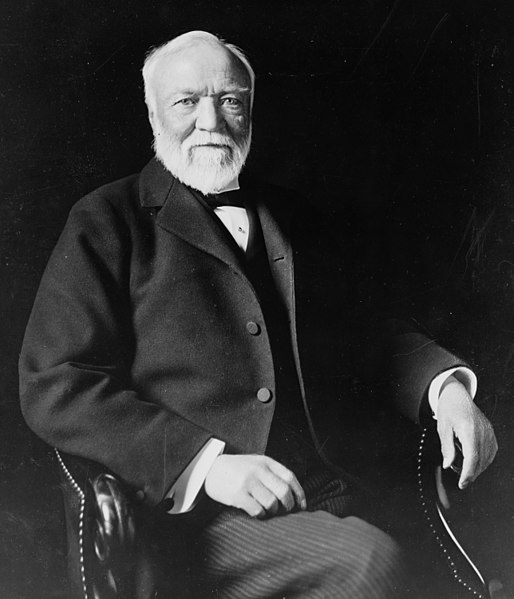
andrew carnegie

I should consider it a disgrace to die a rich man.” – Andrew Carnegie

A boulevard runs through downtown Brownwood, connecting CC Woodson Drive with US Hwy. 377 South. The boulevard, which provides quick, and easy access from the outlying areas of Brownwood to downtown is named Carnegie St.

The name comes from the Carnegie Library, which was built back in the early 1900s at the corner of what is now Carnegie and Adams St. The Carnegie Library was named for Andrew Carnegie, a late 19th Century/early 20th Century industrialist who donated the money for the library’s construction.

Like many who take the journey from rags to riches, Carnegie understood that wealth was meant for more than enjoying with frivolous lifestyles. He advocated for the wealthy to invest their riches in programs that would help the poor escape poverty, such as schools, education, or in his case, libraries.

His philosophy was simple. Spend the first third of your life learning as much as you can, the middle third earning as much as you can, and the last third of your life giving as much as you can. Carnegie understood that, with wealth came responsibility. Sadly, he missed the spiritual component of that truth.

That was not the case with the emperor Cyrus, who stated in Ezra 1:2, “The Lord God of heaven hath given me all the kingdoms of the earth; and he hath charged me to build him an house at Jerusalem, which is in Judah.”

When Cyrus became the king of Persia, he became the most powerful man in the world. All of the known civilizations were under his control at the time. Those provinces he didn’t directly rule over paid him tribute for their safety and sovereignty. Cyrus owned everything.

With his rise to power came the realization that there was a purpose for it all. Cyrus understood that his power and wealth came from divine blessing, not from his own personal merit. Therefore, the Lord stirred his spirit, and brought him to the realization that his rise to power coincided with God’s will to rebuild His temple. Thus, Cyrus concludes in Ezra 1:2 that the Lord gave him all the kingdoms in the world in order for him to rebuild the temple.

Cyrus understood that God raised him to power so that he would rebuild the temple, and failure to do so would result in his reign being prematurely ended. If God blesses you with a purpose, you better follow the purpose, or lose the blessing.

Today in America, we are amazingly blessed. The poorest among us are still among the richest 40 percent of the world’s population. We enjoy fast, convenient access to a variety of foods, can generate income at will, and enjoy the convenient lifestyle afforded by modern technology.

In the third world, goods are expensive and labor is cheap, hence the low standard of living. In America, goods are cheap and labor is expensive, meaning we have more buying power than most of the rest of the world.

Why has God blessed us so?

Simple. God has blessed us so that we will use our ample resources to spread His Gospel throughout the world. This is a Biblical concept. What God gives us still belongs to Him. We merely manage it on His behalf. His will for us is that we use those blessings to further His Kingdom, which means spreading the Gospel and winning more converts.

Has God blessed you today? If so, then live your life on purpose and use those blessings to further the Gospel. You never know what great things may come from your dedication to the Lord.

Leland Acker has served as the pastor of Life Point Baptist Church since its inception in 2008. Life Point meets for Sunday School at 10 a.m., Sunday Worship at 11 a.m., and meetings are held at the Early Chamber of Commerce/Small Business Incubator Facility at 104 E. Industrial Dr. in Early, TX, pending the construction of a new worship facility. 

The Soul Stirring

cropped-wp_20140810_002.jpgPastor Joey Gilbert pastors a small church in southern Mississippi. At first glance, his role at Bayside Baptist Church may not seem that unique. Like many pastors, he preaches, drives a church van to pick up kids for Sunday School, and ministers to his congregation. It’s a scene similar to that of many small congregations across America, until you learn that Pastor Gilbert lives 1,000 miles away in Carnesville, Ga., a small town 75 miles northeast of Atlanta, where he works as a land surveyor.

Bi-vocational pastors of small congregations struggle to make ends meet, and to meet the increasing demands on their time, yet Gilbert maintains the work, life, ministry balance across a distance of three states and two time zones. In a time when pastors are leaving the ministry in record numbers due to burnout, Gilbert keeps going. Why?

“If you came on a Sunday, and met the members and the kids, you’d understand,” Gilbert told MSN.

Gilbert’s soul was stirred for Bayside Baptist Church after providing Vacation Bible School for the kids after Hurricane Katrina. Upon learning that their pastor was leaving, Gilbert was moved to help. His continued devotion (he’s been serving as their pastor for 17 months) is no doubt driven by his love for the people of the church, and by the stirring the Lord has done in his soul.

When God stirs the souls of men, great things happen. In Ezra 1, the Persian emperor Cyrus ordered the Israelites to return to Jerusalem and to rebuild the Temple. His order marked the end of the Jewish exile, begun after they were conquered by the Babylonian empire as God’s judgment for centuries of idolatry. God’s chastisement of his people complete, it was time to send them home. God stirred the spirit of Cyrus to make that happen.

In Ezra 1:1-2, the Bible says:

Now in the first year of Cyrus king of Persia, that the word of the Lord by the mouth of Jeremiah might be fulfilled, the Lord stirred up the spirit of Cyrus king of Persia, that he made a proclamation throughout all his kingdom, and put it also in writing, saying, Thus saith Cyrus king of Persia, The Lord God of heaven hath given me all the kingdoms of the earth; and he hath charged me to build him an house at Jerusalem, which is in Judah.

Notice what scripture said. “The Lord stirred up the spirit of Cyrus.” When that happened, Cyrus set his heart to obey the Lord by ordering the rebuilding of the Temple, which necessitated the return of the people to Jerusalem. So, he ordered it.

This order led to the rebuilding of the Temple, a revival in Israel, and the starting of the 70 weeks prophesied by Daniel that God would use to bring about the final redemption of His people. God stirred the spirit of a man, and great things happened.

As we begin a new year, let’s focus our desires on seeing great things happen for God. For those great things to happen, God will need to revive our hearts. Let’s pray that God stirs our spirits, and that He stirs the spirits of others to make these great things happen.

By doing so, we’ll learn to depend on Him for the revival we desire to see in our nation, and we’ll lean less on our own power and understanding.

Leland Acker has served as the pastor of Life Point Baptist Church since its inception in 2008. Life Point meets for Sunday School at 10 a.m., Sunday Worship at 11 a.m., and meetings are held at the Early Chamber of Commerce/Small Business Incubator Facility at 104 E. Industrial Dr. in Early, TX, pending the construction of a new worship facility. 


What stops love?

DSC_0213Fear.

The one obstacle to following the Biblical command to love our neighbors as ourselves, and to love our enemies, is fear.

The Biblical commandments to love go beyond a tender affection toward others. The Biblical command to love involves putting that love into action. Indeed, the very meaning of agape love indicates that a personal sacrifice is made on behalf of the recipient of love.

This bears out in the way Christ taught us to love. In Luke 6:30, He says, “Give to every man that asketh of thee; and of him that taketh away thy goods ask them not again.” Then, in Luke 6:35, Jesus says, “But love ye your enemies, and do good, and lend, hoping for nothing again; and your reward shall be great, and ye shall be the children of the Highest: for he is kind unto the unthankful and to the evil.”

While we want to follow the teachings of our Lord Jesus Christ, the idea of loving so sacrificially can carry with it the fear that our love will not be returned, or even worse, those we help will turn around and hurt us. We fear the result would leave us empty handed, and looking foolish.

There’s not a person alive who hasn’t loved someone who in turn rejected or betrayed them. It’s not a good feeling. It can leave one jaded, angry, and fearful to love again. To find yourself in that state is to find yourself in a dark place.

Yet, we worship the Light of the world. Jesus Christ shined His light into darkness, dispelling sin, degradation and hopelessness. Perhaps our focus should be on the Light, as opposed to the possible darkness.

Fear of love comes from not trusting the Lord to work in the situation. It comes from not seeing the redemptive power of love, and not trusting the Lord to work through the love toward the redemption and well-being of the one loved. Without that faith, one can only see the risk, and the possible negative consequences.

Love is not a risk. Love is not a gamble. It’s not even an investment. Love is a promise. While the one to whom you show agape may reject or betray you, the Lord promises to bless you for that love.

You see, when you focus on the Lord as you show love to your neighbors and enemies, the same people He loves, then the risk of rejection and betrayal is no longer as big of a deal. It may still happen, but it’s secondary to the fellowship you build with your Lord and Savior Jesus Christ in the process. Furthermore, it’s secondary to the change and reconciliation that can come as a result of your love toward others.

Dr. Martin Luther King, Jr., may not have changed the hearts of segregationalists and white supremacists in the South. Indeed, his efforts landed him in jail on multiple occasions, and even saw him assaulted numerous times. Yet, when we discuss the legacy of Dr. King, we don’t say, “There lived a man who was beaten and jailed.” We say, “There’s a man who forever changed our nation for the better.”

Was the change he made worth the suffering he endured? If he were alive today, I think he would say yes.

Let’s elevate this conversation.

Jesus Christ loves sinners. He loved the publicans and the sinners, and dined with them many times. Scripture teaches that He loves all people. The Lord, who loved people, took on the form of a person, and came and lived among us. He came to save us. Yet, mankind rejected Him, beat and tortured Him, then killed Him in the most brutal way possible.

Yet, His love for us, which propelled Him to the cross, accomplished something no one understood at the time. His death on that cross satisfied the need for judgment, and thus our sins are forgiven if we believe on Him.

He loved. He was rejected. He suffered. Yet, His love redeemed us. For Christ, was it worth it? In scripture, He says, “Yes.”

So, in Luke 6:38, Jesus says, “Give, and it shall be given unto you; good measure, pressed down, and shaken together, and running over, shall men give into your bosom. For with the same measure that ye mete withal it shall be measured to you again.”

Far too often this verse is interpreted that we will be materially rewarded for love. In reality, this verse promises that your love will not be in vain, and by loving, you could very well change the world.

Love your neighbors and enemies, and keep your eyes on the BIG picture.

Leland Acker is the pastor of Life Point Baptist Church. Life Point meets for Sunday School at 10 a.m., Morning Worship at 11 a.m. Services are held at the Early Chamber of Commerce building at 104 E. Industrial in Early. This week, Bro. Waymon Childress will bring the morning message. 

What it means to love

WP_20141002_003Love is a word that has captured the imaginations and inspired poets, authors, artists and musicians for generations. If we took a snapshot of the music industry in the 1980s, we’d see a plethora of poetic explorations of love, including but not limited to, “Is This Love,” “Love Bites,” “The Greatest Love,” “Love Song (Love Will Find a Way)” and of course, “The Power of Love.”

Love is a word that is thrown around in modern society.

“I love that jacket.”

“I love the Dallas Cowboys.”

“I love L.A.”

“I love going to the beach during the spring.”

Love. Then there’s the ever present “I love you” spoken between romantic partners, whether love truly exists in the relationship, or not. Love is so commonly used in today’s language that it no longer carries the gravity it did when spoken by Christ and the apostles 2,000 years ago.

Periodically on this blog, I’ve written about the meaning of the Greek word, agape. Agape love is a self-sacrificial love that puts the needs of others above your own. Agape has a redemptive quality. It’s agape that propelled Christ to the cross. Agape.

The definition makes sense, but what does agape look like in action? How can I know if I truly love my brother, let alone my enemy? There are certain characteristics that identify agape love.

We’ll start with Paul’s explanation in I Corinthians 13.

Charity suffereth long, and is kind; charity envieth not; charity vaunteth not itself, is not puffed up, Doth not behave itself unseemly, seeketh not her own, is not easily provoked, thinketh no evil; Rejoiceth not in iniquity, but rejoiceth in the truth; Beareth all things, believeth all things, hopeth all things, endureth all things. Charity never faileth:

Agape love is marked by:

  • Patience
  • Unselfishness
  • Humility
  • Good behavior
  • Pure thoughts
  • Rejection of evil, rejection of wrongfulness
  • Rejoicing in truth
  • Belief
  • Hope
  • Endurance
  • Never ends, hence, it is unconditional.

So, when we ask ourselves if we love our brother, we must ask ourselves, “Am I patient with him?

“Is my friendship with him for my benefit, or his?”

“Do I gossip about him? Or do I reject rumors shared about him?

“Do I trust him?”

“Is my friendship with him contingent on what he can do for me?”

Philippians 2:4-5 concurs with 1 Corinthians 13, stating that love is outwardly focused, not inwardly focused. Love puts the emphasis on the other person.

Look not every man on his own things, but every man also on the things of others. Let this mind be in you, which was also in Christ Jesus:

When you have agape love toward someone, you are not looking to see what you can get out of the relationship. You are looking at how you can meet the needs of the other. This is why the love from a parent to a child, or from our Lord to us are such powerful examples. A mother loves her son and sacrifices for him greatly, expecting nothing in return. Jesus left the glories of Heaven to suffer for mankind.

In fact, the passage in Philippians 2 speaks to that, saying “Let this mind be in you, which was also in Christ Jesus.”

Jesus was in Heaven, enjoying a close personal relationship with the Father, and being praised by the angels. Life was good. Had Jesus been self-centered, He would have been minded to stay in Heaven. Instead, He looked not only on His on things, but also on our things, particularly, our need for salvation.

Therefore, He “made himself of no reputation, and took upon him the form of a servant, and was made in the likeness of men: And being found in fashion as a man, he humbled himself, and became obedient unto death, even the death of the cross.” (Philippians 2:7-8) As I’ve stated many times, the love of Christ propelled Him to the cross to purchase our salvation. 

And that’s why Luke 6 teaches us to love, not expecting anything in return (Luke 6:35), because that’s who God is. And if we truly want to be conformed to the image of Christ, we will learn to love like Christ. Our focus will be on others without consideration for how we will benefit from the relationship.

So, with that insight from the scriptures concerning love, do we actually love each other? Do we look to each others’ needs? Or are we more concerned that our own needs are not met?

Let’s challenge ourselves to love one another this year. Look on each others’ needs, fears, scars and hurts, and see what you can do to help or heal. Learning to love one another like this will not only create a powerful environment in our lives, but it also brings us into closer fellowship with the Father, which will result in blessings beyond what we can imagine.

Leland Acker is the pastor of Life Point Baptist Church. Life Point meets for Sunday School at 10 a.m., Morning Worship at 11 a.m. Services are held at the Early Chamber of Commerce building at 104 E. Industrial in Early. This week, Bro. Waymon Childress will bring the morning message. 

Why Jesus said, “Love Your Enemies”

Sunday, November 17, 1957, the young Rev. Dr. Martin Luther King, Jr., stepped into the pulpit at Dexter Avenue Baptist Church of Montgomery, Ala., to deliver one of his most profound sermons, ever. The sermon, entitled, “Love Your Enemies,” taken from Matthew 5, not only presented a Biblical definition of love, and God’s commandment to have this love toward all men. It also outlined the philosophy of Dr. King’s Civil Rights Movement from that day forward.

The Civil Rights Movement had just secured a major victory after the Supreme Court ruled that Montgomery’s ordinances segregating the bus lines were unconstitutional. In the aftermath of that victory, Dr. King saw that his method of non-violent resistance and civil disobedience to the Jim Crow laws of the South could secure more freedoms for his people, and put an end to racial segregation.

However, Dr. King also realized that while those political, legislative and judicial victories could put an end to institutional racial discrimination, they could never put an end to racism, or heal the wounds left from America’s racial strife. Dr. King understood that for there to be true peace and equality, America had to be redeemed from its past, not defeated because of it.

Therefore, love became central to Dr. King’s message. In His sermon, “Love Your Enemies,” Dr. King said that God commanded us to love our enemies, not only because God is love, because God loves them, and He wants to redeem them, but because love itself has a redemptive quality.

“Love has within it, a redemptive power,” Dr. King stated. “And there is a power there that eventually transforms individuals.

“That’s why Jesus says, ‘Love your enemies,'” he continued, “Because if you hate your enemies, you have no way to redeem and transform them.”

Dr. King went on to say that at the root of love is the power of redemption.

This concept is not only a philosophy put forth by Dr. King. It was stated by Jesus Christ Himself in Luke 6:35-36:

But love ye your enemies, and do good, and lend, hoping for nothing again; and your reward shall be great, and ye shall be the children of the Highest: for he is kind unto the unthankful and to the evil. Be ye therefore merciful, as your Father also is merciful.

This love that God had toward us motivated Him to give His only begotten Son for our salvation (John 3:16). The love God had toward us redeemed us. We can extend that same redeeming love to others, and in doing so, we can see others transformed by the power of the Gospel into the people God created them to be.

Today, America is divided. Political discourse has grown harsh, cold, and even leads to physical violence. With each passing day, our society becomes more about us vs. them than it is about E pluribus unim.

With more sin and evil being propagated in our society, and more rancid division arising daily, it becomes easy to look at those on the other side as enemies, and work to defeat them. This runs contrary to scripture.

While scripture teaches us to hate sin and to hate evil, we are also commanded to love the sinner. While “love the sinner but hate the sin” seems to be a modern cliche, we are taught by the Word that if we love the sinner, we can see him redeemed from the sin. Isn’t that the goal that all believers should have toward non-believers?

So, as we move toward 2018, let’s make an effort to see people as God sees them. Let’s love people, and see the redemptive power of love come alive.

Leland Acker is the pastor of Life Point Baptist Church. Life Point meets for Sunday School at 10 a.m., Morning Worship at 11 a.m. Services are held at the Early Chamber of Commerce building at 104 E. Industrial in Early. This week, Bro. Waymon Childress will bring the morning message.