Christ

The Resurrection…

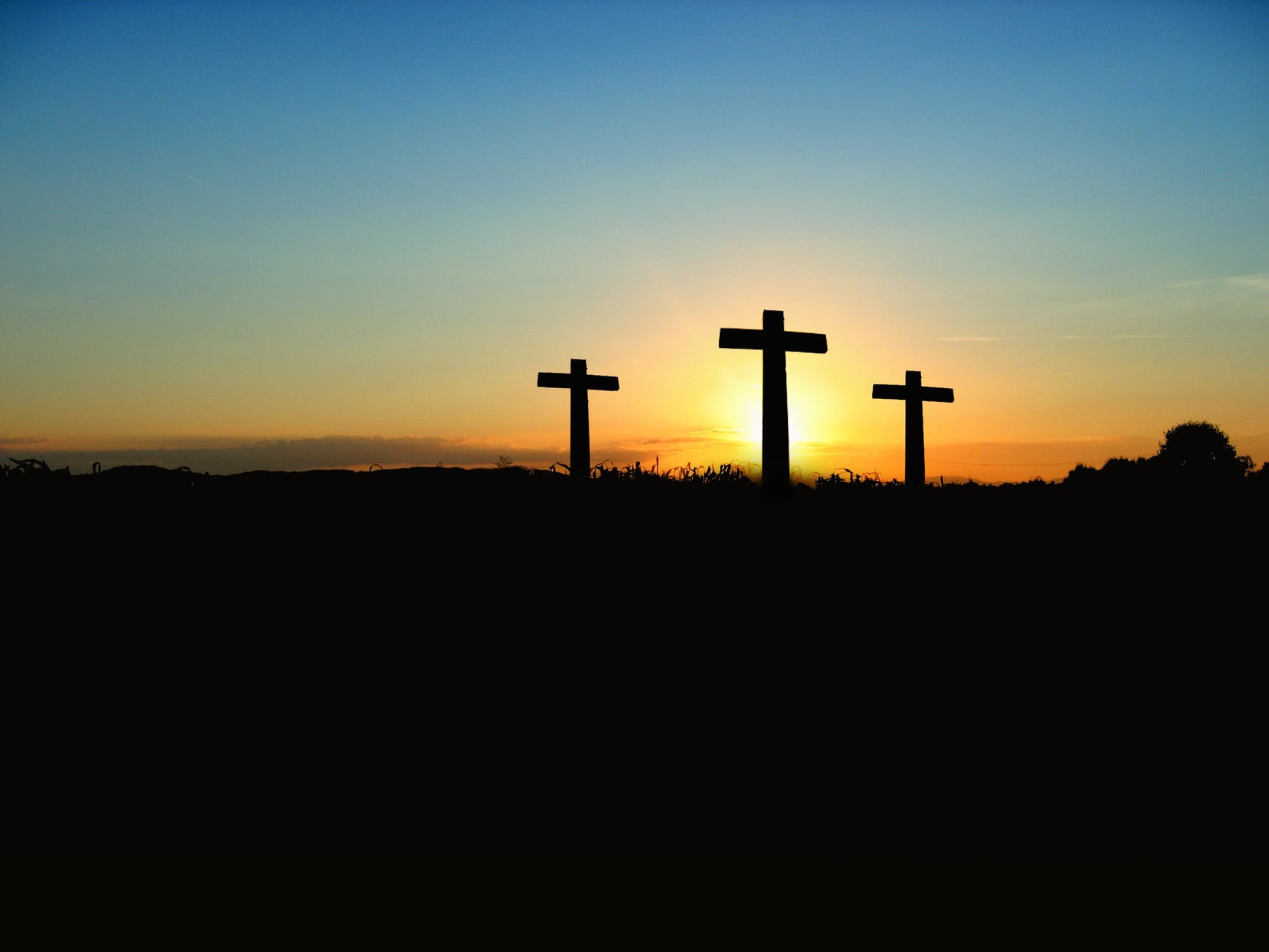
Of all the things that Christians believe, the resurrection of Jesus Christ is the most incredible. Scripture teaches us that Jesus Christ was betrayed, and turned over to the Romans, who crucified Him, killed Him, then released His body to Joseph of Arimathea, who buried Him in the tomb. On the third day, Jesus was raised back to life, and He walked out of the tomb.

The belief is so incredible that a young investigative journalist by the name of Lee Strobel believed he could debunk the entire Christian religion simply by proving that the resurrection of Jesus never happened. Instead, Strobel encountered a mountain of evidence that supported the resurrection of Christ, from the number of copies of the scriptures that have been preserved over the centuries, to secular writings about the resurrection, to written testimony of the Apostles.

Strobel compiled this evidence into a book, entitled, The Case for Christ, which was later made into a movie. Strobel himself became a believer.

However, 2,000 years before Strobel embarked on his proof of the Gospel, the Apostle Paul had already laid out the case that the resurrection was indeed reality. In 1 Corinthians 15, Paul noted that Jesus was seen after the resurrection by the 12 apostles, by Peter, and by 500 brethren at once, some of whom were still alive at the time of Paul’s writing, and could personally attest to the truth of the resurrection. Paul could produce eye witness testimony.

The resurrection of Jesus Christ is the third and final part of the Gospel, how that Christ died for our sins according to the scriptures, that He was buried, and that He rose again the third day according to the scriptures (1 Corinthians 15:3-4). Since the resurrection happened, we have proof that the Gospel is true.

But what does the Gospel mean for us?

In 1 Corinthians 15:1-2, Paul wrote, “Moreover, brethren, I declare unto you the gospel which I preached unto you, which also ye have received, and wherein ye stand; 2 By which also ye are saved, if ye keep in memory what I preached unto you, unless ye have believed in vain.”

Paul told the Corinthians that they received the Gospel, and the Gospel was what made them stand, that is, have standing in the Kingdom of God. In other words, without the Gospel, they would have no standing in God’s Kingdom, and would be condemned. But they received the Gospel, and had standing, and therefore, by the Gospel, they were saved.

It works the same for us. When you receive (that is, believe) the Gospel, you are saved from God’s wrath and given standing in the Kingdom of God. This is all made possible by the death, burial and resurrection of Jesus Christ. This is all proven by the resurrection of Christ.

In Romans 6, the Apostle Paul takes it a step further. Not only does the resurrection prove the Gospel, and not only does it secure our salvation, but it also transforms us.

In Romans 6:4-5, the Bible says, “Therefore we are buried with him by baptism into death: that like as Christ was raised up from the dead by the glory of the Father, even so we also should walk in newness of life. 5 For if we have been planted together in the likeness of his death, we shall be also in the likeness of his resurrection:”

When Jesus rose again, He did not walk out of that tomb in the same broken body that was placed within it. Instead, He walked out of that tomb with a new, glorified body. The only signs left from the crucifixion were the nail scars in His hands, and the hole in His side from the spear thrust into Him by a Roman guard. The Lord purposefully kept those scars as a reminder of what He did for us, and they were the reason why the Apostle Thomas repented of His unbelief and worshipped Christ.

When the Lord returned from the grave, He was transformed and glorified. Likewise, we also should be transformed by the power of the Gospel. How? The Bible tells us in Romans 6, to reckon ourselves dead to sin but alive unto God, and to yield our bodies as instruments of righteousness rather than sin.

If you have believed the Gospel, you have repented of your sin and trusted Christ to save you. If you have trusted Christ to save you, then that belief will change you.

Therefore, as we study the resurrection, we must ask ourselves, “Has the Gospel changed us?” If not, perhaps it’s time to do what Peter told us, to “make our calling and election sure.”

May God bless you as you follow Christ.
The Death…

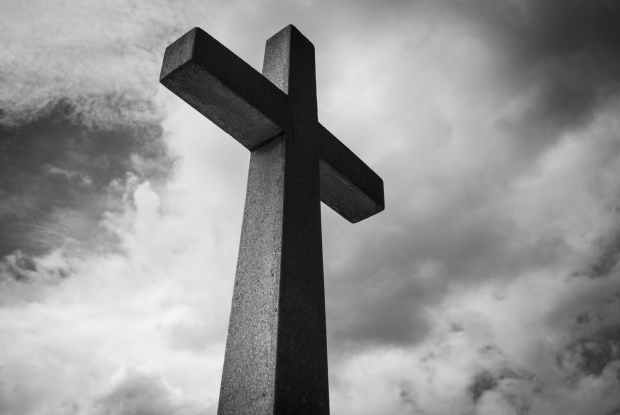
black and white cemetery christ church

Photo by Pixabay on Pexels.com

“For the wages of sin is death; but the gift of God is eternal life through Jesus Christ our Lord.” – Romans 6:23

The circle of life used to be a straight line, and the daily struggle didn’t exist. Such was life in the Garden of Eden, as God prepared a perfect place for man to dwell with a plentiful food supply, an automatic sprinkler system, no bad weather, and no problems. Adam and his wife, who would later be named Eve, were to enjoy the garden to its fullest, eat as much of the fruit as they wanted, and to do light gardening work as they desired. (Irrigation was covered, and there were no weeds, thorns or pests, so all work was recreational.)

In this perfect world, there was no death. Adam would not die. He would be allowed to live to see what his children, grandchildren, etc, would become. He would live to see what his work would produce. He would live to see the society he would build. It was perfect.

There was one stipulation. The tree in the midst of the garden, the tree of knowledge of good and evil, was off limits. This was for two reasons. (1) God wanted man to obey, love and worship Him by choice, and (2) God did not want man to experience the evil he knew Satan already had planned for His creation.

Therefore, God warned Adam, “But of the tree of the knowledge of good and evil, thou shalt not eat of it: for in the day that thou eatest thereof thou shalt surely die.”

Adam likely did not have any concept of death. Prior to his sin in the garden, there was no death. Adam had never mourned for his dog who died, had never suffered that separation from a close loved one, and had never experienced lost fellowship with God. He had no concept of death. However, if God warned against it, it must be bad, and therefore the tree of knowledge of good and evil must be avoided.

The Biblical meaning of death is separation. Separation of soul from body. Separation of man from God. The day that Adam ate the fruit, his soul wasn’t separated from his body, but he was separated from God. Death happened. And death, both the separation of the soul from the body, and the separation of man from God, happened the day Adam and Eve sinned against God by eating of the fruit of knowledge of good and evil.

Since that time, man has sinned, and his sin has become progressively worse. Man has become ever estranged from God. Man rebels against God, His word, His law, His design. As man does this, things on earth get progressively worse. Adam didn’t live to see a great society built. He lived to see the world become so bad that God decided to destroy it with the flood. (Adam didn’t live to see the flood, but he did live to see the conditions that led to it.)

Sin separated man from God, therefore man died, and sin reigned. And so it was.

The wages of sin is death, but the gift of God is eternal life through Jesus Christ our Lord.”

The death prescribed by God in Genesis 2 went beyond physical death. It also meant an eternal death, an eternal separation of man from God, where God was no longer man’s Father and Provider, but rather man’s judge, jury and executioner. Sin brings death. Death brings judgment.

Yet, God loves us too much to leave it at that. Romans 5:8 says “God commendeth His love toward us in that while we were yet sinners, Christ died for us.”

The death Christ died was the death brought on by our sin. The death Christ died was the death we deserved. The death of Christ on the cross was not a mere physical death, from which the Lord could easily heal Himself. It was a separation… His Spirit from His body, but moreover, His separation from His beloved Father.

As Jesus hung on the cross, saying, “My God, My God, Why hast thou forsaken Me?” He was not merely shouting out in agony. Neither was He sad that God “turned His back on Him.” Jesus cried, “My God, My God, Why hast thou forsaken Me?” because the relationship had changed.

The perfect union between God the Father and God the Son had been converted to the relationship of judge and executioner. Instead of lovingly comforting His Son, God was now judging His Son, and pouring out His wrath on Christ for all the sin of the world. This was done to satisfy the requirement for death, so that man could be saved from God’s wrath, if man repents and believes.

Out of all the cruelties that Christ endured on the cross, the hardest part was enduring the wrath of God.

Pastor Bobby Sparks of Emmanuel Baptist Church in Greenville, Tex., who also heads up the Tabernacle ministries, says that on the day of the crucifixion of Christ, man was given one “hour” to do unto God has he pleased. Pastor Sparks then points out how man treated Christ with more cruelty and shame than has ever been dealt to any other human being in history.

The cruelty of the Romans, the scourgings and beatings, the mocking of the crowds, merely demonstrated the evil and sin within man’s heart. It was the wrath of God poured out onto Jesus that settled our sin-debt, cleared us from guilt, and makes reconciliation with God possible.

Jesus Christ died that death, so we don’t have to. Yes, we will one day close our eyes as our soul leaves our body. However, we do not have to suffer an eternity separated from God. Are you willing to trust what Jesus Christ did on the cross for your salvation? Do you trust the Lord? Then turn from your sin and follow Him.

May God bless you.

Gospel Week: Celebrating the Central Theme of Christianity

cross-sunset-sunrise-hill-70847.jpeg

Photo by Pixabay on Pexels.com

Redemption.

This is the one thing that all people seek. Redemption.

It is romanticized in literature, sought through accomplishments, and desired for lifetimes. Redemption.

Redemption is often called by different names: liberation, validation, triumph. At the heart of these desires, however, is redemption.

Last weekend, millions across America celebrated Tiger Woods’ victory at the Masters. Woods’ first Masters victory in 11 years, coupled with his recovery from injury, personal failures, and controversy, prompted many in the media to hail his “redemption.”

Redemption was a theme interwoven into the NFL careers of Carson Palmer and Bruce Arians, whose careers had been sidelined due to firings and trades, then re-ignited when they were signed by the Arizona Cardinals, before making it to the NFC Finals.

The word, “redemption,” may not be used, but it has captured the hearts of writers, poets and artists. Redemption is celebrated in songs, such as Aerosmith’s “Amazing,” fairy tales such as “Cinderella,” and countless movies and TV shows. Every story about the aging athlete seeking one last championship, every story about a child seeking a long-lost parent, every story about a businessman seeking one last deal, or the advocate seeking one more victory over Wall Street, is a story about a protagonist seeking redemption. Redemption is a theme of every rags-to-riches story, and every story about overcoming loss.

We frame it in so many ways, but at the end of the day, all we are really after is redemption. And true redemption cannot be found in one last championship, one last victory, or in a dream come true. No matter what victories we score in life, we will never receive the fulfillment we seek, unless our redemption is a Spiritual one.

And that’s what Christ purchased on the cross for us.

In 1 Corinthians 15, Paul lays out the Gospel of Jesus Christ. He reminds the Corinthians in verse 1 that they have received the Gospel, and it is the reason they have standing in God’s Kingdom. He then reminds them that the Gospel is the basis for their salvation. Essentially for them, and for us, the Gospel is the source of our hope for the future, our hope for eternal prosperity in God’s Kingdom, and our hope that all that is wrong will be made right.

Then, in one of the most important things ever written, Paul defined the Gospel. In 1 Corinthians 15:3-4, Paul wrote:

For I delivered unto you first of all that which I also received, how that Christ died for our sins according to the scriptures; 4 And that he was buried, and that he rose again the third day according to the scriptures:

How did Christ purchase our redemption? He died for our sins, He was buried, and He rose again the third day in fulfillment of the Old Testament scriptures.

The death of Jesus Christ on the cross paid the price for our sin. 1 John 2:2 says that He is the propitiation for our sins. A propitiation is a payment made to God to atone for sin. A propitiation cancels a debt owed as a result of sin. To make this payment on our behalf, Christ gave Himself, and was nailed to the cross, and gave up His life.

In doing this, Christ not only paid our debt, but He also removed the stain and guilt sin left on our lives (Isaiah 1:18, “Though your sins be as scarlet, they shall be white as snow.”) Essentially, the old has been washed away, and all things have been made new. New life, new Spirit, new us, new hope. (Isaiah 43:18-19, Revelation 21:5, Ephesians 2:15, Ephesians 4:24, 2 Corinthians 5:17).

Historically, churches have commemorated the death of Jesus Christ on the cross on “Good Friday.” (In all actuality, He was likely crucified on a Wednesday, but that’s a story for another day.) On Easter Sunday, we celebrate His resurrection.

In 1 Corinthians 14:3-4, Paul wrote that the Gospel is how Christ died for our sins, according to the scriptures, that he was buried, and that He rose again the third day according to the scriptures. He then spends the rest of the chapter defending, and advocating, that Christ rose again from the dead. When you see how adamantly Paul argued that the resurrection happened, you will understand not only how important this doctrine is to Christianity, but also how much hope it gives us.

As Phil Robertson once said, “A dead savior can’t do much for you.” However, a living Savior advocates for you and opens the doors of Heaven for you.

The resurrection of Jesus Christ shows us His victory over death, which will also be our victory if we know Him as Savior. And that’s true redemption. To be rescued from the pain of this life into an eternal life with no pain, to be transformed from the old you into a gloriously new version of you, and to be cleansed from all unrighteousness is the ultimate redemption, and that is truly what we celebrate, not just every Easter, but every Sunday as well.

Come join us for Sunrise Service, 7 a.m. Sunday, April 21, 2019, at the Early Visitors and Events Center at 419 Garmon Dr. in Early, TX.

Inside the Throne Room of Christ (Revelation 4-5)

If one is rushing through the book of Revelation to get to the “good stuff,” one might miss the amazing thing that happens in Revelation 4. The Apostle John, imprisoned on the Isle of Patmos for spreading the word of God, has been invited into Heaven. Not only has he been invited into Heaven, but He has been invited into the nerve-center of Heaven, the throne room of Christ.

As John is conveying to us everything he saw as he entered into the throne room of Christ, it can be easy for us to get lost in all the precious stones, gems, and spectacular sights of that place. For example, how does one interpret verse 3, which says, “And he that sat was to look upon like a jasper and a sardine stone: and there was a rainbow round about the throne, in sight like unto an emerald?”

What’s interesting is that the things John sees are not only brilliant and spectacular, but are symbolic as well. As John looks upon the One sitting upon the throne, he sees a being that looks like jasper and sardine stone. While this speaks to the glory of Christ, there is also a deeper meaning. Jasper and sardine stone are both red. Isaiah 1:18 tells us that the color of sin is red. The color of the blood of Christ is red. When you look through a red lense, that is, these precious stones and the blood of Christ, the redness of sin is cancelled out.

Thus, as the Bible says in Isaiah 1:18, “though your sins be as scarlet, they shall be as white as snow; though they be red like crimson, they shall be as wool.”

Surrounding the throne is a rainbow, which you might remember is the symbol of the covenant God made with Noah to never destroy the world with a flood again. Right there in front of Christ is a reminder of His grace and mercy.

In the secular world, in the business world, we tend to decorate our offices (our throne rooms, if you will,) with the things that we are most proud of… the things which are the most important to us.

When you look into the throne room of Christ, you see symbol after symbol of our redemption and salvation. What does that tell you about the Lord’s passion for you?

Encountering the Resurrected, Glorified Christ (Revelation 1)

If Jesus were to appear to you today, what would He look like? What would He be like? How would He speak to you, and would you be intimidated to be in His presence?

Such was the case as the Apostle John worshiped on the Lord’s day in Revelation 1. John, who was imprisoned on the Isle of Patmos for preaching the Gospel, was in the Spirit when Christ appeared to Him. He wrote about this experience on Revelation 1:10-17:

I was in the Spirit on the Lord’s day, and heard behind me a great voice, as of a trumpet, Saying, I am Alpha and Omega, the first and the last: and, What thou seest, write in a book, and send it unto the seven churches which are in Asia; unto Ephesus, and unto Smyrna, and unto Pergamos, and unto Thyatira, and unto Sardis, and unto Philadelphia, and unto Laodicea.

And I turned to see the voice that spake with me. And being turned, I saw seven golden candlesticks; And in the midst of the seven candlesticks one like unto the Son of man, clothed with a garment down to the foot, and girt about the paps with a golden girdle.

His head and his hairs were white like wool, as white as snow; and his eyes were as a flame of fire; And his feet like unto fine brass, as if they burned in a furnace; and his voice as the sound of many waters. And he had in his right hand seven stars: and out of his mouth went a sharp twoedged sword: and his countenance was as the sun shineth in his strength.

And when I saw him, I fell at his feet as dead.

Bloch-SermonOnTheMountThis glorious appearance of Jesus Christ is a far-cry from the happy-hippy image of Jesus made popular by Renaissance paintings.  Instead of a gentle looking man with long, brown hair and a most excellent beard, John saw Christ as bright as the sun, with white hair, eyes of fire, and brazen feet. The fact that He had a two-edged sword as a tongue is even more intimidating.
Upon seeing Christ, the Apostle John, the disciple whom Jesus loved, who was the closest of all the disciples to Christ, who walked and talked with Christ three and a half years, fell at His feet as dead.

This experience reminds us of the glory of Christ. No longer is He the suffering Savior nailed to the cross. No longer is He meek and lowly, submitting Himself to self-sacrifice for mankind. His sacrifice has been completed, and our salvation is paid. Now, the resurrected Christ sits in His glorified form at the right hand of the throne of God.

It would do us well to remember that our Lord and Savior Jesus Christ is not merely a “buddy” or companion. He is our creator, God in flesh, Who loved us and gave Himself for us. We should revere Him as such.

Yet, as intimidating as this encounter was for John, the mission of Christ is redemption and restoration, not judgment and wrath. Therefore, when John fell on his face as dead, Christ told Him to fear not, and lifted Him up.

Indeed, the risen Christ is a comfort, not a condemnation to those of us who believe.

In the above posted episode of “The Point,” we study Revelation 1, exploring the things Christ did for us, the power of His resurrected form, and we explore how Christ sees us. It’s well worth the listen.

The Altar (Ezra 3)

It is significant that when the people began to rebuild the Temple in Ezra 3, they began with the building of the altar, because it was the altar that symbolized their redemption and peace with God.

In “The Altar,” we discuss how the altar symbolized redemption, what that entailed, and how we should respond.

What stops love?

DSC_0213Fear.

The one obstacle to following the Biblical command to love our neighbors as ourselves, and to love our enemies, is fear.

The Biblical commandments to love go beyond a tender affection toward others. The Biblical command to love involves putting that love into action. Indeed, the very meaning of agape love indicates that a personal sacrifice is made on behalf of the recipient of love.

This bears out in the way Christ taught us to love. In Luke 6:30, He says, “Give to every man that asketh of thee; and of him that taketh away thy goods ask them not again.” Then, in Luke 6:35, Jesus says, “But love ye your enemies, and do good, and lend, hoping for nothing again; and your reward shall be great, and ye shall be the children of the Highest: for he is kind unto the unthankful and to the evil.”

While we want to follow the teachings of our Lord Jesus Christ, the idea of loving so sacrificially can carry with it the fear that our love will not be returned, or even worse, those we help will turn around and hurt us. We fear the result would leave us empty handed, and looking foolish.

There’s not a person alive who hasn’t loved someone who in turn rejected or betrayed them. It’s not a good feeling. It can leave one jaded, angry, and fearful to love again. To find yourself in that state is to find yourself in a dark place.

Yet, we worship the Light of the world. Jesus Christ shined His light into darkness, dispelling sin, degradation and hopelessness. Perhaps our focus should be on the Light, as opposed to the possible darkness.

Fear of love comes from not trusting the Lord to work in the situation. It comes from not seeing the redemptive power of love, and not trusting the Lord to work through the love toward the redemption and well-being of the one loved. Without that faith, one can only see the risk, and the possible negative consequences.

Love is not a risk. Love is not a gamble. It’s not even an investment. Love is a promise. While the one to whom you show agape may reject or betray you, the Lord promises to bless you for that love.

You see, when you focus on the Lord as you show love to your neighbors and enemies, the same people He loves, then the risk of rejection and betrayal is no longer as big of a deal. It may still happen, but it’s secondary to the fellowship you build with your Lord and Savior Jesus Christ in the process. Furthermore, it’s secondary to the change and reconciliation that can come as a result of your love toward others.

Dr. Martin Luther King, Jr., may not have changed the hearts of segregationalists and white supremacists in the South. Indeed, his efforts landed him in jail on multiple occasions, and even saw him assaulted numerous times. Yet, when we discuss the legacy of Dr. King, we don’t say, “There lived a man who was beaten and jailed.” We say, “There’s a man who forever changed our nation for the better.”

Was the change he made worth the suffering he endured? If he were alive today, I think he would say yes.

Let’s elevate this conversation.

Jesus Christ loves sinners. He loved the publicans and the sinners, and dined with them many times. Scripture teaches that He loves all people. The Lord, who loved people, took on the form of a person, and came and lived among us. He came to save us. Yet, mankind rejected Him, beat and tortured Him, then killed Him in the most brutal way possible.

Yet, His love for us, which propelled Him to the cross, accomplished something no one understood at the time. His death on that cross satisfied the need for judgment, and thus our sins are forgiven if we believe on Him.

He loved. He was rejected. He suffered. Yet, His love redeemed us. For Christ, was it worth it? In scripture, He says, “Yes.”

So, in Luke 6:38, Jesus says, “Give, and it shall be given unto you; good measure, pressed down, and shaken together, and running over, shall men give into your bosom. For with the same measure that ye mete withal it shall be measured to you again.”

Far too often this verse is interpreted that we will be materially rewarded for love. In reality, this verse promises that your love will not be in vain, and by loving, you could very well change the world.

Love your neighbors and enemies, and keep your eyes on the BIG picture.

Leland Acker is the pastor of Life Point Baptist Church. Life Point meets for Sunday School at 10 a.m., Morning Worship at 11 a.m. Services are held at the Early Chamber of Commerce building at 104 E. Industrial in Early. This week, Bro. Waymon Childress will bring the morning message. 

And His name shall be called…

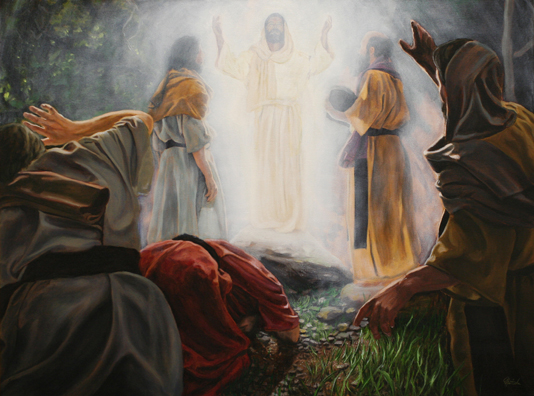
the-transfiguration

For unto us a child is born, unto us a son is given: and the government shall be upon his shoulder: and his name shall be called Wonderful, Counsellor, The mighty God, The everlasting Father, The Prince of Peace.

-Isaiah 9:6

There was a hymn we used to sing at the church where I grew up, called, “Sweet, Sweet Spirit.” You’ve probably heard it. It begins with, “There’s a sweet, sweet Spirit in this place….”

The song praised God for pouring His Spirit into our lives, and into our church. The song thanked God for what He was doing at that moment in the lives of each one present, then concluded with the following line of hope, “Without a doubt we’ll know that we have been revived, when we shall leave this place.”

Oddly enough, I used to hum that line to myself as I walked the halls of Jacksonville High School as a teenager. I looked forward to graduation, when I would leave school and home to try my hand in the real world. I had no doubt that I would be successful in life, that the blessings would pour in, and that I’d make my family and community proud. I couldn’t wait.

I could not wait to “be revived” on graduation day, when I “shall leave this place.” The promise of the graduation was what kept me going in school. (I had a good high school experience, but I’ve always seemed to look forward to the next stage in life).

You may think it silly to apply a hymn of praise and hope to high school graduation, and you’re probably right. Still, how many high school seniors today are anxiously awaiting May 31?

Scripture teaches that, just as high school students anticipate the coming commencement ceremony, we are to anticipate the coming of the Lord. For it is that day that the promises of God will come to full fruition. In fact, 2 Timothy 4:7-8 indicates that you can measure your faith by how much you look forward to the return of Christ.

Isaiah 9:6, often quoted around Christmas as it did foretell the birth of our Savior Jesus Christ, was more a prophecy about the hope He would bring than the fact He would be born.

Unto us a child is born. Jesus was born of the Jewish nation of Israel, just as God promised repeatedly in the Old Testament.

Unto us, a Son is given. God promised to give His only begotten Son for the salvation of the world.

The rest of the verse, often glazed over, is where the true hope is found.

Isaiah 9:6 says His name shall be called “Wonderful.” That is a word that has lost its meaning over the past few centuries. The original English word used in 1611 literally meant, “full of wonder.” The Hebrew word that was translated “wonderful” meant “miraculous.”

Not only was the birth of Jesus miraculous, but His entire ministry on Earth was a continual working of miracles, from the turning of the water into wine, to the raising of Lazarus from the dead. The miracles of Christ healed multitudes of people, fed thousands, restored hope for two sisters, and testified to the people that the promised Son of God was now among the people, and that Christ had come.

The people of the Old Testament looked forward to the One who would heal them. Likewise, we look forward to the One who will heal us. When the Lord returns and establishes His Kingdom on Earth, He will miraculously heal us all of our ailments, wash away our sin, put an end to the sin in the world, and usher in a perfect eternity of peace and prosperity. That will be a wonder, living in a Kingdom led by Christ, who is full of wonder. His name shall be called Wonderful.

His name shall be called “Counsellor.” This is an adviser, one who gives counsel, one who teaches, and one who plans. The teachings of Jesus Christ of Nazareth were so perfect, that even the religions that deny His divinity and Sonship admire His teaching. Those religions that reject Jesus as Messiah accept Him as a wise teacher.

In fact, my World History teacher in high school even noted that, “If you reject Christianity, you still have to admit that Jesus had some good ideas.”

The teachings of Christ were given both to the people of Bible times, and to us as well. His teachings shed light on the true meanings of the scriptures and God’s love toward mankind. If one wants to conform to God’s standard, or realize the love of God, one would do well to read, learn, and apply the teachings of Christ.

“His name shall be called… the mighty God, the everlasting Father.” Jesus Christ of Nazareth is God in the flesh. John 1:14 tells us that “The Word became flesh and dwelt among us.” John 1:1-2 tells us that the Word was God, and the Word was with God. Jesus told His disciples, “He who has seen Me has seen the Father.”

Think about that for a moment. God has always wanted to dwell with His people. It’s why He ordered the building of the tabernacle in Exodus. So, in order to dwell among us, He became a man, and lived our experience. How much love did God demonstrate in doing that?

This is why Hebrews 4:15-16 tells us we can trust the Lord to hear our prayers. He lived our experience, and is therefore empathetic.

This also opened the way for God to redeem us, seeing how He paid the price for our sins on the cross, thus removing the debt and guilt of sin from us. Romans 5:8 says “God demonstrated His love toward us, in that while we were yet sinners, Christ died for us.”

This is the hope promised to us in Isaiah 9:6, that God would redeem us through Christ, who would live our experience then purchase our salvation.

The final name attributed to Christ is “the Prince of Peace.” The Lord bought peace between us and God, and will bring everlasting peace into the world when He establishes His Kingdom.

There is a lot we can learn from the names of Christ given in Isaiah 9:6, but let us not forget God’s end game… to redeem us from sin, and to one day rescue us from the troubles of this world, taking us into the perfect world He intended for us in the beginning.

Knowing that these promises were made, kept, and will be kept should restore our hope as we celebrate the fulfillment of the first two phrases of Isaiah 9:6, “unto us a child is born, unto us a Son is given.” Celebrate the Lord’s birth this Christmas, and look forward to the joy that will follow.

–Leland Acker has served as pastor of Life Point Baptist Church since its inception in 2008. Sunday, He will bring a special Christmas message from Isaiah 9. Sunday School begins at 10 a.m., Morning Worship at 11 a.m. Life Point meets at the Early Chamber of Commerce at 104 E. Industrial Dr. in Early, TX. 

Hope

cropped-20130519_130256.jpg

For unto us a child is born, unto us a son is given: and the government shall be upon his shoulder: and his name shall be called Wonderful, Counsellor, The mighty God, The everlasting Father, The Prince of Peace.

-Isaiah 9:6

I can remember the exact moment my oldest son was born. I did not get to see his birth, as there was a curtain between me and the doctors performing the c-section. However, I can remember the exact moment because he cried, and the moment we heard his cry, my wife’s condition went from discomfort to absolute joy and ecstasy. I can still remember her tears of joy as we welcomed him into the world.

My wife delivered all three of our biological children via c-section, and each situation was different, but there was one thing that tied them all together. Regardless of the difficulty of the delivery (two were emergency c-sections), or the level of discomfort, all of that was secondary to her joy in holding our baby for the first time.

When our oldest daughter was born, my wife refused orders from the nurses to rest, demanding to hold her. When my oldest son was born, the hospital staff was surprised that we never sent him to the nursery so we could rest. When my youngest was born, immediately he and my wife became best friends.

There is this indescribable feeling that comes with the birth of a child. It’s a moment when you realize that your life is forever changed for the better. There’s joy. There’s hope. There are dreams, and there’s excitement. There’s a sudden desire to do better, and there’s a sense of responsibility knowing that this child has been entrusted to you by God for his care.

Isaiah 9:6 says “Unto us, a child is born.”

In the darkest days described by Isaiah 9:2, a child would be born unto the nation of Israel which would restore their hope. At that moment, Israel would be changed forever. His birth would bring joy and hope, and the nation would bring forth the Christ, through whom all the nations of the world would be blessed.

Think about what that meant for Mary and Joseph. Those two were chosen by God to raise His only begotten Son, who was the Savior of the world. Joy, hope, excitement, but what an incredible responsibility!

Isaiah 9:6 goes on to say, “Unto us, a Son is given.” This phrase takes the promise a little further. The child is born unto Israel. He would be one of them, but the Son would be given to the entire world.

The Son would be sent from the presence of God to live among men, as a man, and would conquer sin and death and reign forever. While this verse does not directly address the suffering He would endure to accomplish that, we know from other Bible passages that His suffering was what accomplished His mission of salvation.

It’s the giving of the Son that Jesus spoke about when He told Nicodemus in John 3:16, “For God so loved the world that He gave His only begotten Son, that whosoever believeth in Him should not perish, but have everlasting life.”

It is through His Son, given unto us, that hope, redemption and salvation came. It is that hope, redemption and salvation that gives us joy.

Jesus Christ is the child born unto us, the Son given to us, who brought salvation, joy and hope to us. He truly is the reason for the season.

Isaiah 9:6 as been fulfilled. God kept His promise. He is worthy to be praised and worshiped. Christmas Eve falls on a Sunday this year, and I can think of no better response than to dedicate that day to the Lord by attending worship at one of his churches.

–Leland Acker has served as pastor of Life Point Baptist Church since its inception in 2008. Sunday, He will bring a special Christmas message from Isaiah 9. Sunday School begins at 10 a.m., Morning Worship at 11 a.m. Life Point meets at the Early Chamber of Commerce at 104 E. Industrial Dr. in Early, TX. 

Light

golden-bible

And the light shineth in darkness; and the darkness comprehended it not.

-John 1:5

The gentle breeze blowing across Texas brought the summer night air to the perfect temperature, with the low summer humidity making the evening an absolute pleasure. I was on the 8th hole of the miniature golf course at FunSphere in Arlington, Tex. On the other side of Interstate 30, the lights of the newly opened “Ballpark in Arlington” were ablaze, illuminating a packed stadium as the Texas Rangers hosted the New York Yankees.

I was 16 at the time, enjoying an overnight trip with my church youth group, and we were having a blast. The evening included a trip to an all-u-can-eat pizza buffet, bowling, and the Funsphere, which was an amusement park including go-carts, laser tag, and a video arcade. Six Flags later bought it, and thus it no longer exists.

At that time in my life, attending a professional sporting event was a dream, and only a dream. The tickets, travel and parking were too much of a logistical challenge for my rural East Texas family. And despite the great time I was having, I couldn’t help but wonder what it would be like sitting along one of the baselines at the Ballpark, watching Pudge Rodriguez or Jose Canseco take it to the Yanks.

Beneath those lights were life, excitement, adventure and hope. Beneath those lights was the place to be.

In almost every context, the light is the place to be, whether you dream of being a professional athlete beneath the lights of a big-league stadium, or a performer beneath the Broadway lights. The light is hope. The light is prosperity. The light is victory.

Scripture refers to Jesus Christ as the Light of the world, and His light is far more than the excitement of a major league game, or the glory of a Broadway production. His light brings real hope.

Isaiah 9:2 says “The people that walked in darkness have seen a great light: they that dwell in the land of the shadow of death, upon them hath the light shined.” In this scripture, the Light is a source of hope and deliverance. It is redemption and restoration.

The people had walked in the hopeless degradation of Spiritual darkness, having spent their lives in idolatry, rebellion, sin and debauchery. The ensuing consequences destroyed their nation and wrecked their lives. Yet, the Light shined into their darkness.

Despite their sin and wickedness, the Lord loved them, and shone His perfect light to redeem them and bring them hope. When the people of Isaiah’s day heard that the light shined, they heard that their condition wasn’t the end. They heard the message of redemption, and had hope. The coming captivity would be temporary, and God would rescue them.

The Light of Jesus Christ works in our lives as well. When you turn from your sins and trust Jesus Christ as your personal Savior, He gives you hope, a confident expectation of the glory of His eternal Kingdom.

Next, the Light cleanses us. In the physical world, certain UV rays and types of lighting can be used to disinfect. In the Spiritual world, the light of Christ illuminates our works, showing our sin for what it is, and our righteous works for what they are.

Thus, Jesus said in John 3:19-21:

Light is come into the world, and men loved darkness rather than light, because their deeds were evil. For every one that doeth evil hateth the light, neither cometh to the light, lest his deeds should be reproved. But he that doeth truth cometh to the light, that his deeds may be made manifest, that they are wrought in God.

If our sin was the cause of our degradation and hopelessness, obviously we would want to escape that pattern. Sin, like drugs, is highly addictive, rendering the individual incapable of stopping an activity that is killing their soul and body.

What Christ does is highlight the sin in our lives, that our mind toward it changes, and our lives change from the inside out. Then, those changes in our lives are illuminated for all to see, which glorifies our Father in Heaven.

If we wish to escape the hopelessness and degradation of sin, then it follows that we should turn to Christ and allow Him to cleanse us of the sin that destroys us.

The problem, stated by Christ, is that man doesn’t want to do this. He doesn’t want to come to the light to have his deeds reproved, because he enjoys the sin, if not the effects. So, he stays away from the light, so that his sin is not reproved, corrected, and that he doesn’t have to see the sin for what it is. This leads to condemnation.

It’s easy to neglect your physical health if you never count calories, or look in the mirror. It’s easy to neglect your financial health if you never track your expenses. It’s easy to neglect your spiritual health if you never evaluate your life in the Light of Christ by reading the scriptures or attending church. Christ calls this staying in the darkness. In doing so, you can deny the harm that you are doing to yourself, but only until the effects are irreversible, or until you see the Lord on judgment day.

Therefore, we are commanded to come into the Light. Enter the presence of Christ through prayer and Bible study. Attend church. Join a church. Accept the Lord as your Savior if you haven’t already, and allow Him to cleanse you with the light of his word.

Finally, the Light gives us life more abundantly. The scripture tells us that night will never fall in Heaven, and we will live in the perfect light given by our Lord and Savior Jesus Christ. Every description of Heaven is one of paradise. No pain, no sickness, no conflict. Just perfect peace and prosperity. This is the Kingdom we anticipate, and to which we look forward.

We have hope of entering this Kingdom because Christ died for our sins on the cross, then rose again the third day. Just like those beneath the lights of the Ballpark in Arlington, we, too, will enjoy the good life.

John 1:5 tells us that the light shines in darkness, and that the darkness couldn’t comprehend, or overtake it. As certain as flipping on a light switch drives the darkness from a room, the Lord’s final victory, and our glorification, is certain. So continue to trust the Lord, believe in the hope that He brings, and look forward to His Kingdom.

For what it’s worth, I did eventually get to go to a Texas Rangers game. I won tickets in 1996, and watched an afternoon game where the Rangers blew a 5-3 lead to lose to the Twins 9-5. Still, it was a fantastic experience.

–Leland Acker has served as pastor of Life Point Baptist Church since its inception in 2008. Sunday, He will bring a special Christmas message from Isaiah 9. Sunday School begins at 10 a.m., Morning Worship at 11 a.m. Life Point meets at the Early Chamber of Commerce at 104 E. Industrial Dr. in Early, TX.