One of the great tragedies of our day is that people are in bondage to sin, yet because of the pleasure of sin, they don’t realize they’re trapped.
faith
Cards on the Table, This is Truth!
The conversation continues between Jesus and the Pharisees in the aftermath of His forgiving the woman who was taken in the act of adultery in John 8. The Pharisees are challenging Jesus’ authority and trying to discredit Him, while Jesus preaches the truth and calls them out on their Spiritual ignorance.
In this message, Pastor Leland Acker warns about the dangers of studying scripture without learning Who God is, and how many high-level Bible scholars spend lifetimes reading and studying scripture without knowing God. Such was the case for the Pharisees.
So, in this passage, Jesus reminded the Pharisees that, like all non-believers, they stand condemned before God. The only escape from this condemnation is through faith in Christ.
Jesus then confirmed His identity and promised blessings to the believers. Listen in as Pastor Leland Acker brings us an encouraging word from this powerful passage.
What is Truth?

Having pardoned the woman taken in adultery, confronting the Pharisees for their own sin and addressing their unbelief, Jesus then turned His attention to the people that believed on Him. In a word of encouragement, He said, “If ye continue in my word, then ye are my disciples indeed. And ye shall know the truth, and the truth shall set you free.”
How amazing it must be to know the truth and to be set free by it. It seems simple, yet liberating. Easy, yet hopeful.
Then, questions arise in our souls. Questions like the one that plagued Pilate, “What is truth (John 18:38)?” And, “From what are we being set free?”
To answer these questions, lets travel back in time to the days of Christ. Israel was under Roman occupation, and the people faced oppression, not only from the Roman government and military, but from many of their own people.
From the publicans who enriched themselves by extorting tax money from the people, to the religious leaders who enriched themselves by seizing power through the religious institutions. For the people who followed Jesus, there were few points of hope, save for one… that the Messiah would come and set everything straight.
As Jesus walked the earth, the people had become hopeful. The timing of the arrival of the Messiah was nearing as predicted by the Prophet Daniel. John the Baptist fulfilled scriptures in Isaiah concerning the forerunner to the Christ, and John himself pointed out Jesus as being that Christ.
As Jesus taught and ministered, many of the people came to believe that He was, in fact, the Christ that had been promised to deliver Israel. Those who followed found salvation, love, compassion and deliverance in His words.
The people who were constantly being called upon by their own religious leaders to sacrifice more, to suffer more, and to obey more, were being told by Jesus, “Come unto Me, and I shall give you rest.” And, for a time, they accepted that invitation.
Jesus knew that there would be those who would follow for a while, and leave. Indeed, it is a common thing when one is overcome with the struggles of life to cling to religion, or a religious leader, in order to find some sort of answer or resolution. Often, when that resolution is found, or when hope of a resolution is lost, the follower will fall back to their old ways.
It was that pattern that Jesus spoke to when He said, “If ye continue in my word, then ye are my disciples indeed.” The ones who are truly the followers of Christ are those who continue to follow and trust Him regardless of outcome, who continue with Him until the end.
That level of dedication leads one to know the truth.
What is truth?
Truth is objectively true, and which is true under any consideration. Truth is real regardless of how men may perceive it.
Regarding the Lord, truth is the reality of the Gospel, and the blessing of hope that comes through the Gospel.
Jesus told His followers that if they continued in His word, then they would truly be His disciples. They would know the truth of the Gospel, Who He is, and the truth of God’s grace, and thus they would be freed from the oppression of the religious leaders and the anxieties of living under Roman rule.
For us today, continuing in the word means continually learning the truth of the Gospel from the scriptures. The more we do that, the better we know and understand the Gospel, the more we know the truth, and the more we are set free by the truth.
Being set free by the truth means being freed from fear of God’s judgment, from the questions of whether we’re good enough to get into Heaven, and freed from the fears peddled to us by cable news. We have been set free, because we know the One who holds tomorrow, the One who holds us, and we know that our eternal life and deliverance is in His hand, not ours.
And that is liberating.
Jesus: Light of the World, Destroyer of Darkness
In chapter 8, the Apostle John records the account of the woman taken in adultery, in which Pharisees challenged Jesus by bringing a woman who was allegedly caught in the act of adultery, and demanding that Jesus tell them what her consequence should be.
In that famous passage of scripture, Jesus told the Pharisees that the one without sin could cast the first stone. After they all left, realizing both their own sin and their inability to win this particular debate with Jesus, the Lord asked the woman where her accusers were. When she said no one stood there to condemn her, Jesus said, “Neither do I condemn you. Go, and sin no more.”
John 8 is a beautiful account of the sinless perfection of Christ, and His grace and mercy upon us as we struggle with sin.
After this incident, Jesus proclaimed, “I am the light of the world: he that followeth me shall not walk in darkness, but shall have the light of life.”
Jesus being the Light of the world is a recurring theme in the book of John, beginning with John 1, in which states that “in Him was life, and the life was the Light of men.”
With that, we are reminded that life with all of its meaning, fulfillment and blessings, comes from Christ. He is the source of life, intellect and creativity. This means that, ultimately, Christ is the source of all that is good in life.
Check out this message, as Pastor Leland Acker discusses how Christ being the Light of the world brings goodness to our lives and gives us deliverance from the darkness of this world.
One Focus, One Mind, One Church
In John 17, Jesus has just observed the Passover meal with His disciples. Having broken the unleavened bread and shared the wine, thus instituting the Lord’s supper, Jesus spent the next few moments preparing the disciples for what would come next. From John 13-16, He prepared His disciples for His arrest, trials, and crucifixion.
As He discussed these things with His disciples, He reminded them of God’s eternal plan through all of it, and how it would all work to their redemption. Still, things weighed heavy on the heart of our Lord, and on the hearts of the disciples.
So, in John 17, Jesus lifted up His prayer to God. In that prayer, He prayed for His own glorification, for the protection of the disciples, and then He brings the prayer to its glorious conclusion in verses 20-26 as He prayed for the unity and glorification of His disciples.
You read that right… the unity, and the glorification of His disciples.
Christ prayed that His disciples would be one, that they would be unified. Since verse 20 shows that Christ not only prayed for His disciples, but also for all future believers, we can conclude that He prayed for our unity as well.
This unity that Christ prayed for was not a generic hope that we would all be able to get along. Unity can only come from being centered around a central idea, theme, ethic or cause. There has to be a basis for unity.
In His prayer, the Lord prayed that we would be one in God. The basis for our unity is the Lord Jesus, and our Heavenly Father. In a broader sense, the basis of our unity would be in what Christ was about to accomplish on the cross.
Unity among believers can only happen if we are centered upon the Gospel. If we lose our focus on the Gospel, we will find ourselves preoccupied with different things, and those different things will divide us. Therefore, we must continually focus and refocus ourselves on the Gospel.
As Alastair Begg once preached, we must preach the Gospel to ourselves daily to prevent ourselves from drifting from the Lord, and placing our trust in ourselves and our own understanding.
Indeed, once we lose focus on the Gospel, we become more focused on the menial things of this world, and such drift more toward selfishness. This is the cause for most church divisions.
Show me a church that is divided over worship style, and I’ll show you a church that has lost its focus on the Gospel. Show me a church divided over carpet color, sanctuary decor, and programs, and I will show you a church that has lost its Gospel.
Show me a church building that has been placed on the market as the congregation it once housed disbanded, and I will show you a church that forgot the reason for its existence.
When we lose the Gospel, we lose unity, we lose purpose, we lose everything.
Jesus prayed that we would be one. That we would be united in will and understanding, that we would hold the same mission. That can only be accomplished through our unified focus on the Gospel.
Jesus then prayed that we would be glorified. Specifically, in His prayer He mentioned that the glory that was given to Him was also given to His disciples. This “glory” is translated from the Greek, Doxa, from which we get the title of the song, Doxology, which means to make renown, or to be well thought of.
Christ not only made His name great in the Earth by completing the Gospel, He lifted up the names of His disciples, too. This was done so that the disciples could turn around and glorify the Lord.
There are aspects to our transformation in the Gospel that make us stand out in this world. The purpose behind our standing out is to direct people to the Gospel.
The purpose of all of this is to effectively proclaim the Gospel and lead others to salvation. Is that a purpose we live by? Or do we get in the way with our earthly and selfish desires? To ensure that we do the former, and not the latter, we must be Gospel-focused.
Trying to Solve Spiritual Problems with Worldly Solutions
The scene must have puzzled Pilate. The man who had entered Jerusalem as the Messiah was now in custody and detained in his judgment hall. Even more puzzling, it was this Messiah’s own people who arrested Him and turned Him in.
The traditional understanding of Holy Week is that Jesus entered Jerusalem on Palm Sunday, so named because as He rode the donkey colt into Jerusalem, multitudes of people laid palm leaves in his path while cheering, “Hosanna, Hosanna, Blessed is He that comes in the name of the Lord.”
This caught the attention of the chief priests and Pharisees, who wanted Jesus to tell the people to quieten down, saying, “Master, rebuke your disciples.” Such an event likely caught the attention of Pilate, whose job it was to keep the peace in Jerusalem, a task that was seemingly impossible.
With the people’s desire to overthrow Roman rule, and with a popular Messiah entering the city to the cheers of the crowd, Pilate was possibly bracing for the worst. Then, he awakens to find that the Pharisees had arrested that Messiah, and He was being held in the judgment hall.
When Pilate asked Jesus why He had been arrested, Jesus said, “My Kingdom is not of this world.”
The Pharisees opposed Jesus because they wanted an earthly kingdom, and they wanted to rule that kingdom. Pilate lived in the flesh, and in the tangible aspects of this world. Even though he saw the truth of Who Christ was, and the words He spoke, Pilate was unable to repent and trust the Lord as His Savior.
And through this account in John 18, we find that the Kingdom of God is a Spiritual Kingdom. It being a Spiritual Kingdom, that means that our mission is a Spiritual mission, our priorities should be Spiritual priorities, and that the things of this world are mere distractions.
Check out the above video, where Pastor Leland Acker encourages us to live for the Spiritual things of God, not the temporary things of this earth.
Sanctified and Sent (John 17:17-19)
As Jesus prayed the High Priestly Prayer in John 17, his time with the disciples was winding down. There in the upper room, Jesus and the disciples had just observed the Passover, and Christ had just instituted the Lord’s Supper. Both of those observances symbolized what He was about to do.
The Passover was a celebration of God leading the children of Israel out of Egypt by delivering them from the curse of the death angel and by leading them through the Red Sea. To commemorate this event, the Israelites were commanded by scripture to sacrifice a yearling lamb, without spot or blemish, to sweep all leaven out of the home, and to eat unleavened bread and drink wine (but not in a way to get drunk).
In scripture, Egypt is a symbol of the bondage of sin. The Lamb symbolizes a sacrifice made to God to atone for sin. The blood pays the penalty for sin. The Passover celebration pictured Christ, that sacrificial Lamb that took away the sins of the world, and by so doing, led His people out of the bondage of sin.
The unleavened bread given by the Lord as He instituted the Lord’s Supper symbolized His body, and the wine symbolized the blood that redeemed us from sin. This was about to be fulfilled by Christ as He went to the cross.
This truly was a powerful moment in the life of Christ, the lives of His disciples, and truly one of the most powerful moments for all human history. The symbols of our redemption intersecting with our moment of redemption, coupled with the imminent separation of Christ from His beloved disciples, drove our Lord to prayer, and thus we have recorded in the Gospel of John the High Priestly Prayer of Christ.
In John 17:17-19, Jesus prays for God to sanctify His disciples through truth, noting that God’s word is truth, and declares that He is sending the disciples into the world. From this, we learn about the sanctification of the disciples of Christ, the mission of the disciples of Christ, and the sanctification of Christ Himself.

In John 17:17, Jesus prayed, “Sanctify them through thy truth, thy word is truth.”
The word “sanctify” was translated from the Greek hagiason, which in this case means to purify internally by the reformation of the soul.
In this prayer, Jesus was praying that God would transform the disciples from the inside out through His truth, which is written in His word, the Bible. Indeed, the Bible has transformative power, especially when one completely grasps the central message of the scriptures.
The Gospel, how Jesus died for our sins, according to the scriptures, was buried, and rose again the third day is the central theme of the Bible. Scripture fills out this message by introducing us to God through the creation in Genesis 1, demonstrating Him as the source of our lives in Genesis 2, depicting His formulation of our redemption in the immediate aftermath of our sin in Genesis 3:15, teaching that He demands sacrifice by faith and not empty works in Genesis 4, showing His gracious rescue of His people in Genesis 6-8, His ultimate sacrifice in the story of Abraham and Isaac, His redemption of His people from the bondage of sin in Exodus through Deuteronomy, and His provision for the faith-filled life in the book of Joshua.
Psalms declares His glory. Song of Solomon declares His passion. Isaiah declares His salvation. The four Gospels the events of the life of Christ that purchased our redemption, and Revelation foretells God’s final victory and our final deliverance.
These scriptures depict a God who gave us life so that we could have fellowship with Him, and Him companionship with us. Instead, we rejected Him and tried to overthrow His presence from our lives. Instead of accepting this rejection and allowing us to die the death that comes from cutting ourselves off from the source of life, He (through Christ) died that death on our behalf so we could be reconciled, endowed with eternal life, and reunited with Him in His Kingdom.
The deeper we understand this truth, the deeper we understand the Gospel, the more our souls are transformed into the people God intended on us being. The more fully we understand the Gospel, the more sanctified we are.
After praying for our sanctification, Christ then told why He wanted us sanctified.

Jesus told the Father that, as He was sent into the world, He was sending His disciples into the world.
In Matthew 28:19-20, Mark 16:15 and Acts 1:8, we find that Christ sent His disciples into the world to preach and bear witness of the Gospel. Like His disciples, we are called to go into all the world preaching the Gospel to all who will listen, and baptizing those who believe, following up with good doctrinal teaching.
That is the reason we live as followers of Christ, and the reason our church exists.
Finally, Christ said that He sanctified Himself so that the disciples could be sanctified. In this sense, Christ was set apart, consecrated, and holy, as He prepared to go to the cross to redeem us.
These few verses in the larger High Priestly Prayer of Christ should remind us of the transformation God has worked in our lives, and motivate us to carry His Gospel to a lost and dying world.
Transformed by the Word of God (John 17:14-16)
As Jesus prayed in John 17:14, He made a profound statement. He said, “I have given them thy word; and the world hath hated them, because they are not of the world, even as I am not of the world.”
This statement proclaims how Jesus Christ transformed His disciples by giving them God’s word. Because they were transformed, they were no longer of the world, meaning they no longer held the world’s mindset. Thus, the world hated them.
Now when Jesus said that He gave them God’s word, He didn’t mean that He gave them the scriptures. The disciples had known the scriptures from the time they were children. Starting at the age of five, they would have begun attending school, where they would spend several hours per day memorizing the Old Testament.
The Old Testament scriptures were so familiar to the disciples, that Jesus could say things like, “You have heard it said, (quotes Old Testament scripture),” and the disciples would know the scripture and where to find it. You find the same phenomenon with the Apostle Paul, who would write things like, “As it is written…” before quoting Old Testament scripture, with the expectation that the reader would know the verse.
However, just because one knows what the scripture says does not mean that they know the Word. Often it is that men know the scripture without knowing the heart of God. They know the verses without knowing the God Who inspired them. They know the words without knowing what they actually teach.
Scripture without the Lord is dead. Such was the case for the Pharisees and the Sadducees of Jesus’ day. They knew the entire Old Testament word for word, but they didn’t know God. They didn’t know the Gospel. They didn’t understand God’s master plan, which is our redemption and reconciliation to Him.
Thus, to the Pharisees and Sadducees, the Old Testament became an endless list of proclamations, rules, laws, ceremonies, commandments, and ordinances. Knowing these scriptures meant endless word studies, explorations of word definitions, and debating whether the words actually meant what they said.
This impacted the way the scriptures were taught as the disciples were growing up. So, when Jesus said, “I have given them thy word,” He was saying that He completed the word they knew by giving them the Living Word, Himself.
He accomplished this by speaking past the noise of doctrinal debates by going to the heart of what the scriptures addressed. While the Pharisees and Sadducees quoted the commandment, “Thou shalt not commit adultery,” before debating what the definition of “adultery” was, Jesus said, “If you look upon a woman to lust after her, you have committed adultery in your heart.”
In that teaching, Jesus pointed out that the sin in your heart is what separates you from God.

Many people parse words from the scriptures to delude themselves into thinking that they haven’t sinned. They redefine terms, they make excuses or find exceptions. However, when we apply the teachings of Christ to the words of the Law, we find not only are we all sinners, but we still have sin in our hearts.
It’s a sentiment the Apostle Paul knew all too well when He wrote, “But I see another law in my members, warring against the law of my mind, and bringing me into captivity to the law of sin which is in my members. 24 O wretched man that I am! who shall deliver me from the body of this death? 25 I thank God through Jesus Christ our Lord. So then with the mind I myself serve the law of God; but with the flesh the law of sin.”
In Romans 7, Paul related how he struggled with sin, not doing the things he knew he should, while doing the things he knew he shouldn’t. It came to the point that even when he did the right things, he did those things with sin in his heart. It all came to the conclusion of Paul confessing his wretchedness and proclaiming his faith that Christ would redeem him from his brokenness.
Paul had this keen awareness of his broken condition because he not only knew the scriptures, but he knew the God behind the scriptures. Thus, in Galatians 3:24, he wrote that the “law is our schoolmaster to bring us unto Christ, that we might be justified by faith.”
As we continue to hold ourselves up to the light of the scriptures and the sinless perfection of Christ, we continually see our need for his grace and forgiveness. Thus, we find ourselves continually trusting in His forgiveness, and as we do that, we find ourselves being transformed by the scriptures to the point that we become more aligned with the values, character, and mission of Christ.
When that happens, we are no longer of the world, as Christ said. And when we are no longer of the world, we no longer have its values and mindset, it rejects us and we become its enemy.
We should not fear this, however, as Christ went on to pray that God would not take us out of the world, but that He would protect us from the evil one.
Christ wants us to be in the world so we can lead others to salvation. However, He wants us to be protected from being overcome by the world, absorbed by the world, or destroyed by the evil one. Knowing that this was Jesus’ prayer for us, and that the Father answers Jesus’ prayers, this should give us confidence.
So, spend time in the word, get to know the Lord through the word, and let that transform you. Then, boldly carry that word to others.
Why the fruit was a big deal, and why the tree was even in the garden
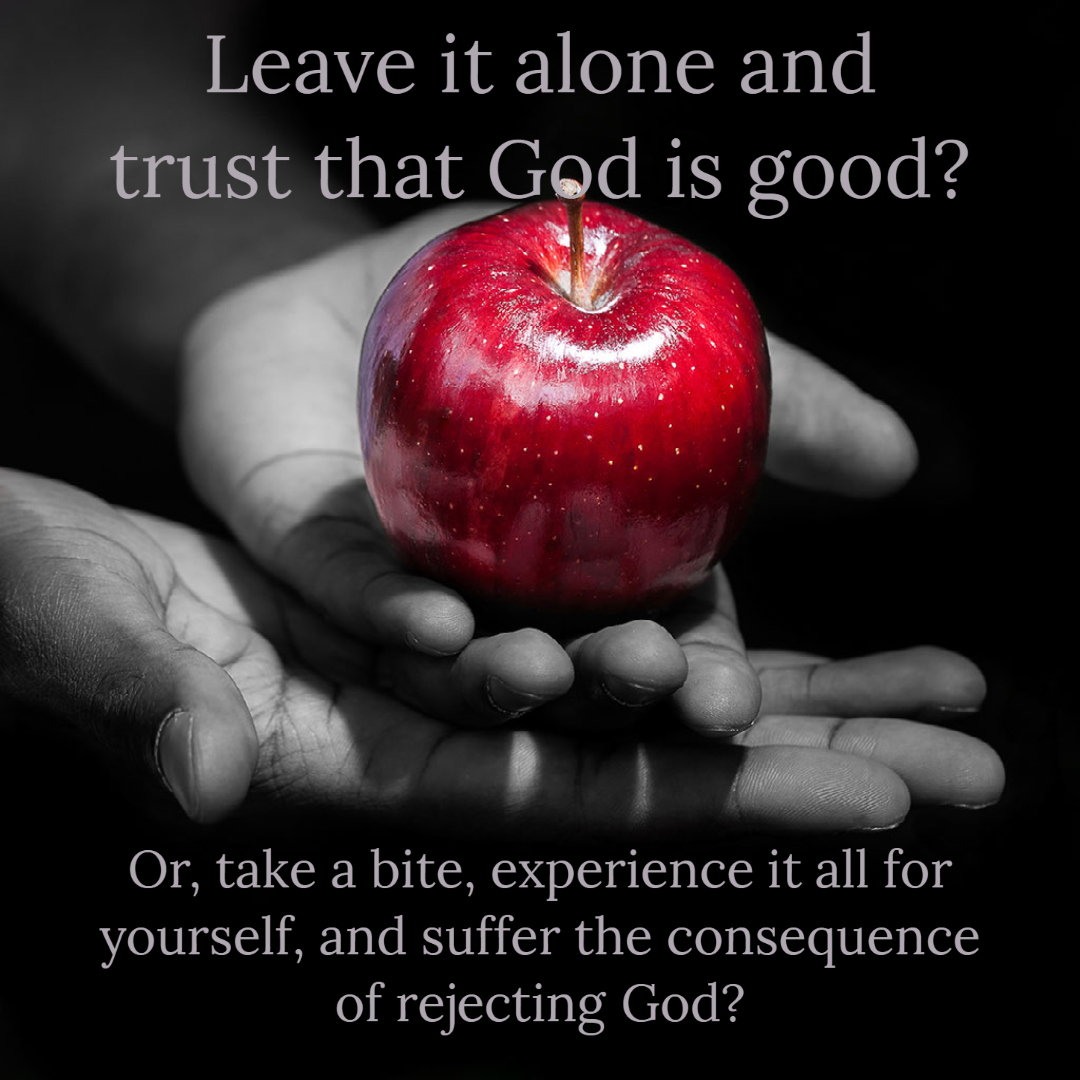
As creation and Christianity are debated between believers and skeptics, two questions often arise. The first is why God put the tree of knowledge of good and evil in the garden, and the second is why eating of that tree carried the death penalty.
In the below-posted video, Pastor Leland Acker makes the point that to fully give Adam and Eve life, they had to have the choice, the free-will to decide whether to follow God or reject Him.
When God formed man from the dust of the ground, and man became a living soul, man was gifted with the highest form of life. Far beyond existing, man was given self-awareness, consciousness, the ability to reason, to create, to problem-solve, to dream, and to cultivate. God, having created man in His image, bestowed upon man many of His own divine attributes.
Creating man to be a living soul, God wanted him to have the fulness of life. In order for man to be able to reason, create, solve and dream, man would also have to be given the choice of whether to trust and obey the Lord. God so wanted us to have the fulness of life, God gave us the choice.
So, to create the opportunity for that choice, God placed the tree of knowledge of good and evil in the midst of the garden of Eden. While one may wonder why knowledge would be a bad thing, keep in mind that this knowledge is an experiential knowledge. By eating the fruit, man would not be suddenly indwelt with endless information, rather he would come to learn good and evil by experiencing both. This knowledge would be gained apart from God, without His help and leadership.
Pursuing knowledge in this way would amount to a complete rejection of God.
So, man had a choice. Trust that God is good and live forever in His presence, or doubt God’s goodness, overthrow His presence in man’s life, and strike out on his own. The former carried with it the promise of eternal blessing. The latter carried a risk of death and eternal judgment.
The serpent (a.k.a. Satan) tempted Adam and Eve with just that. In his speech to Eve in Genesis 3, Satan said, “You will not die. For God knows that in the day that you eat thereof, you will be as gods, knowing good and evil.”
Genesis 3:6 records the logic Adam and Eve used when deciding to eat the fruit. It says, “And when the woman saw that the tree was good for food, and that it was pleasant to the eyes, and a tree to be desired to make one wise, she took of the fruit thereof, and did eat, and gave also unto her husband with her; and he did eat.”
The logic was, “It’s good to eat, it looks good, and it will make us wise (as gods.)” They ate so they could experience the pleasures of everything, take power over their own lives, and eject God from the life that He gave them.
This was not a simple mistake or a poor food choice. It was an all-out rebellion against God. They cut themselves off from God, Who gave them life.
And when you cut yourself off from the source of life, you die.
This would be a good time to pause and reflect. God said, “In the day that you eat of this fruit, you will surely die.”
Satan said, “In the day that you eat this fruit, you will be as gods.”
The question arises, “Where are Adam and Eve today?” Based on the answer to that question, who was telling the truth, God? Or Satan?
If you’ve ever attended a funeral, you know the answer to that question. There is good news, however. In the same chapter, God offered a way of redemption. By promising that the seed of the woman would crush the head of the serpent, while suffering a death-blow Himself, God promised a savior, a redeemer, who would come and save His people from the death that comes as a result of sin.
That Savior was Jesus Christ, who both defeated Satan and suffered death upon the cross, and obtained final victory through the resurrection. Belief in this brings salvation and eternal life, and wins God’s favor.
The result of that salvation is being welcomed into His eternal Kingdom, where God will have restored life to what He intended on it being in the Garden.
So, with all that in mind, trust that God is good. Trust in Him, and place your faith in the death Jesus died on the cross for your forgiveness of sin. Then leave that sinful lifestyle behind and follow Him.
Safe and Sound (John 17:9-10)
Do we truly realize what our Lord Jesus Christ has done for us?
Our Lord gave us life. Scripture teaches that Christ was the Word which was in the beginning with God, and was God. That all things (ourselves included) were created by Him, and without Him nothing was made that was made.
In Him was life, and the life was the light of men.
The Lord created man and gave him life, so that he became a living soul. Our consciousness, creativity, dreams, and problem-solving ability are all effects of this life that the Lord gave us.

And when man rebelled against God, not only through disobedience, but through an attempt to overthrow God’s power and authority through that disobedience, the Lord redeemed us from the death and condemnation that came as a result.
To do that, He became man, lived the life of a man, endured the same trials and tribulations we do on a daily basis, yet He did so without sin (Hebrews 4:15-16).
Scripture says He came into His own, and we didn’t receive Him, nor did we recognize Him. In fact, we rejected and betrayed Him, turned Him over to the Romans and had Him crucified.
That is the greatest sin ever perpetrated in the history of the world, the sin of rejecting Christ and nailing Him to the cross.
Yet, even in that, He endured the wrath of God on our behalf, so that we could be cleared of all guilt and could stand faultless before God. He even prayed, “Lord, forgive them for they know not what they do.”
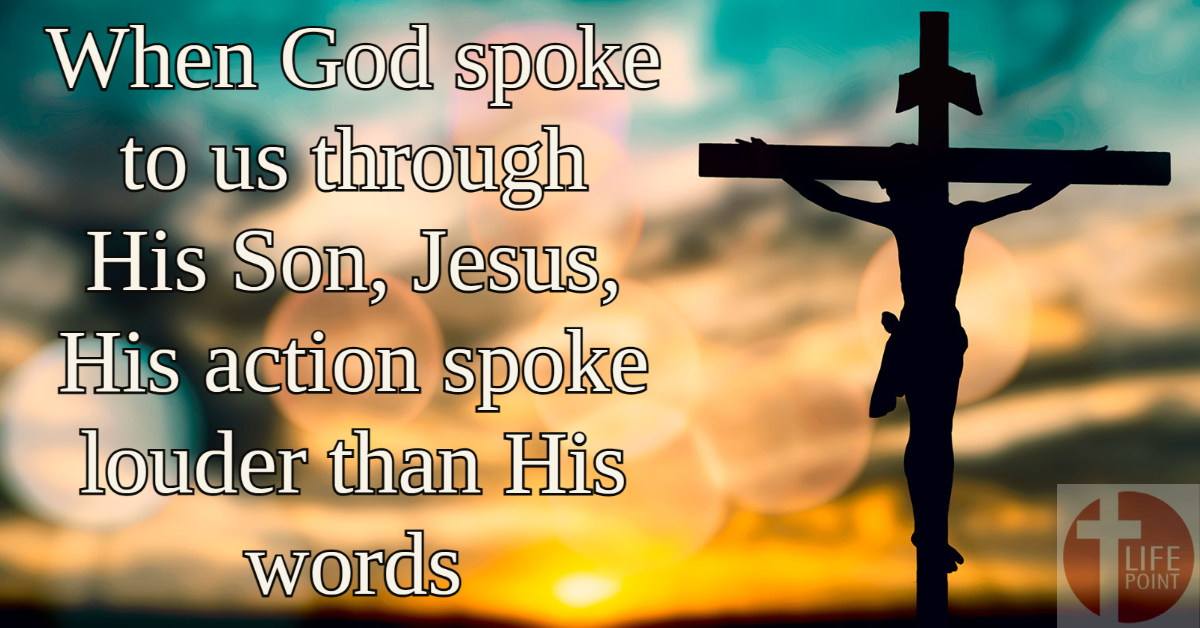
Having paid for our sins on the cross, the Lord resurrected on the third day, conquering death and the grave, and later ascended to the right hand of the throne of God where He ever lives to make intercession for us. He maintains our salvation by continually putting our cause before the Father in Heaven.
So, in John 17:9-10, it makes perfect sense that Jesus would clarify to the Father that He is praying for us. He said, “ I pray for them: I pray not for the world, but for them which thou hast given me; for they are thine. And all mine are thine, and thine are mine; and I am glorified in them.”
In that statement, Jesus said that He prays for us, that we are securely His, and that He finds glory in us.
Jesus prays for us. He earnestly pleads before the Father on our behalf, and He advocates for us. He stated that He prayed for “them,” and not the world. “Them” are His disciples, and not only His disciples, but all those who would believe based on their words. Therefore, since we have all become believers based on their words, then this prayer is for us as well.
And we know that Christ prays for us, because Hebrews 7:25 says that He “ever liveth to make intercession” for us. He intercedes, advocates for us. Advocacy… we don’t often associate that word with Christ, but it is truly what He does for us.
1 John 2:1-2 says “My little children, these things write I unto you, that ye sin not. And if any man sin, we have an advocate with the Father, Jesus Christ the righteous: And he is the propitiation for our sins: and not for ours only, but also for the sins of the whole world.”
John told us to sin not. That means to leave sin behind, to leave the sinful lifestyle behind, to leave “the life.”
However, if anyone sins, “we have an advocate with the Father, Jesus Christ the righteous.” He truly is our advocate.
His advocacy is one reason we are secure in our salvation, if we know Him as Savior.
Jesus said in John 17:9-10, “all mine are thine and thine are mine.” We belong to God, and in John 10, Jesus said, “no man is able to pluck them from my hand.” We have been passed from death to life, from condemnation to salvation, from guilt to innocence.
Then Jesus concludes this verse by saying, “and I am glorified in them.”
When Jesus said He was glorified in His disciples, it means His disciples bring him honor, renown, and cause Him to be well-known in a good day. This was something Jesus said had already happened. Simply by following Him, remaining faithful to Him even when all others walked away, and preaching His Kingdom, the disciples had already glorified Jesus.
When we remain faithful to the Lord, we glorify Him as well.
So, in light of this passage, knowing that Jesus prays for us, has secured our salvation, and is glorified in us, let us spend time in prayer, trusting in His forgiveness and redemption, and promoting His Gospel.
 The Point...