In Genesis 32, Jacob is following God’s direction to return to the Promised Land, however, there’s just one problem… Esau. The last time Jacob heard from Esau, Esau wanted to kill him. No doubt Esau still lived there, but the question was whether Esau was still angry. Despite God showing his favor upon Jacob in a very favorable way, Jacob still acts as if he is doomed once he sees Esau. That struggle in his faith sparked an epic wrestling match that continues to have implications today. Listen to our latest episode of The Gospel Expedition, on YouTube, or on Soundcloud.
Genesis
Gospel Expedition: Selling the Birthright
Esau was a cunning hunter, a barbecue pitmaster, his father’s pride and joy, and a man who could get things done. He saw himself as a winner, was powerful and strong.
Jacob was a plain man, dwelt in the tents, and was an accomplished chef, administrator, and an excellent marketer.
Though they were brothers, and were very skilled in their vocations, their rivalry was one of the bitterest this world has ever seen. This rivalry would see Jacob deceiving their father Isaac, and swindling Esau in an underhanded trade agreement over lunch. And this rivalry would see Esau set out to murder Jacob in revenge for his antics.
In Genesis 25:27-34, Esau returns home after a day in the fields. Esau, the older brother, holds the birthright to his father’s estate by default. Being the holder of the birthright, the assumption is that he would also inherit the promises God made to Abraham, which had in turn been handed down to Isaac.
Jacob, the younger brother, knew that God’s promise would be handed down to him. This was a promise God made to Rebekah, his mother. Jacob understood that God’s favor and blessing was upon him, but for some reason, Jacob still felt that he had to be the one to make things happen.
So, when an exhausted Esau returns home after a tough day in the field, Jacob saw an opportunity. This occasion would see Esau denounce his birthright and God’s blessing, and would see Jacob put forth a dubious sales pitch in order to scam Esau out of the birthright.
Listen to The Gospel Expedition’s Episode 25, “Selling the Birthright,” on YouTube or Soundcloud.
What Made Enoch Special

Genesis 5 says Enoch walked with God… how did he do that?
When scripture discusses our walk, it is referring to our lifestyle. So, when scripture says Enoch walked with God, it means that Enoch lived a lifestyle of faith in the Lord. He took time to learn who God is, what God wanted, and he had an active prayer life.
What made Enoch special was a simple willingness to trust God. While that sounds simple, it’s something few are willing to do.
Walking with God is not something reserved for the super spiritual. Anyone can do it, so long as they are willing to build their life around their faith in the Lord.
New Episode: Jacob Have I Loved…

One of the most amazing things about God, and one of the unique things about the Christian faith, is how God can take a deeply flawed individual and transform him, using him in an amazing way. One of the most iconic stories in the Bible about this is the story of Jacob.
Jacob lived his entire life under God’s favor. God had favored him from the time he was conceived, and throughout his life, Jacob was reminded by God and others of the Lord’s favor upon him. Yet, Jacob continually lived as if he had to work it out on his own. That lack of faith led to some of Jacob’s biggest sins and mistakes, and cost him dearly.
However, by the end of his life, we find Jacob trusting and worshipping God. Take a listen to “Jacob Have I Loved,” from the Gospel Expedition Podcast, via Soundcloud or YouTube, below:
Cain vs. Abel
In Genesis 4, Cain and Abel both brought offerings to the LORD. Scripture tells us that Cain brought of the fruit of the ground, which makes sense because he grew crops for a living. Abel, on the other hand, brought one of the firstlings of his flock, which also makes sense as Abel kept sheep for a living.
Now, Genesis 4 tells us that God had respect for Abel’s offering, but not Cain’s. As a result, Cain became very upset. God confronted Cain about his attitude, saying, “If you do well, won’t you be accepted? And if not, sin lies at the door.”
Cain did not do well, however. As he and Abel worked in the field, Cain vented his frustration on Abel, resulting in a fight that led to Cain killing Abel. Cain was subsequently banished, leading him to found a godless society. Adam and Eve had another son, who fathered the Godly lineage in the pre-flood world.
Such set the stage for the downfall of mankind, leading to the flood in Genesis 6-9.

In taking all of this into consideration, the question is often posed, “Why did God respect Abel’s offering, but not Cain’s?”
One answer commonly given is that Abel offered a blood sacrifice, while Cain did not. While this explanation harmonizes with the Gospel pattern of the shedding of blood for the remission of sins, the fact is that there is little Biblical evidence for it, especially when you consider that grain offerings were a completely legitimate part of the temple system of worship in the Old Testament.
The explanation with scriptural evidence is actually much simpler. Abel offered his sacrifice by faith, whereas Cain did not.
Hebrews 11:4 says, “By faith Abel offered unto God a more excellent sacrifice than Cain, by which he obtained witness that he was righteous, God testifying of his gifts: and by it he being dead yet speaketh.”
Abel offered his sacrifice by faith. He knew God was God, trusted in His goodness, and rested in His grace.
On the other hand, Cain lacked this faith. He obviously knew God existed, but did not trust God’s goodness and grace. For Cain, the offering was more of an obligation than an offer of thanksgiving or worship. Thus, God rejected it.
Scripture is very clear, and the point is driven home in Hebrews 11. What pleases God is faith, that simple trust in His existence and grace. While that faith motivates action, the fact is without that faith, the most righteous acts in the world will not please God.
So, with all that in mind, do you have faith. Do you believe that God is? And do you trust in His goodness and grace? (Hebrews 11:6)
And if so, are you living by that faith? May God grant you clarity as you reflect on your faith.
You Best Believe in Love Stories, Because You’re in One.
What was the happiest moment in human history?
The most glorious, victorious moment would be when Christ paid for our sins on the cross and then rose from the grave, conquering death.
But, what was the happiest moment in history?
To answer that question, what is your happiest memory, excluding your salvation?
Ask this question to the general public, and you will find that most people’s happiest memories involve their families and loved ones. Such memories involve weddings, the birth of children, family reunions, Christmas celebrations with the family, or just the memory of how you used to spend time together.
Our best memories involve the ones we love, and those times are often the happiest times of our lives.
With that in mind, what was the happiest memory from human history?
Genesis 2:15-20 records how God spent personal time with Adam, having placed him in the Garden of Eden to keep and dress it, and creating animals for Adam to name. Genesis 3:8 records how Adam and Eve heard the voice of the LORD walking in the garden in the cool of the day, which gives you the idea that those walks were common, if not daily.
Reading between the lines of Genesis 2-3, you get the idea that life was good. God and man dwelt together, spent time together, created things together, and even dreamed together. Before the fall of man, there was no sin in the world, no illness, no problems. Life was just good.

For us, this sounds like a dream! Obviously, this was the happiest time in human history. However, when it comes to the happiest time in God’s memory, this would also be it.
God created man for that fellowship, a fellowship that came from a gratitude and a recognition of God’s blessing, but by man’s choice (hence the tree in the garden).
When man sinned in the garden, that fellowship was broken, death entered in, and the problem filled life we know today emerged. God was no longer physically present, and could no longer dwell among His people. Paradise truly was lost.
However, God loved us so much that He refused to let the story end there. Though man ended the relationship by taking a tangible step to remove God from his life, God undertook a centuries-long project to reconcile with man, and to redeem His creation so that He could once again dwell with His people.
It’s God’s desire to live with His people that motivated Him to order the construction of the Old Testament Tabernacle. Situated in the middle of the camp of the Israelites as they lived in the wilderness in Exodus-Deuteronomy, God’s presence filled the tent, and thus He literally dwelt in the midst of His people.
When the Lord became flesh and dwelt among us (John 1:14), God once again was able to dwell among His people, this time in a more personal sense than when He dwelt in the Tabernacle.
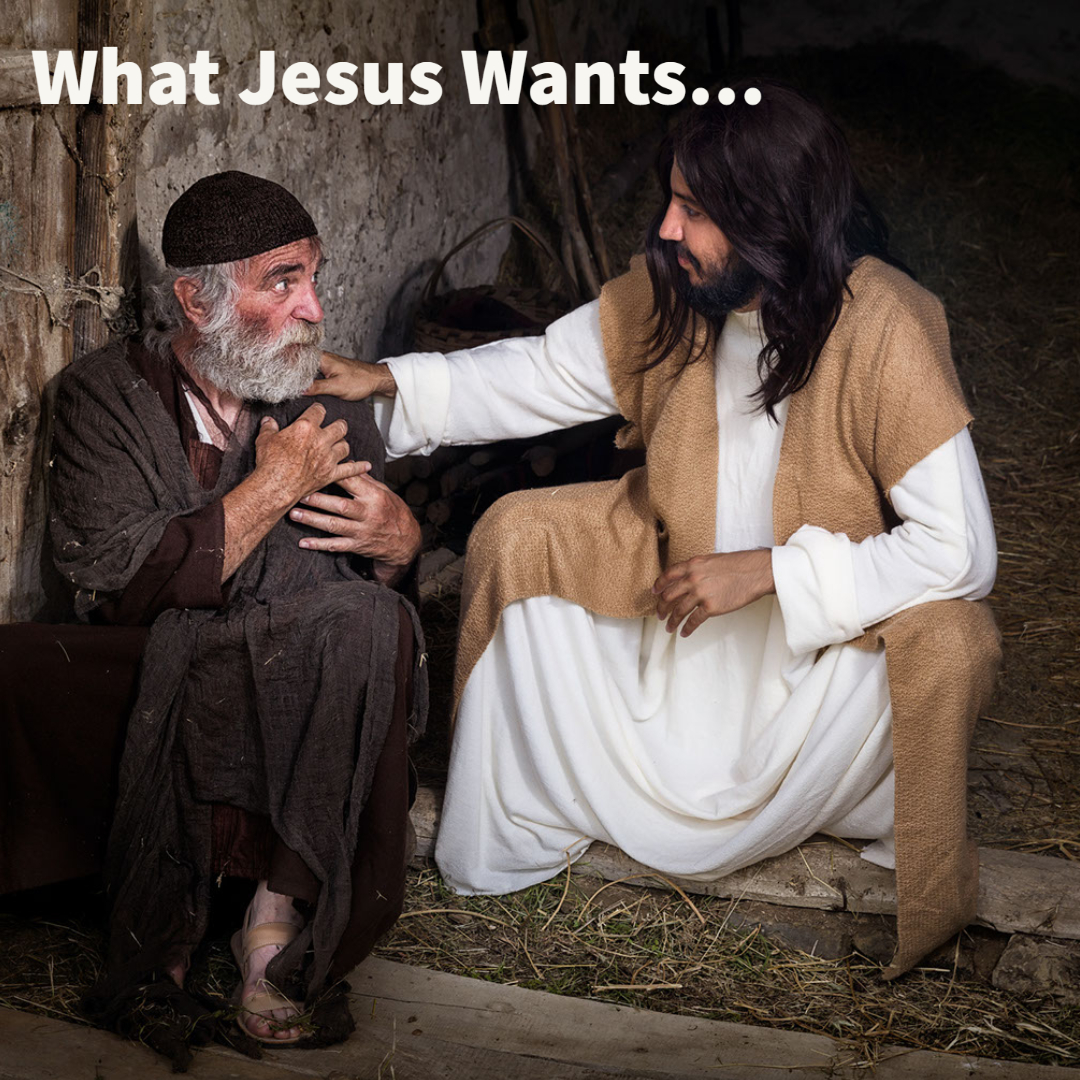
In the four Gospels (Matthew, Mark, Luke and John), we see the Lord’s love for His disciples, His compassion for people, and His frustration at the impact their lostness had on them. In John 17, we find Jesus in prayer in the hours prior to His crucifixion. In that prayer, we can see the heartbreak He experienced, not over His own death, but His pending separation from His disciples.
Having only lived His biggest dream for a few years, the Lord was about to undertake the redemption of all mankind so that He can once again live with us.
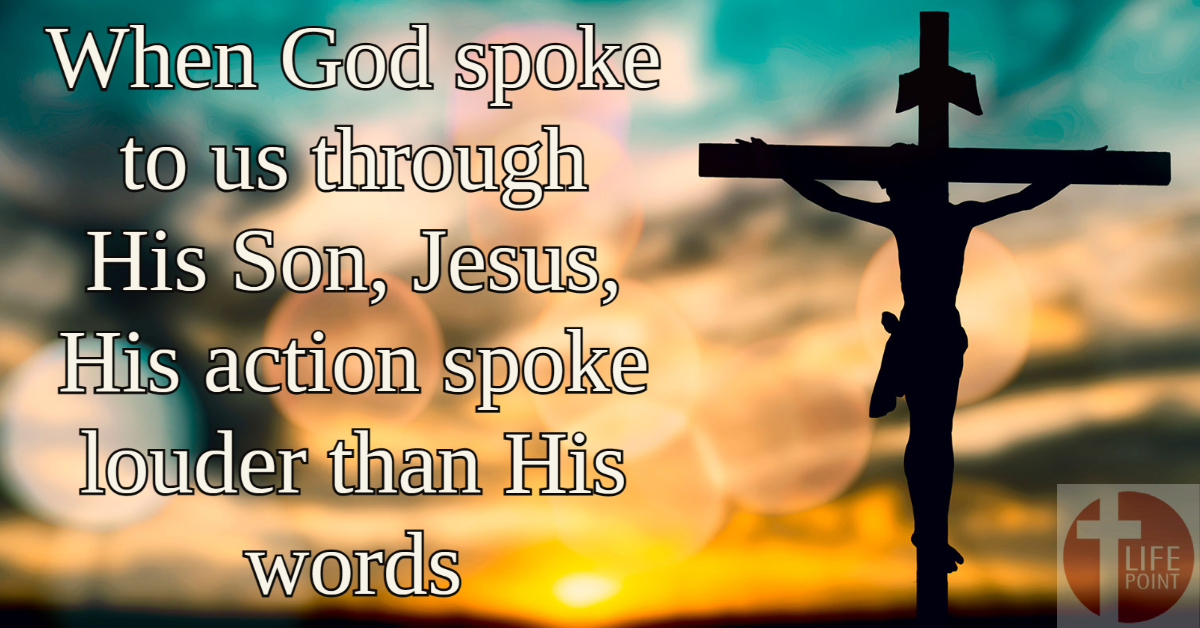
Once our redemption was completed on the cross, Jesus continued to advocate for us in Heaven. To this day, that advocacy continues, along with His ministry to us through the Holy Spirit, and His reaching out to us with the Gospel through His ministers on this earth.
All of this is building to the day when the Lord will return, and we will be reunited with Him forever, and that day will come when the last man on earth to accept the Gospel does so.
God’s love for us is so profound, that He sacrificed Himself, giving His only begotten Son for us, so that we can be reunited with Him upon our belief. There is no higher love than that.
And the center of this love story is our Lord, but the object of that love us you… so you best believe in love stories, you’re in one.
Why the fruit was a big deal, and why the tree was even in the garden
As creation and Christianity are debated between believers and skeptics, two questions often arise. The first is why God put the tree of knowledge of good and evil in the garden, and the second is why eating of that tree carried the death penalty.
In the below-posted video, Pastor Leland Acker makes the point that to fully give Adam and Eve life, they had to have the choice, the free-will to decide whether to follow God or reject Him.
When God formed man from the dust of the ground, and man became a living soul, man was gifted with the highest form of life. Far beyond existing, man was given self-awareness, consciousness, the ability to reason, to create, to problem-solve, to dream, and to cultivate. God, having created man in His image, bestowed upon man many of His own divine attributes.
Creating man to be a living soul, God wanted him to have the fulness of life. In order for man to be able to reason, create, solve and dream, man would also have to be given the choice of whether to trust and obey the Lord. God so wanted us to have the fulness of life, God gave us the choice.
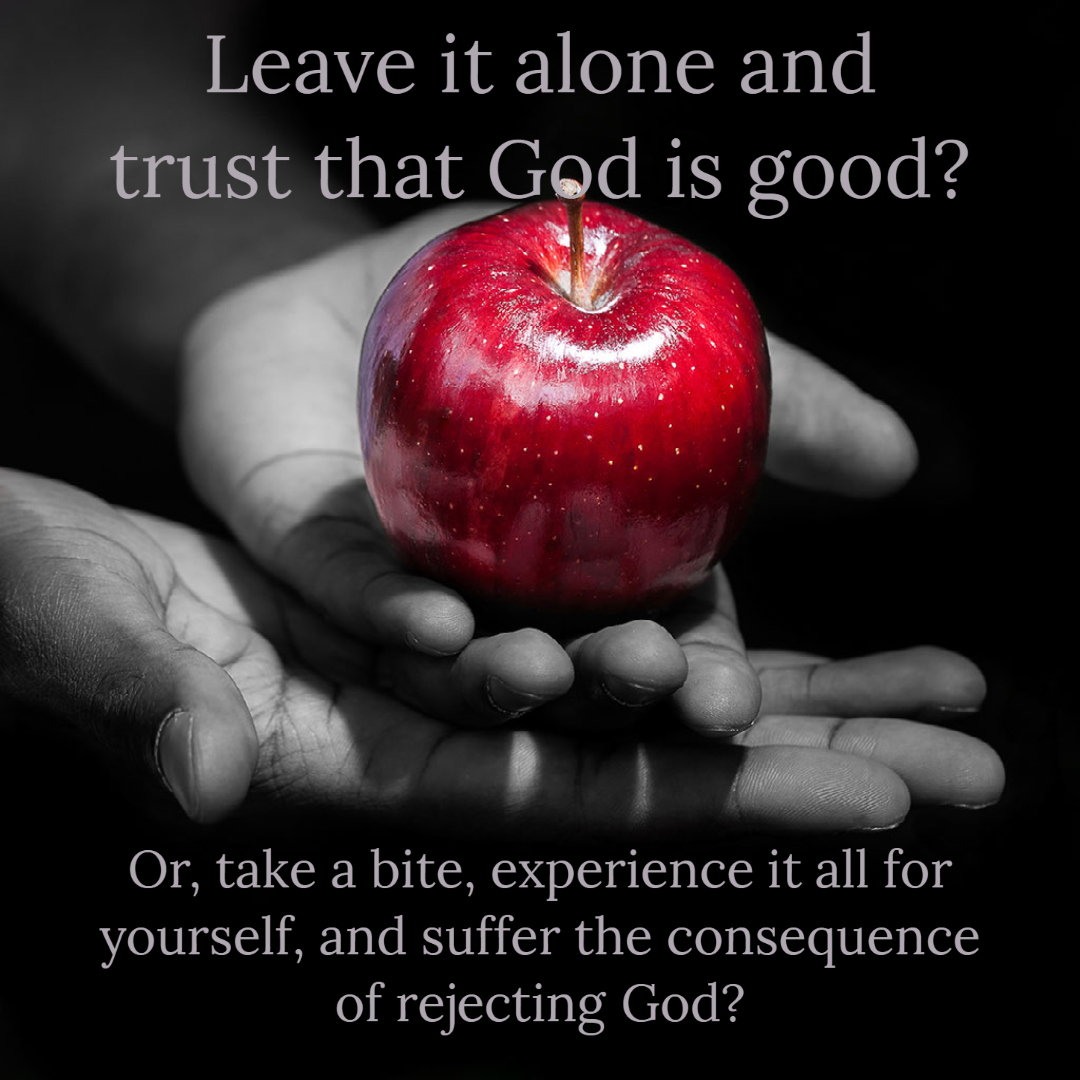
So, to create the opportunity for that choice, God placed the tree of knowledge of good and evil in the midst of the garden of Eden. While one may wonder why knowledge would be a bad thing, keep in mind that this knowledge is an experiential knowledge. By eating the fruit, man would not be suddenly indwelt with endless information, rather he would come to learn good and evil by experiencing both. This knowledge would be gained apart from God, without His help and leadership.
Pursuing knowledge in this way would amount to a complete rejection of God.
So, man had a choice. Trust that God is good and live forever in His presence, or doubt God’s goodness, overthrow His presence in man’s life, and strike out on his own. The former carried with it the promise of eternal blessing. The latter carried a risk of death and eternal judgment.
The serpent (a.k.a. Satan) tempted Adam and Eve with just that. In his speech to Eve in Genesis 3, Satan said, “You will not die. For God knows that in the day that you eat thereof, you will be as gods, knowing good and evil.”
Genesis 3:6 records the logic Adam and Eve used when deciding to eat the fruit. It says, “And when the woman saw that the tree was good for food, and that it was pleasant to the eyes, and a tree to be desired to make one wise, she took of the fruit thereof, and did eat, and gave also unto her husband with her; and he did eat.”
The logic was, “It’s good to eat, it looks good, and it will make us wise (as gods.)” They ate so they could experience the pleasures of everything, take power over their own lives, and eject God from the life that He gave them.
This was not a simple mistake or a poor food choice. It was an all-out rebellion against God. They cut themselves off from God, Who gave them life.
And when you cut yourself off from the source of life, you die.
This would be a good time to pause and reflect. God said, “In the day that you eat of this fruit, you will surely die.”
Satan said, “In the day that you eat this fruit, you will be as gods.”
The question arises, “Where are Adam and Eve today?” Based on the answer to that question, who was telling the truth, God? Or Satan?
If you’ve ever attended a funeral, you know the answer to that question. There is good news, however. In the same chapter, God offered a way of redemption. By promising that the seed of the woman would crush the head of the serpent, while suffering a death-blow Himself, God promised a savior, a redeemer, who would come and save His people from the death that comes as a result of sin.
That Savior was Jesus Christ, who both defeated Satan and suffered death upon the cross, and obtained final victory through the resurrection. Belief in this brings salvation and eternal life, and wins God’s favor.
The result of that salvation is being welcomed into His eternal Kingdom, where God will have restored life to what He intended on it being in the Garden.
So, with all that in mind, trust that God is good. Trust in Him, and place your faith in the death Jesus died on the cross for your forgiveness of sin. Then leave that sinful lifestyle behind and follow Him.
God is Good, We Have Proof!

Is God good?
For decades, if not centuries, the assumption has been that God is good. He is the creator of all things, the redeemer of sinful man, and the good force in the universe that battles the evil forces of Satan and his demons.
However, an increasingly skeptical generation is rising up. While this increased skepticism may alarm some Christians, a sincere search for the truth will not only quench the thirst of the skeptics, but will also deepen their faith, as knowing why you believe something endows you with a faith strong enough to endure the hardest temptations.
The skeptic looks at a broken world full of suffering and questions whether a truly good God could allow such. However, if we only evaluate God by the current conditions of this world, a work that is still very much in progress, then our perception will be skewed.
The fact is that while God created the world, not everything in the world is of God’s doing. God created a perfect world, a perfect environment, and a life for man with no suffering.
And God’s gift to man was the gift of life. To fully understand the gift of life, let’s take a look at Genesis 2:7, “And the LORD God formed man of the dust of the ground, and breathed into his nostrils the breath of life; and man became a living soul.”
This concept of life includes a certain consciousness, a sense of self-awareness, a certain creativity, a problem solving ability, and the desire and ability to create beauty.
This concept of life includes a certain freedom, the freedom to choose one’s destiny and will.

To lock in that freedom, God placed the tree of knowledge of good and evil in the Garden of Eden. Man was warned that eating of that tree would amount to rebellion against God and death. More on that in a moment.
The life God gave was one of freedom, creativity, consciousness, intellect, problem solving, engineering, art, beauty, music and progress. All of this is birthed from the life God gave, and the life God breathed into man’s nostrils.
Man is capable of all of this because God made him a living soul.
So, everything good we enjoy about life, whether it be music, art, sports, or entertainment, springs forth from the life God gave us. Everything good we accomplish, from building things, business, to medical advancements, comes from the life God gave us.
And God intended on us doing these good things with the life He gave us, which is why He told Adam to keep and dress the Garden, meaning that God’s intention for man was to make his perfect creation even better.
As Genesis 2:15 says, “And the LORD God took the man, and put him into the garden of Eden to dress it and to keep it.”
So, everything good you enjoy in life comes from the life God gave, thus everything good in life comes from God, because He is good.
As James 1:17 says, “Every very good gift and every perfect gift is from above, and cometh down from the Father of lights, with whom is no variableness, neither shadow of turning.”
So, seeing that God’s creation is good, and seeing that the gifts He gives is good, then we can conclude that God is good. Jesus Christ said that there is none good but God.
So what about the suffering? We did that on our own. God created the perfect world and gave us a perfect life, but in sinning against Him, we broke it. Not only that, but we continually perpetuate the suffering by sinning against each other.
So God is not the source of what’s bad in the world, we are. God is good, but we are not. But praise be to God, He can take all of our badness and turn it into good, and He does that continually (Romans 8:28)
So, God is good. The life He gave is good. The gifts He gives through that life is good. Therefore He is worthy of our faith – we should trust Him all the more.
 The Point...