Christian Living

God Took A Day Off (Mark 2:23-3:6)

One of the most satisfying parts of a home improvement project is stepping back, and looking at the finished product. Isn’t it awesome when a home improvement project turns out right. The paint color perfectly matched the bedroom. The new deck greatly expands outdoor living space. That above-ground pool will provide refreshing entertainment all summer long. Sitting back, and enjoying the fruit of your labor is one of the great pleasures in life.

man and woman standing beside body of water during sunset

Photo by Luis Quintero on Pexels.com

Scripture tells us in Genesis 1 that God created the universe, and all life therein within 6 days, and on the 7th day, He rested. God rested on the 7th day, not because He was tired, but because He wanted to enjoy the beauty and goodness of His creation. He wanted to enjoy that pleasure of life. Enjoying a sabbath day’s rest, God saw that man would greatly benefit from such a day. So, He told man to remember the Sabbath, and to keep it holy. In Exodus 20:8-11, God told the Israelites that they were to set the Sabbath aside, rest, and worship. They were not to do work on that day, and they weren’t to force others to work for them. They were to enjoy the same day God enjoyed in the beginning.

As with all things, man found a way to turn the Sabbath, a day of rest and relaxation, into a burden. By the time Jesus came, Sabbath laws had become so complex that men were forbidden from picking corn to eat on the Sabbath, and they were prevented from healing on the Sabbath. It is those two issues Jesus confronts in Mark 2:23-3:6 when He said, “The Sabbath was made for man, and not man for the Sabbath.”

In essence, Jesus told the Pharisees, “The Sabbath was made to benefit and bless man, not the other way around. Man wasn’t created to worship the Sabbath.”

Taking that statement, we can learn three things. (1) The Sabbath is a gift from God. (2) Observing the Sabbath takes faith. (3) Observing the Sabbath glorifies God.

God gave the Sabbath day to us as a gift. God knew our nature. He knew without a Biblical command to stop and rest, we would continue our daily grind day in, and day out, without rest. He knew this would be harmful to us. Therefore, He commanded us to break the daily grind once per week. We are to take one day to set the struggles of life aside, rest, and enjoy the goodness of God, whether that be by enjoying His creation, or whether that be by enjoying the fruit of our labor. Either way, the Sabbath was God’s gift to us. We should be willing to accept that gift, but doing so requires faith.

Observing the Sabbath, like obeying all of God’s commands, requires faith. It requires faith in God to set aside the daily grind in favor of spending a day in God’s presence and blessings. It requires faith that God is not going to allow us to lose everything by taking a day off. It requires faith that God will provide for us on that day.

A good example of the exercise of that faith would be Chick-fil-A. When Truett Cathy founded the chain, he made the commitment to close the restaurants on Sundays to allow his employees to enjoy the Sabbath. Closing on Sundays is a huge sacrifice and step of faith in the restaurant business. Not only are Sundays the busiest days, but chicken restaurants are especially popular on those days. Yet, Cathy committed to closing on Sundays, which resulted in a number of blessings, including employee retention and increased business the rest of the week. Today, Chick-fil-A is winning the fast food wars, and they are winning on character and image. God has blessed because they honored the Sabbath. This glorifies God, which brings us to our final observation of the Sabbath.

Observing the Sabbath glorifies God. It shows faith in the Lord, and it shows His provision and protection of His people. Therefore, Christians ought to not only observe the Sabbath, but should also be willing to minister to others on that day.

The Sabbath is a beautiful gift God has given. Do we have the faith to accept that gift, and take that day to rest, enjoy His blessing, and worship Him?

When we say, “God’s not dead,” we mean…

brown concrete cathedral

Photo by Robert Stokoe on Pexels.com

… that He has not died, that He has not forgotten us, and that He has not turned against us.

Ezekiel was born to be a priest. He was in the right family, and was destined to minister in the Temple of the Lord in Jerusalem. However, a Babylonian invasion ended that dream, as he was one of thousands taken into captivity and led as slaves into a foreign land. There, Ezekiel dwelt with the captives by the Chebar river. Through no fault of his own, he had lost everything.

So it was, living in Israel’s twilight years prior to the Babylonian captivity. The nation slipped further and further into sin and idolatry, behaving so reprehensibly that even the heathen nations surrounding it were repulsed. As Israel rebelled and reveled, God withdrew His protection, allowing Babylon to continue to conquer the nation. The southern kingdom continued to lose province after province, and city after city, all the while continuing in the sin and idolatry that was bringing on their demise. This continued until the Babylonian troops had laid siege to the capital city of Jerusalem.

The tragedy of a lifestyle of sin is that you often don’t realize what it’s cost you until you are about to lose what little you have left. So it was that Israel was down to defending Jerusalem, and any hope of maintaining the kingdom rested in their ability to fend off the Babylonians.

Meanwhile, back in Babylon, the captives awaited news from back home. Was Jerusalem successfully defended, or did she fall. The anticipation touched off a firestorm of debate. Some believed that God could not allow Jerusalem to be conquered, for doing so would violate the promise He made to Abraham back in Genesis. False prophets had even gone among the people, promising that God would deliver them. Others had concluded that God’s providence was not needed, that the walls of Jerusalem would protect her from her enemies.

Jerusalem had to be saved, for anything else would represent God’s total abandonment of Israel. Some had even believed that God had divorced Himself from His chosen people, a belief that God Himself refuted in Isaiah 50:1. With those questions swirling, God began to speak to His people.

In Ezekiel 1, the former priest, soon to be prophet, Ezekiel, is by the Chebar River when God speaks to Him.

The prophecies recorded in Ezekiel show God’s plan for Israel. In the early part of the book, God tells the people that Jerusalem would fall. That prophecy caused many to reject the legitimacy of Ezekiel’s ministry, but once Jerusalem fell, the people listened.

Through Ezekiel’s prophecies, God told the people that Jerusalem would fall, and that they would spend their 70 years in captivity, but that God would use that time to transform them, and would bring them back into their homeland when the process was finished.

This concept goes right along with Jeremiah 29:11-12, “For I know the thoughts that I think toward you, saith the Lord, thoughts of peace, and not of evil, to give you an expected end. Then shall ye call upon me, and ye shall go and pray unto me, and I will hearken unto you.”

In that prophecy, Jeremiah told the people that God was not allowing the captivity to come upon Israel out of wrath, or a desire to see them destroyed. Rather, the captivity was going to transform them to a point where they would trust in the Lord and call upon Him, and He would hear and respond.

Some in Israel may have felt that God abandoned them. The Babylonians might have thought they conquered the Israelites’ God. The question circulating may have been, “Is God dead? Why doesn’t He hear?”

However, the truth was that God was working through the situation the whole time.

So, when you are going through trials and tribulations, or when others mock your faith, do not fear. God is not dead. He did not abandon you. He hasn’t forgotten you. He is still with you, and is working through the situations you face to refine you into a glorious child of His. Trust the process, and thank God for the progress.

The Fishers of Men Sermon (Audio)

The Gospel according to Mark was written to record Peter’s teachings about Jesus, so it should come as no surprise that the Lord’s call to the disciples to “come, and I’ll make you to become fishers of men,” had a profound impact on Peter. A fisherman by trade, and one who found balance on the water, Peter understood life best when he was casting a net, which is likely one reason he returned to fishing in John 21.

When Jesus called the disciples to follow Him, and become fishers of men, He was not only calling them to be His apostles. He was telling them what they would be doing.

grayscale photo of man throwing a fishing net

Photo by DoDo PHANTHAMALY on Pexels.com

Being fishers of men, the disciples would cast a proverbial net to bring people into the Lord’s presence. They would labor to bring people to salvation in Christ.

Likewise, we are called to be fishers of men. Our call mirrors that of the disciples. Jesus has called us to follow Him, to cast a wide net, and to work together.

We are called to follow Jesus. The disciples were called to follow. When Jesus said, “Come ye after me,” in Mark 1:17, He was telling them, “Fall in behind me and follow Me where I go.” Jesus led. They followed.

For us, following Jesus means that we should hear His teaching, we should follow His teaching, and we need to realize that the miracles and work are His. In Mark 1, it was Jesus who cast out the unclean spirits. It was Jesus who healed Peter’s mother-in-law of her fever. It was Jesus who cleansed the lepers.

For us, it’s Jesus who saves, changes/transforms lives, who hears our prayers and intercedes for us before the Father. We don’t accomplish these things through our own wisdom or innovation. It’s Christ, working in us through the Holy Spirit with the blessing of the Father. We merely follow and obey, ministering, praying and serving as the Lord leads.

Jesus called, and in Mark 1:18-20, the disciples left their nets, boats, fathers and employees, and followed Christ. They left it all behind. To follow Christ, we, too, must leave it all behind. While some are called to leave the life they’ve built in order to become missionaries overseas, not every one receives that order from the Lord.

Being called to leave it all does not always mean that you have to leave here. However, being called to leave it all behind does mean that you will have to leave your unscriptural beliefs behind in order to follow Jesus. You will also have to leave the friends who hinder your walk with Christ. While it is good to have lost friends to whom you can witness, if that friend is openly rejecting the Gospel and discouraging you from following Christ, that friendship is detrimental to your Spirituality. We also have to leave behind our sin and rebellion against God.

Following Jesus meant starting over for the disciples. For us, it means starting over by allowing Christ to transform us from the inside out.

The question then becomes, “Are you following Christ? Or are you wanting Him to fill the gaps in your life?”

May God bless you in your Spiritual journey.

See also:

The Futility of Fishing Alone

Let’s Go Fishing

The futility of fishing alone

three men riding boats on body of water

Photo by Vietnamese Private Tours on Pexels.com

When Jesus told His disciples, “Come after me, and I will make you fishers of men,” we often misinterpret what He said. Having grown up in the United States, where the most common form of fishing is recreational, and is accomplished with a rod and reel, we often think of fishing as a recreational activity meant to be enjoyed in a relaxing manner. Such an activity can easily be enjoyed alone, and in some cases, it’s easier to enjoy the serenity of God’s creation when fishing alone.

However, as previously mentioned, fishing for the disciples of Christ was not a recreational activity accomplished with a rod and reel. It was a commercial enterprise undertaken for mere survival that was accomplished by casting a net. One thing we did not specifically address in the above-linked post is how the net was cast, and how it was drawn from the water.

In order to successfully fish with the types of nets the disciples used, you had to have a team (which is one reason you didn’t see the disciples by themselves when Jesus called them to be fishers of men. They were working as teams.) Often, these disciples utilized two boats to draw the net from the water. It took a lot of hands to fish with those nets, but the harvests could be great. With the help of Christ, they were on more than one occasion.

A fisherman who chose to fish alone would not only have a hard time properly casting the net, but properly drawing the net with a sufficient catch would prove nearly impossible.

The Spiritual application to this fact is that, as Christians, we will never be as strong in isolation as we will be when gathered with our brothers and sisters in Christ. The fundamental truth of fishing, whether commercially in Jesus’ day, or Spiritually in our day, is that it is a team effort. The Christian who chooses to isolate himself from his brothers and sisters in Christ has chosen a life that will prove frustrating and discouraging.

Therefore, let’s heed the Biblical command in Hebrews 10:25, which tells us not to forsake the assembling of ourselves together, and let us come together to encourage, pray and lift up each other. Then, let’s minister for the Lord together.

Let’s Go Fishing

boats fishing boat harbor harbour

Photo by Nick Santarone on Pexels.com

If I were to invite you to go fishing with me, what would you expect?

You would probably expect a relaxing afternoon on the local lake in a small boat, holding a fishing pole, and making casual conversation while waiting for the fish to bite. And why wouldn’t you? Living in America, all we’ve seen of fishing is canes, poles, lines, tackle and bait. Fishing in America is recreation. (Unless, of course, you work on a shrimp boat on the Gulf Coast.)

So, when we read that Jesus told His disciples that He would make them “fishers of men,” we tend to envision fishing poles, spoon lures and minnows.

In the Bible, Peter was a fisherman. Popular tradition holds that he was an expert fisherman, and had honed his craft well, building a great fishing business that he walked away from upon becoming a disciple of Jesus. However, if you were to travel back in time, and hand Peter a rod and reel, he would look at you like you were crazy. Peter had never seen such.

Fishing for Peter, and the other disciples so employed before following Jesus, involved the casting of nets in order to draw in as many fish as possible. This was not recreation to them, this was survival. It was how they gathered food, not only for their families, but also to sell for necessary provisions. Fishing was work. Fishing was business. Fishing was absolutely necessary for survival.

The casting of nets not only enabled Peter and his colleagues the ability to draw out as many fish as possible, but it also required a team effort. You never see the disciples fishing alone. In fact, in many cases, it took two boats to cast and draw a net. There are fish in that sea. We need the food. Therefore, we are going to draw out as many as we can.

With the modern American approach to fishing involving a rod and reel, many get the wrong idea when Jesus said, “Come, and I will make you fishers of men.” Some church leaders have taught that this means that the church should use bait to lure unsuspecting sinners in the door, then hit them with the surprise Gospel. Others have advocated that this means “finding the right fishing hole.” As a result, Christianity’s evangelistic efforts have suffered. As a whole, Christianity is not reaching as many as it has in the past, and new converts are not being properly discipled.

However, if we apply the imagery of casting a net, and drawing it back out of the water, we get a more beautiful picture of what Christ was referring to when He called His disciples to be “fishers of men.” Instead of targeting outreach to certain “fishing holes,” or trying to find the right “bait,” we should instead cast a wide “net,” reaching as many people as possible, regardless of location, demographic, or socioeconomic status.

In essence, our evangelistic efforts should be an all-out effort to reach every individual in our communities. This is accomplished when the membership of the church takes on the responsibility of personal evangelism, and when the church openly promotes, propagates and teaches the Gospel. When the church commits itself to its message, the Gospel, and relentlessly communicates that message, people will be reached and lives will be changed.

The mission of Life Point Baptist Church is to cast as wide of a net as possible, reaching as many as possible with the Gospel. This we will do, if we follow the example of the disciples, and follow Jesus as we continue to learn from Him.

The Greatest Love Story Never Told (Song of Solomon)

The Song of Solomon is often overlooked in Bible studies for a variety of reasons. First, it’s located in the middle of the Old Testament. Secondly, the imagery of passionate romance depicted in the book can seem awkward for groups with young children, or groups with both genders. Thirdly, and possibly the biggest reason, is that the book can be difficult to understand.

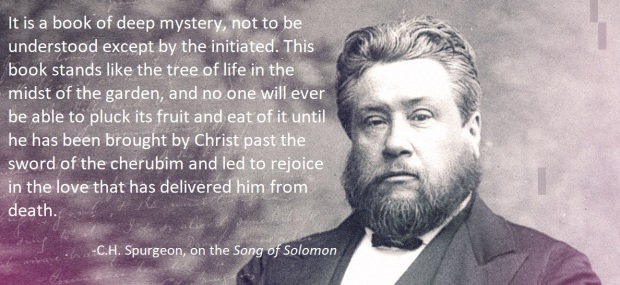
Even the great Bible expositor Charles Haddon Spurgeon expressed difficulty in interpreting the Song of Solomon when he said the book could only be understood by the “initiated,” and that the book stood in the middle of the Old Testament like the Tree of Life in the Garden of Eden, whose fruit you cannot eat unless you are brought by Christ past the cherubim with the fiery sword. Apparently, Spurgeon was incapable of simply saying, “This book is hard.”

Spurgeon song of solomonSong of Solomon is often preached as a book about marriage. However, Spurgeon believed, as do many other Bible teachers, that Song of Solomon is an allegory for the love Christ has for His people.



It’s with that context that we examine the book, Song of Solomon. The Song of Solomon can be divided into three parts… the romance, the wedding, and the marriage. Each mirrors a stage in our walk with Christ. The romance, where Christ loves us regardless of our station in life, and draws us to Him. The wedding, where we repent and commit ourselves to Him, and the marriage, where He takes us to our eternal home. In each of these parts, we can see the passionate love that Christ has toward us.

In the beginning of Song of Solomon, we see the romance develop between the Shulamite woman and King Solomon. In Verses 1:5-6, the Shulamite woman notes that she is black, that she keeps vineyards for others, and her mother’s children were angry with her. The fact that she is black indicates that she has spent her life in hard field labor. She has not known luxury, nor has she been able to preen or care for herself. While she says that she is comely (she looks good,) her body shows the effects of her life of hard labor.

She also says that she has not kept her own vineyard, which means she has no vineyard. She has no wealth, she has no assets.

She is hardly a bride suited for a king. In Old Testament times (as well as medieval times, and even modern times), royalty married those who could bring peace or prosperity to their kingdoms. Alliances, trade agreements, and even mergers were orchestrated through royal weddings. The Shulamite woman can offer none of these.

Yet, despite her destitute situation, King Solomon loves her. In Verse 2:4, the Shulamite woman says, “He brought me to the banqueting house. His banner over me was love.”

This is a Cinderella-type story if there ever was one. King Solomon not only loves the Shulamite woman, and cares for her, but he brings her to the banquet. There’s a banquet, a ball. The creme de la creme are there. And King Solomon has this Shulamite woman on his arm, is introducing her to every one, and his proud to be in love with her.

It means a lot that King Solomon makes this romance public. He loves the Shulamite woman. She is the object of his love, and he is driven by his love to care for her. She is not a scandal to him, and he is not ashamed of her.

This is a mirror to how Christ loves us. He loves us in spite of the fact there is nothing we can do for Him. He loves us in spite of the rejection we suffer at the hands of others. He lifts us out of our hopelessness and takes us into His kingdom, where we can know love, care, and be provided for.

In Chapter 3, we see the wedding. In Verse 3:11, the Shulamite woman tells the daughters of Zion to “Behold King Solomon,” who has been crowned with the crown of his espousals. Also in chapter 3, we see that King Solomon takes the Shulamite woman to His bedchamber, which is surrounded by 60 of the best fighters in the king’s army.

The espousals, the wedding, is the union of King Solomon to the Shulamite woman. The marriage union is an eternal union never to be broken. This is why marriage is so sacred to God. It provides a picture of the love between the Lord and His people.

Being married to King Solomon, the Shulamite woman would never again know fear. She would sleep in the safest place in the kingdom, and the king would never put her out.

Likewise, when you are a child of God, when you know Christ as your Savior, you are in the safest place in the universe, because nothing can get to you without going through God first. And God will never turn you away.

Jesus said in John 5:24, “Verily, verily, I say unto thee. He that heareth My words, and believeth on Him that sent me, hath everlasting life, and shall not come into condemnation, but is passed from death unto life.”

Basically, if you know Jesus as your Savior, you will never need to fear God’s wrath, and you will never come into condemnation. You are safe, and the Lord will receive you into His kingdom.

Finally, in Song of Solomon, we see the marriage.

No marriage is perfect. All marriages endure hard times, conflict, and sometimes estrangement. Thus, in Song of Solomon 5:2-8, we see such an occasion arise between the Shulamite woman and King Solomon. The king has come to her door, but she has just gotten ready for bed, her coat is put off, and she has washed her feet, and she doesn’t want to get messy. So, he leaves.

How often does the Lord knock on our door, but we are too busy with the day to day things of life to answer His call? How often are we preoccupied with the things of this world to answer God’s call on our life? How often do we put off doing something for the Lord because today is not a convenient day?

We miss our Bible devotional time, and our prayer time because we are too busy. We refrain from giving to the church because we have a lot of financial plans and obligations. We do not surrender to the ministry God has called us too because it would disrupt our current lifestyles. Then one day, we find ourselves apart from God, wondering why He is silent, and distant.

He knocked. We couldn’t be disturbed. Therefore, the fellowship was broken.

The good news is that there is reconciliation. In Verses 6:1-3 we see the reconciliation between the Shulamite woman and King Solomon. When we repent and turn to the Lord, He forgives, and we are reconciled to Him.

Closing out the Song of Solomon, we see a beautiful sight. In verse 8:12, the Shulamite woman has her own vineyard. The woman who had no vineyard in chapter 1 now has a vineyard of her own. She lives happily ever after, with Solomon.

Likewise, those of us who wonder this earth without a home, those of us who know Christ as our Savior, will one day have an eternal home.

In John 14:2-4, Jesus said, “In my Father’s house are many mansions: if it were not so, I would have told you. I go to prepare a place for you. And if I go and prepare a place for you, I will come again, and receive you unto myself; that where I am, there ye may be also. And whither I go ye know, and the way ye know.”

If you know Christ as your Savior, He has prepared an eternal home for you in Heaven. The day is coming when He will return and take you to that eternal home, and you will be with Him forever.

Even so, come Lord Jesus.

As Solomon loved the Shulamite woman, so Christ loved us. Will we receive His love by turning from sin and trusting in Him? Or will we spurn His love in favor of the sins of this world. Each will choose for himself or herself. How will you choose?

Whatever Happened to Simple Pleasures?

13139229_10209006359102001_6160792898451924492_n

Life in the United States has become more hectic. The cost of living has increased. Jobs demand more time and effort, and the kids are involved in more activities. Today, it is not uncommon for a high school student to put in a 12-hour day at work (classes and extra-curriculars) before coming home to do two hours worth of homework.

Meanwhile, Dad, who already clocked a 10-hour workday, sits on the couch checking and responding to work emails. Today, it seems that we are always working on something. We always have somewhere to be, or something to accomplish. The American life today is busy.

Life today is far from the future envisioned by a 1960s-era CBS News documentary about the future life in America. In it, Walter Cronkite previewed future technology, such as the internet, big screen TVs, automated home systems, the home office and distance learning. Much of that technology had not even begun development, but Cronkite foresaw it, and optimistically declared that, with life being made easier by these new devices, Americans would have more recreational time than ever before.

Cronkite’s vision of future technology came to pass. His vision of more recreation and leisure, and an easier lifestyle did not. Why?

We could list the societal changes and issues that drive our current pace of life, but the root cause is that we, by nature, are discontent. To be human is to be discontent. To be human is to want more. To be human is to want it better. Our desire for more, our discontentment drives us to take on more projects, duties, activities, and so forth to accomplish more and to profit more. In some cases, that is thrust upon us by discontent employers. The root cause is the same. Discontentment.

Lost in all of this hustle and bustle of discontentment are the simple pleasures of life… iced tea on the back porch, fishing on a Saturday afternoon, watching your kid step up to bat in a little league game. We are so busy trying to survey and claim the entire forest that we miss the beauty of the trees. And so, we miss the simple pleasures in life. Thus, our discontentment grows.

Scripture speaks into this in 1 Timothy 6:6, which says, “Godliness with contentment is great gain.” Basically, if you can learn to trust God and be content with what you have, you are the richest person you know.

Think about it. Who’s happier right now? The multimillionaire who stares at his portfolio all day stressing about the right time to make the next trade? Or the Social Security retiree who is sitting on the banks of the Mississippi river with his line in the water? At this very moment, which person would you rather be?

If you believe that peace and happiness will come at a time when you achieve a certain financial goal, you will never feel secure, and you will never be content. However, if you find contentment in the Lord, and the simple pleasures He brings into your life, you have already achieved wealth, and will find yourself at peace.

Now, if you’ll excuse me, I think I’ll go find my cane pole.

Written by Pastor Leland Acker

What Vince Lombardi Can Teach Us about Church

WP_20140713_007

Life Point Baptist Church gathered around a fellowship meal in 2014

Christianity has become such a mainstream facet of American culture that often we pursue the activities of the faith under the assumption that everyone knows the basics. As a result, we rarely discuss the basics because we don’t want to insult anyone’s intelligence. As a result, many move forward on the false assumption that we all understand the basics.

One need not be offended by discussing the basics, or by having the basics taught to them. Legendary Green Bay Packers coach Vince Lombardi often began his first practice of the year by holding out a ball and saying, “Gentlemen, this is a football.” Lombardi then went on to discuss what all you could do with a football, as well as the objective of the game of football. Lombardi explained that the objective of football was to get possession of the ball, maintain possession of the ball, and advance the ball across the goal line for a touchdown. Then, the process repeated. The secondary objective, which was accomplished if you met the first, was to keep the other team from advancing the football across the goal line.

Advancing the football could be accomplished by running the ball, or passing the ball. He demonstrated how to carry the ball, and how to throw the ball, etc. This is riveting stuff for a football novice. However, Lombardi was talking to players who were professionals. These guys had been playing their entire lives. Still, he understood the value of fundamentals. And he was successful.

In that vein, we’d like to return to the fundamentals. And we begin by asking, “What is a church?”

The word, “church,” in the New Testament was translated from a Greek word, ekklesia, which means an assembly. This is important. As our Lord founded the Christian faith, He used words that were already widely in use in that culture. Our Lord did not sit down with the disciples and invent a new vocabulary and systems of practices for this new religion we call Christianity. No, He merely taught that we were to repent of our sins and trust His death on the cross for our salvation. He did so using common words of that day.

So, when the Lord said, “Upon this Rock I will build My church,” He didn’t invent a new word. That’s why none of the disciples said, “What is a church?” They already knew. Our English translations of the Bible say, “Upon this Rock I will build My church.” What the disciples heard was, “Upon this Rock I will build My assembly (ekklesia).”

The word “assembly,” i.e. “ekklesia,” was widely used, and practiced in the Roman Empire. Ekklesias were called out assemblies in local cities used to conduct business, take a vote, or discuss a pressing matter. There was a legal structure and framework for these.

You see this concept in action in Acts 19. The entire city was gathered to discuss the controversial teachings of Paul, who proclaimed that there were no other gods besides God, and that the way to God was through repentance and faith in Jesus Christ. As a result, the local industry (sales of idols to the goddess Diana) suffered as more turned away from idolatry and toward Christianity. The town clerk realized that the assembly did not meet the legal requirements to hold such a meeting under Roman law, and as such, “he dismissed the assembly (ekklesia).”

When Christ said, “Upon this Rock I will build My church,” He said, “upon this Rock, I will build My assembly.” This verse, supported by other verses throughout the New Testament, shows that the will of Christ for His followers is that we are to assemble, conduct His business, and encourage each other.

Therefore, given the meaning of the word, and the will that Christ expressed, and the teachings expressed throughout the New Testament, a church is an organized assembly of saved, scripturally baptized believers who have come together to carry out the Lord’s will. This assembly is a literal assembly, a local assembly.

Which means that, in order to be a part of the church, you must assemble with the church. And the Lord’s will is that you be a part of the church.

At Life Point Baptist Church, we’d love to have you be a part of our church, a part of our assembly. However, if you do not feel led to join with us, we will encourage you to join a church where God is leading you, and that you follow His will there.

May God bless you richly as you follow His teachings.

Passions

Have you ever lost your cool?

Or in a moment of weakness, have you ever made a decision you regretted?

If we’re to be honest, life is full of regrets. We regret the sins of our past, our bad decisions, the things that bring us shame and even the things no one knows about.

I think to a large degree this is one reason why many people skip church. Life can become one big guilt trip, and hearing a sermon about sin and impure motivations in the heart can compound that guilt.

Guilt is universal. The late Dr. J. Vernon McGee once said that he has never been the preacher, husband or father he thought he should be. A man who spent his life teaching millions of people through the Bible felt like he didn’t measure up.

And then there’s the Apostle Paul, who said in Acts 14:15, “ We also are men of like passions with you, and preach unto you that ye should turn from these vanities unto the living God.”

The like passions Paul experienced are the same ones Dr. McGee experienced, which are the same passions you and I experience. It’s the sin nature. It’s temptation. And all too often, we fall before it.

Yet Christianity goes beyond defining the problem of sin and temptation. Christianity teaches us about God’s grace, forgiveness and redemption from that sin and temptation.

Notice how Paul, in Acts 14:15 exhorted the people to turn from their sin to God. Obviously to please God, we must believe in Him and trust Jesus Christ as Savior. That involves the confession that sin is evil and the decision that we no longer want a part in it.

Yet, our passions pull us back in. At this point we truly see how awesome the grace of God is, because even though we continue to struggle and fall, God continually forgives us. He loves us in spite of our weaknesses and failures.

When I read Dr. McGee’s statement that he falls short, and when I read Paul’s statements about his shortcomings, and when James mentions Elijah’s passions in James 5, I am reminded that I am not alone. You are not alone. We all struggle with sin, and come short of the glory of God.

But God be praised, He loves us anyway.

Don’t let sin and shame keep you out of the Lord’s presence. He already knows all about it. Come on in, and let Him love you through it.

The Opposition

The people who had moved into the land were tolerant of the Israelites who returned to rebuild Jerusalem, but once construction began on the Temple, conflict broke out.

In this message, we evaluate why the people of the land opposed the construction of the Temple, and how that correlates to Satan’s opposition to our daily lives today. This chapter illustrates how Satan actively opposes you and tries to sabotage you as you try to live out God’s purpose for your life.