Fundamentals

The Counterfeiters

pexels-photo-2068975.jpeg

Photo by Alexander Mils on Pexels.com

It’s Superbowl Sunday, Feb. 2, 2020, and you’ve got tickets! How exciting!

You’ve spent the weekend in Miami, and now you are waiting in line, eager to enter Hard Rock Stadium for one of the biggest sporting events in the world. For once, you are going to be a part of sports history.

Then it happens. The gate attendant tells you that your tickets are counterfeit. You had bought them on a ticket exchange site, and you fell victim to a scam artist. There is no recourse. They will not let you into the stadium. You’ve lost your money, and you are dealing with massive disappointment.

Such is not only common with tickets to sporting goods, it also happens with currency. Working as a cashier at a local truck stop, I have on more than one occasion broken the news to a customer that the $20 bill they handed me was counterfeit. Their faces showed expressions of deep betrayal, as the bill had been given to them as a payment for a service rendered.

These situations are extremely disappointing and sometimes tragic. But nothing is as horrible as spending a life believing a counterfeit gospel. In Matthew 13:24-30, Jesus tells the Parable of the Wheat and the Tares.

The Parable of the Wheat and the Tares goes as follows:

Another parable put he forth unto them, saying, The kingdom of heaven is likened unto a man which sowed good seed in his field: But while men slept, his enemy came and sowed tares among the wheat, and went his way. But when the blade was sprung up, and brought forth fruit, then appeared the tares also. So the servants of the householder came and said unto him, Sir, didst not thou sow good seed in thy field? from whence then hath it tares? He said unto them, An enemy hath done this. The servants said unto him, Wilt thou then that we go and gather them up?But he said, Nay; lest while ye gather up the tares, ye root up also the wheat with them.Let both grow together until the harvest: and in the time of harvest I will say to the reapers, Gather ye together first the tares, and bind them in bundles to burn them: but gather the wheat into my barn.

Remembering the rules for interpreting the Kingdom Parables from our last post, which concurs with Jesus’ explanation of this parable in Matthew 13:37-40, we see the following symbols at work:

  • The man – the Son of Man, Jesus Christ.
  • The good seed – the Word of God, the Gospel.
  • The field – the world.
  • The wheat – the children of the Kingdom.
  • The tares – The children of the wicked one.

While the primary message of this parable is that Satan will place false converts and false believers among the children of God to derail the Lord’s work, the implied warning of the spread of a counterfeit Gospel cannot be ignored.

The tares, the children of the wicked one, were sown into the field as seed. Bad seed. Counterfeit seed. If the good seed is the Gospel, then it follows that the bad seed is a counterfeit gospel.

Counterfeit gospels take on many forms. Some teach that you must perform certain works, are take part in certain rituals to be saved. Some teach that you can lose your salvation. Some teach that God loves all people and all will be welcomed into Heaven. Some teach that salvation is so simple, one does not even have to repent to obtain it.

The counterfeit gospels and false doctrines being taught are so rampant, we cannot possible address them all in one blog post, neither do we have to. To identify a counterfeit Gospel, one need only know the true Gospel.

Interestingly enough, this is also how the U.S. Secret Service learns to spot counterfeit currency. They don’t study counterfeit currency. They study the true currency to the point that if anything on that bill is out of place, they instantly identify the error, and thus conclude the currency is counterfeit.

So, with that in mind, let’s be reminded of the true Gospel, summarized in 1 Corinthians 15:3-4 as how “Christ died for our sins, according to the scriptures, was buried, and rose again the third day according to the scriptures.”

Christ died for our sins. In dying for our sins, He took the punishment for our sins, thus shielding us from the wrath of God. This payment for our sins cost Him His life. Thus, He died for our sins, and was buried. However, on the third day, He took His life back, and rose from the grave.

So now, Christ has not only cleared our sin-debt by giving His life for our sins, but He rose again, and ever lives to intercede for us. In other words, Christ rose again to advocate for us and to open the gates of Heaven for us. This is salvation.

Scripture is clear on how to access that salvation, how to accept it. Romans 5:1 says “Therefore being justified by faith, we have peace with God through Jesus Christ our Lord.” Isaiah 45:22 says, “Look unto Me, and be ye saved, all the ends of the earth. For I am the LORD, there is none else.”

And the verses that drive it all home, Ephesians 2:8-9, “For it is by grace that you are saved through faith, and that not of yourselves. It is the gift of God. Not of works lest any man should boast.”

Based on these verses, we see that the true Gospel:

  • Is how Christ paid for our sins by dying on the cross.
  • That Christ rose again to save us and give us eternal life.
  • That salvation is gained by repenting of sin and trusting (believing) in Jesus Christ.

Deviations, additions or subtractions from that Gospel are counterfeit. What a tragedy it would be to live a good, religious life, only to realize that you never believed the true Gospel. What a tragedy it would be to live life believing a lie. If you have never placed your faith in Christ for salvation, make that decision now.

The implied warning of a counterfeit gospel is only a small sideline to the Parable of the Wheat and Tares. The real point to this parable is that Satan uses false believers and counterfeit Christians to derail the cause of Christ.

Imagine the huge inconvenience for the farmer who had to go through the process of separating the wheat from the tares at harvest time.

Likewise, the cause of Christ can be frustrated by the antics of those who claim to be Christian, but are not. This is one reason bad things happen in good churches. Understanding this can help prevent discouragement and disillusionment when the unthinkable happens. Satan is working to derail, discourage and discredit the Lord’s churches.

Notice, however, what the parable says about the man’s reaction to finding tares in his wheat field. The man told his servants not to root out the tares, because the wheat would be uprooted and damaged in the process. Instead, the wheat and the tares would be allowed to come to full maturity before being separated at the harvest.

As the wheat and the tares mature, you can tell which is which by the fruit they bear. Likewise, Jesus said you could tell the true believers from the false believers by their fruit.

The application to this passage is that we, as Christians, need not be concerned with identifying and distinguishing the true believers from the false believers. Instead, we are to grow and bear fruit, and allow the Lord to judge in the end time.

At the core of this parable is the instruction to believe the true Gospel, and trust the Lord to judge righteously on the day of judgment. If we do this, we will not be discouraged by the antics of the tares, for we will have the understanding of why they do what they do.

The tares have been sowed to frustrate our purpose. The more they frustrate our purpose, the closer we grow to harvest day. At harvest time, we will be gathered in the Lord’s presence. Be encouraged. Satan’s attacks are evidence that you are being effective for the Lord.

May God bless you as you continue your walk with Him.

The Parable of the Sower (Audio included)

abundance agricultural agriculture arm

Photo by icon0.com on Pexels.com

In Mark 4:1-20, Jesus begins teaching in a series of parables. His first, “The Parable of the Sower,” tells of a man sowing seed throughout his field, with some seed landing by the wayside and being snatched up by the birds, some landing in thorny ground, and being choked out by the weeds, some landing on stony ground, and being scorched by the sun, and others landing on the good ground, and bearing fruit.

It’s one of the most basic parables that has spawned books, blogs, sermons and teachings. You may be very familiar with this parable, and much of what you know about this parable is probably true. However, we need to go back to study the Parable of the Sower because that parable is the key to understanding all of the Lord’s parables. Jesus said so in Mark 4:13.

Understanding this parable, and the symbolism thereof will shape the way you interpret the Kingdom Parables (the parable of the leaven, the mustard seed, the treasure in a field and the pearl of great price) in Matthew 13. To see how this parable sets the stage for the Kingdom Parables, join Pastor Leland Acker and Life Point Baptist Church on April 14. Hint: The current state of Christianity is no surprise to the Lord.

In Mark 4:1-20, we learn three things through this parable. We learn about the sower, we learn about the reactions of the world, and we have our hearts revealed.

In verse 14, Jesus said, “The sower soweth the word.”

Matthew 13 identifies the sower as Christ Himself. Verse 14 in our passage today identifies the seed as the word. So, we see that our Lord Jesus Christ sows the word throughout the world (the field, also a symbol in this parable).

The word is the Gospel, how that Christ died for our sins, according to the scriptures, that He was buried, and that He rose again the third day, according to the scriptures. The Gospel includes the proper application of repentance and faith in Christ to benefit from salvation.

The Bible says the sower sows the word. He spreads the Gospel. And with the sower being our Lord Jesus Christ, we see that the primary mission of Christ not only included fulfilling the Gospel, but also spreading the word of the Gospel. During His earthly ministry, our Lord spread the word of the Gospel, as Mark 1:14 tells us Jesus came forth preaching the Gospel of the Kingdom of God.

For 3 1/2 years, Christ preached the Gospel as He conducted His ministry on Earth. Ever since then, He has spread the Gospel through His churches, whether that be through churches sponsoring missionaries, or whether that be through church members evangelizing the lost themselves.

Furthermore, the Lord sowed the Gospel seed indiscriminately. Seed was sown on good ground, thorny ground, stony ground, and by the wayside. Everyone got a chance to hear the Gospel. Likewise, the Gospel is being spread to all parts of the world today.

Seeing Christ as our example, and following the commands of scripture, we too should sow the seed of the Gospel. As the sower sowed the seed throughout the entire field, good ground or not, we, too, are to spread the Gospel to all people. We are to preach the word to everyone, not just those we deem worthy. We are to preach the word to everyone, whether they are receptive, would make good church members, or whether they wouldn’t. This is what the Lord commanded in Mark 16:15, when He said, “Go ye into all the world and preach the Gospel to every creature.”

And as we preach, we should remember that we are not responsible for their reaction. Throughout this parable, you see the varied reactions to the Gospel. Some discard the truth as soon as they hear it, some are too distracted by the things of this world, some really dig the religion for a while, but never allow the Gospel to take root in their heart, and others fully receive it. We should not be surprised or discouraged by the rejection, and we should celebrate those whose lives are changed by the Gospel. However, we should never limit our efforts because we don’t feel that the soil is primed for planting, so to speak.

In the Parable of the Sower, the Lord showed us the different reactions the world has toward the Gospel so that we would understand what to expect as we spread the word. However, the Lord also gave us the Parable of the Sower so that we could examine our own hearts, and see whether we are ones who discard the Gospel, who are too distracted by the things of this world to allow it to take root, or whether our faith is superficial. The way we make this determination is to examine the fruit in our lives. Has the Gospel changed you?

That is an extremely important question, “Has the Gospel changed you?” Keep pondering that question and look within yourself for the fruits of that change. Meanwhile, we will continue our study into the parables of Christ over the next few weeks.

If you have any questions about the parables, or about salvation, feel free to contact us below.

Go back

Your message has been sent

Warning
Warning
Warning

Warning.

God Took A Day Off (Mark 2:23-3:6)

One of the most satisfying parts of a home improvement project is stepping back, and looking at the finished product. Isn’t it awesome when a home improvement project turns out right. The paint color perfectly matched the bedroom. The new deck greatly expands outdoor living space. That above-ground pool will provide refreshing entertainment all summer long. Sitting back, and enjoying the fruit of your labor is one of the great pleasures in life.

man and woman standing beside body of water during sunset

Photo by Luis Quintero on Pexels.com

Scripture tells us in Genesis 1 that God created the universe, and all life therein within 6 days, and on the 7th day, He rested. God rested on the 7th day, not because He was tired, but because He wanted to enjoy the beauty and goodness of His creation. He wanted to enjoy that pleasure of life. Enjoying a sabbath day’s rest, God saw that man would greatly benefit from such a day. So, He told man to remember the Sabbath, and to keep it holy. In Exodus 20:8-11, God told the Israelites that they were to set the Sabbath aside, rest, and worship. They were not to do work on that day, and they weren’t to force others to work for them. They were to enjoy the same day God enjoyed in the beginning.

As with all things, man found a way to turn the Sabbath, a day of rest and relaxation, into a burden. By the time Jesus came, Sabbath laws had become so complex that men were forbidden from picking corn to eat on the Sabbath, and they were prevented from healing on the Sabbath. It is those two issues Jesus confronts in Mark 2:23-3:6 when He said, “The Sabbath was made for man, and not man for the Sabbath.”

In essence, Jesus told the Pharisees, “The Sabbath was made to benefit and bless man, not the other way around. Man wasn’t created to worship the Sabbath.”

Taking that statement, we can learn three things. (1) The Sabbath is a gift from God. (2) Observing the Sabbath takes faith. (3) Observing the Sabbath glorifies God.

God gave the Sabbath day to us as a gift. God knew our nature. He knew without a Biblical command to stop and rest, we would continue our daily grind day in, and day out, without rest. He knew this would be harmful to us. Therefore, He commanded us to break the daily grind once per week. We are to take one day to set the struggles of life aside, rest, and enjoy the goodness of God, whether that be by enjoying His creation, or whether that be by enjoying the fruit of our labor. Either way, the Sabbath was God’s gift to us. We should be willing to accept that gift, but doing so requires faith.

Observing the Sabbath, like obeying all of God’s commands, requires faith. It requires faith in God to set aside the daily grind in favor of spending a day in God’s presence and blessings. It requires faith that God is not going to allow us to lose everything by taking a day off. It requires faith that God will provide for us on that day.

A good example of the exercise of that faith would be Chick-fil-A. When Truett Cathy founded the chain, he made the commitment to close the restaurants on Sundays to allow his employees to enjoy the Sabbath. Closing on Sundays is a huge sacrifice and step of faith in the restaurant business. Not only are Sundays the busiest days, but chicken restaurants are especially popular on those days. Yet, Cathy committed to closing on Sundays, which resulted in a number of blessings, including employee retention and increased business the rest of the week. Today, Chick-fil-A is winning the fast food wars, and they are winning on character and image. God has blessed because they honored the Sabbath. This glorifies God, which brings us to our final observation of the Sabbath.

Observing the Sabbath glorifies God. It shows faith in the Lord, and it shows His provision and protection of His people. Therefore, Christians ought to not only observe the Sabbath, but should also be willing to minister to others on that day.

The Sabbath is a beautiful gift God has given. Do we have the faith to accept that gift, and take that day to rest, enjoy His blessing, and worship Him?

The Power to Forgive (Mark 2:1-17)

In Mark 2, Jesus is in a house teaching the people about the coming Kingdom of God, their need to repent, and how salvation comes by faith. Many were bringing their sick and disabled loved ones to Jesus for healing, and a crowd had gathered to the point that no one could enter the house.

Then, four men show up carrying their friend who is “sick of the palsy.” Being unable to get him in the door, the men carry him up on the roof, break a hole in the roof, and lower him down in front of Jesus. It is at that moment that the Lord says something peculiar, “Son, thy sins be forgiven thee.”

Seeing this man disabled and in pain, the first thing Jesus said was, “Your sins are forgiven.” Why?

silhouette image of person praying

Photo by Rodolfo Clix on Pexels.com

Because whether or not we realize it, forgiveness of sin is our greatest need. We need forgiveness more than we need anything else. In this life, we face problems, and there are times we are not sure whether we will make it. Sometimes, our finances are in the tank. Sometimes, our relationships struggle. Sometimes, we suffer health problems. However, no cure to these problems will bring us the peace that comes through the forgiveness of sin.

If we suddenly obtain wealth, we still face the problem of future expenses. If our relationships are healed, there are still the scars of former hurt. Our health will progressively get worse as we get older. Yet, forgiveness of sin is not only an eternal blessing, it removes the fear of the next life from us. Forgiveness of sin will give us an eternal blessing that no earthly blessing can give.

Has God forgiven your sin? Has He forgiven your neighbor?

Take a listen to the above-posted sermon, and give God the glory for forgiven sin.

Let Each Examine Himself: Why Properly Taking the Lord’s Supper is of the Utmost Importance

52523844_636844223401975_5092975427937370112_o

The Lord’s Supper matters. One might even say that the Lord’s Supper is one of the most important things to Christ. And why wouldn’t it be? After all, it does demonstrate His suffering and death on the cross for our redemption. The death of Christ on the cross is not only the signature achievement of the almighty God and His beloved Son, but it is also the turning point of human history, of human destiny.

The Lord Jesus Christ instituted the Lord’s Supper on the night He was betrayed, which also happened to be on the day of unleavened bread during Passover. That night, He explained what the Lord’s Supper symbolized, how it was to be observed, and why (to remember Him).

In the centuries since, man has deviated from the intent and method Christ set forth for observing the Lord’s Supper. Some gave it purpose that Christ never gave it, such as obtaining or confirming salvation. Some observe it in settings that Christ never intended, such as weddings, funerals, or public performances. Some have deviated from the elements… unleavened bread being replaced by Italian or French bread. Some have even deviated from how it should be served, with some churches having the priest or pastor take the supper on behalf of the congregation. These all run counter to the Bible’s teaching on the Lord’s Supper, therefore, these are all in error.

This mission drift regarding the Lord’s Supper happens when we drift from the scriptures teaching it, and when we drift from the words and actions of Christ as He instituted it. For that reason, we embark upon this effort to bring us back to the scriptural understanding of the Lord’s Supper with the goal to return us to a scriptural observance of the Lord’s Supper.

There are some points of controversy regarding the Lord’s Supper, such as Open, Close or Closed Communion. You may agree or disagree with our teachings on this. However, it is our desire that, upon reviewing this teaching, you at least understand and accept the importance and symbolism of the Lord’s Supper, and that you give consideration to how you observe it with your church. Something this important need not be taken for granted, and reviewing the doctrine of the Lord’s Supper is a good way to stay within God’s will and truth concerning the matter.

The first thing to remember about the Lord’s Supper is that it is important to Christ. In 1 Corinthians 11:23, Paul wrote, “For I have received of the Lord that which also I delivered unto you, that the Lord Jesus the same night in which he was betrayed took bread:”

Do not overlook the first part of that verse, “For I have received of the Lord that which also I delivered unto you….” In writing this, the Apostle Paul notes that the Lord Jesus Christ personally taught Paul the doctrine of the Lord’s Supper. How could this be? When did this happen? Wasn’t Paul still a lost Pharisee when Jesus walked and taught with His disciples? Yes.

However, in Galatians 1, the Apostle Paul tells us that the Lord Jesus Christ personally taught him the Gospel by divine revelation. This likely happened in the three years he was in Arabia following his conversion. The belief is that, after Paul was converted and after he escaped Damascus, Jesus appeared unto him and taught him personally.

Whether Jesus personally appeared to Paul in Arabia to teach him or not, it is clear through Paul’s writings, both here, in Galatians 1, and in 1 Corinthians 15, that he received the truth he taught through divine revelation from the Lord.

Either way, Christ personally taught Paul. The two things Paul learned of the Lord through all of this were (a) that the Gospel is the death, burial, and resurrection of Jesus Christ for our sins according to the Old Testament scriptures (1 Corinthians 15:3-4), and (b) what the Lord’s Supper is.

If the Lord’s Supper were so important to Christ that He personally took the time to teach it to Paul, then we can conclude that the Lord’s Supper is important, and therefore we should pay special attention to the Bible’s teaching on the subject.

Most Sunday School children can tell you what the elements of the Lord’s Supper represent. The bread represents the body of Christ. The wine (or grape juice in modern times) represents the blood of Christ. Jesus specifically stated this when He instituted the Lord’s Supper, and you also see this written in 1 Corinthians 11:23-25:

For I have received of the Lord that which also I delivered unto you, that the Lord Jesus the same night in which he was betrayed took bread:And when he had given thanks, he brake it, and said, Take, eat: this is my body, which is broken for you: this do in remembrance of me.After the same manner also he took the cup, when he had supped, saying, this cup is the new testament in my blood: this do ye, as oft as ye drink it, in remembrance of me.

Pretty basic stuff… but did you know there’s more to the imagery.

First of all, the bread that Jesus broke was unleavened bread. We know this because He instituted the Lord’s Supper during Passover week, a week in which no Jew living in Jerusalem would possess leaven in their homes. Following the commandments from Exodus 12 regarding the Passover, each family would have purged their house of leaven. They would have swept and thrown it out.

There is a symbolism here. In scripture, leaven symbolizes sin. In Passover, the commandment to rid the house of leaven was a symbolic commandment to rid your life of sin. By having unleavened bread represent the body of Christ, we see that the Lord’s Supper upholds the teaching that Christ was sinless. He had no sin. He had no sin nature. He committed no sin. He was perfect, pure, and sinless. Yet, He went to the cross where He died a death suffering the wrath of God as a consequence for the sin of mankind. In that, He bore our punishment upon Himself, and that punishment having been served, we have been redeemed. We are now free from God’s wrath, if we trust Jesus, because He took it on our behalf. That’s what the Lord’s Supper represents.

The wine represents the blood, which is separate from the bread, because Jesus shed His blood on the cross to purchase our redemption, and thus His blood was separated from His body.

Each time we take the Lord’s Supper, we show His death for us on the cross, and we remember His sacrifice for us. We are commanded to continue to do so until He returns (1 Corinthians 11:26).

Finally, let’s look at how we should take the Lord’s Supper. 1 Corinthians 11:27-30 teach us that we should take the Lord’s Supper worthily, because those who did so unworthily not only denigrated the Lord’s body, but they also suffered consequences. So, by showing the negative consequences to taking the Lord’s Supper unworthily, the scriptures teach us to take it worthily.

Worthily is an adverb. It’s not about whether you are worthy. It’s about how you take the supper. Are you doing so worthily, or, in a worthy manner. You take the Lord’s Supper worthily every time you take the Lord’s Supper according to the Biblical standard. You take it unworthily every time you take the Lord’s Supper without considering the Lord’s death, or with bitterness and unrepentant sin in your heart.

Therefore, to keep this from happening, 1 Corinthians 11:28, 31-32 teach us to examine ourselves, test ourselves, and judge ourselves to see if there is any sin, bitterness or malice in our hearts. Upon finding it (and we will), repent. Then take the Lord’s Supper.

Finally, the scriptures tell us to take the Lord’s Supper together, as a church. This can be inferred from 1 Corinthians 11:33, “Wherefore, my brethren, when ye come together to eat, tarry one for another.”

The Lord’s Supper is to be taken together with the church, not as an individual outside the church. The Lord’s Supper is intended to be taken with the church, not as a small group within the church. And, the Lord’s Supper is intended to be taken by the church, not as an outreach to the general public.

For this reason, Life Point Baptist Church teaches closed communion, though we also teach that the ultimate responsibility for whether the Lord’s Supper is properly taken falls upon the individual worshiper, who is commanded by scripture to examine and judge themselves.

If this post has accomplished nothing else, we hope it inspires you to ponder, and consider what the Lord’s Supper is, and to focus more on its meaning the next time you take it at church. May God bless you as you continue to learn of Him.

What Vince Lombardi Can Teach Us about Church

WP_20140713_007

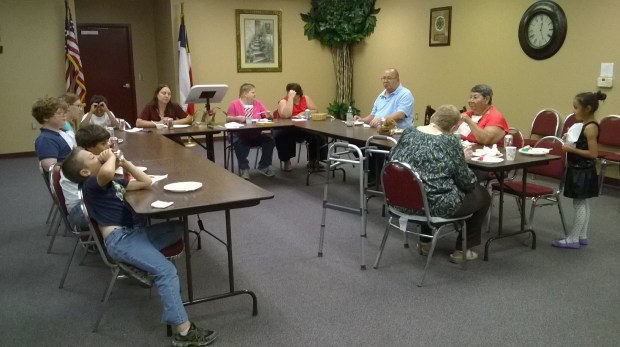
Life Point Baptist Church gathered around a fellowship meal in 2014

Christianity has become such a mainstream facet of American culture that often we pursue the activities of the faith under the assumption that everyone knows the basics. As a result, we rarely discuss the basics because we don’t want to insult anyone’s intelligence. As a result, many move forward on the false assumption that we all understand the basics.

One need not be offended by discussing the basics, or by having the basics taught to them. Legendary Green Bay Packers coach Vince Lombardi often began his first practice of the year by holding out a ball and saying, “Gentlemen, this is a football.” Lombardi then went on to discuss what all you could do with a football, as well as the objective of the game of football. Lombardi explained that the objective of football was to get possession of the ball, maintain possession of the ball, and advance the ball across the goal line for a touchdown. Then, the process repeated. The secondary objective, which was accomplished if you met the first, was to keep the other team from advancing the football across the goal line.

Advancing the football could be accomplished by running the ball, or passing the ball. He demonstrated how to carry the ball, and how to throw the ball, etc. This is riveting stuff for a football novice. However, Lombardi was talking to players who were professionals. These guys had been playing their entire lives. Still, he understood the value of fundamentals. And he was successful.

In that vein, we’d like to return to the fundamentals. And we begin by asking, “What is a church?”

The word, “church,” in the New Testament was translated from a Greek word, ekklesia, which means an assembly. This is important. As our Lord founded the Christian faith, He used words that were already widely in use in that culture. Our Lord did not sit down with the disciples and invent a new vocabulary and systems of practices for this new religion we call Christianity. No, He merely taught that we were to repent of our sins and trust His death on the cross for our salvation. He did so using common words of that day.

So, when the Lord said, “Upon this Rock I will build My church,” He didn’t invent a new word. That’s why none of the disciples said, “What is a church?” They already knew. Our English translations of the Bible say, “Upon this Rock I will build My church.” What the disciples heard was, “Upon this Rock I will build My assembly (ekklesia).”

The word “assembly,” i.e. “ekklesia,” was widely used, and practiced in the Roman Empire. Ekklesias were called out assemblies in local cities used to conduct business, take a vote, or discuss a pressing matter. There was a legal structure and framework for these.

You see this concept in action in Acts 19. The entire city was gathered to discuss the controversial teachings of Paul, who proclaimed that there were no other gods besides God, and that the way to God was through repentance and faith in Jesus Christ. As a result, the local industry (sales of idols to the goddess Diana) suffered as more turned away from idolatry and toward Christianity. The town clerk realized that the assembly did not meet the legal requirements to hold such a meeting under Roman law, and as such, “he dismissed the assembly (ekklesia).”

When Christ said, “Upon this Rock I will build My church,” He said, “upon this Rock, I will build My assembly.” This verse, supported by other verses throughout the New Testament, shows that the will of Christ for His followers is that we are to assemble, conduct His business, and encourage each other.

Therefore, given the meaning of the word, and the will that Christ expressed, and the teachings expressed throughout the New Testament, a church is an organized assembly of saved, scripturally baptized believers who have come together to carry out the Lord’s will. This assembly is a literal assembly, a local assembly.

Which means that, in order to be a part of the church, you must assemble with the church. And the Lord’s will is that you be a part of the church.

At Life Point Baptist Church, we’d love to have you be a part of our church, a part of our assembly. However, if you do not feel led to join with us, we will encourage you to join a church where God is leading you, and that you follow His will there.

May God bless you richly as you follow His teachings.