Philosophy

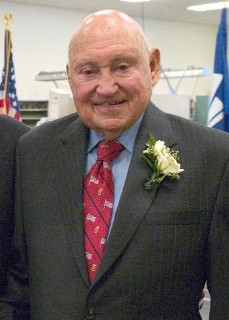
In Honor of Truett Cathy…

Truett_CathyThere are two types of Christians in the world today… those whose faith is part of their overall character, and those whose faith shapes their character. Chick-fil-A founder Truett Cathy fell into the latter category. Before you knew him as the founder of the top chicken restaurant in America, Cathy taught Sunday school at the First Baptist Church of Jonesboro, Georgia, where he often said that the Bible was his guide-book for life. 

While many people acknowledge that the Bible is God’s Word and His instructions for living, few actually put it into practice. Cathy not only taught Biblical concepts to his Sunday school class, he demonstrated them in how he lived, and how he conducted business. 

One of the hallmarks of Cathy’s Chick-fil-A restaurants is that they are closed on Sundays, thus allowing employees a day of rest, and a day to worship. This practice is a demonstration of Cathy’s faith, as Sundays tend to be the biggest day of the week for most restaurant chains. Yet, God blessed Chick-fil-A’s yielding of the most profitable day to His worship. Chick-fil-A sells more fried chicken products than most fried chicken chains. 

The benefits of closing on Sunday cannot be overstated. For a full day, crew members need not worry about being called in, management need not worry if the store is property operating, and maintenance personnel need not worry if the fry vats are working. For one full day, every single employee is able to take the load off of their shoulders and rest. Cathy afforded his employees the opportunity to take a day of rest, to worship, and to relax in God’s grace.

Yet, Cathy’s faith is expressed far and above his decision to close his restaurants on Sundays. In his personal life, Cathy was a foster parent for more than 30 years, and took in more than 200 foster children through his WinShape Homes. His WinShape Foundation also provided college scholarships, and supported marriage seminars to help the younger generation achieve success, and new couples to have strong marriages.

Cathy’s faith wasn’t about personal piety. It was about helping others walk worthy of the Lord. Cathy’s books not only taught business success, they taught readers to inspire others and raise Godly children. It was about reaching out and impacting those around him.

So, here’s honoring a man who personified a life of faith. Cathy allowed God to shape his character by applying the principles taught in the Bible to his life. He truly was a doer of the word, and not a hearer only. As a result, modern Christianity had a witness, that you could serve God and prosper, and that there is more to life than the next quarter’s earnings. Along the way, he impacted the lives of countless foster kids and at-risk youth, inspired Christians to live better, and provided us with the most delicious chicken sandwiches ever.

We can’t all be Truett Cathy. We can’t all build a national franchise, and achieve business success. We can, however, build our foundation out of a faith in Jesus Christ, and build on that foundation by applying God’s Word to our lives. And, while we all can’t create multi-million-dollar foundations and pay for hundreds of kids to go to college, we can all inspire the people around us to look to the Lord, and live a better life. 

Truett Cathy was laid to rest today, and I guarantee you that at some point, the preacher referenced how he “didn’t invent the chicken, just the chicken sandwich.” I am thankful that’s not all he will be remembered for. When your life is over, what will you be remembered for? Your business or financial success? Your personality? Or how you impacted people’s lives for the better?

This is a Man of Faith

Life was hard in the city. The murder rate was skyrocketing, burglaries and robberies were rampant, and rumors of another war circulated among the people. Meanwhile, downtown, the nightclubs were busy with music, alcohol, drugs and prostitution. As times got worse, the divorce rate increased, and some people declined to get married in the first place. 

Yet on the outskirts of town lived a man, who, despite the evil that was rampant in society, continued to live his life peacefully and follow his core convictions. In a time and place where people expected salesmen to lie and cheat, and justice was about who had the best lawyer, not who was actually right, this man continued to deal fairly in his business transactions, and his integrity was unassailable. This man went to worship every week, and stood out as a Godly man in an evil world. 

On occasion, people would take advantage of him, and others would laugh at him for continuing to hold on to old-fashioned, outdated values. Yet, this man endured the abuse and ridicule because he knew that at the end of his life, he would stand before God. He feared the Lord more than man.

While this may describe any number of people in today’s society, the man I am describing is actually Noah (from Genesis 6-8). In Genesis 6, the Bible says that the wickedness of man was great, and that every imagination of the thoughts of man was only evil continually, and as a result, the Earth was filled with violence. Things were so bad, that it repented the Lord that He had made man. This means that God was actually repulsed by what He was seeing.

Yet, in that day, the Bible says Noah found grace in the eyes of God. Why did Noah attract God’s attention? Because Genesis 6:9 says Noah was a just man and perfect in his generations, and Noah walked with God. “Just” means he was saved, and that he treated everyone fairly. “Perfect” means that Noah was complete. When it came to faith, Noah was “the real deal.” He was a true man of God, from the inside out. The Bible also says Noah “walked with God.” This means he lived his life in fellowship with God. He prayed, he sought God’s wisdom, and he obeyed the Lord.

Hebrews 11:7 provides commentary on the life of Noah, when it says “By faith Noah, being warned of God of things not seen as yet, moved with fear, prepared an ark to the saving of his house; by the which he condemned the world, and became heir of the righteousness which is by faith.” What we learn is that Noah’s lifestyle wasn’t one of mere piety, or empty religion, but that his life was motivated by his faith in the Lord.

While Noah’s faith and faith-driven lifestyle were the catalysts for God directing him to build the ark, we’d be remiss if we didn’t consider what it was like to be Noah. In a time where anything went, Noah stayed true to God, and was likely ridiculed as a result. When God directed Noah to build the ark (a project that took nearly 120 years), I’m sure that people made fun of that project as well. Noah lived a significant part of his life following the Lord and looking to His promise, a promise that took years to be fulfilled. While life was hard, Noah patiently waited on the Lord.

In this life, you may find challenges to your faith. Others may ridicule  you, and God’s promises may seem far off. When you find yourself in this situation, just think of Noah. His life was one of constant tribulation, and loneliness, yet he remained true to the Lord. In doing so, he not only honored and glorified the Lord, but God also took the occasion to honor and glorify him. 

In Hebrews 13:5, the Lord said, “I will never leave you nor forsake you.” You may be going through a tough time right now. You may wonder if God even remembers you. You are probably wondering when it will all end. The promise God gives us in the scriptures is that He is working things out according to His plan, that He hasn’t forgotten you, and that He will come to your rescue at just the right time. Trust Him, and live by that faith in Him. In doing so, you’ll not only honor and glorify God, but you’ll place yourself in a position where God can bless you. 

Hitting the Reset Button on Life

Toward the end of The Shawshank Redemption, Red, portrayed by Morgan Freeman, gave the following speech at a parole hearing when asked if he had been rehabilitated:

There’s not a day goes by I don’t feel regret. Not because I’m in here, because you think I should. I look back on the way I was then: a young, stupid kid who committed that terrible crime. I want to talk to him. I want to try to talk some sense to him, tell him the way things are. But I can’t. That kid’s long gone, and this old man is all that’s left. I got to live with that.

Who can relate to looking back on one’s younger self, and wishing they could relate the consequences of their actions? The problem is, when we’re young, we lack the wisdom to foresee the consequences of our choices, and actions. Many people find themselves in a place today where they never intended to be, nor did they desire to be.

While some people made good choices in their youth, they placed their faith in Jesus Christ, went to college, graduated from law school, built a career, stayed away from drugs/alcohol, and were faithful to their spouses, many made poor choices, and as a result, have seen their lives torn to shambles. Such hopelessness has some contemplating suicide, others contemplating running away. Oh, if there was just a reset button on life? Such as the one on the old Nintendo Entertainment System…. if the game wasn’t going well, just hit the reset button, and start over.

The good news of the Gospel is that such a reset button exists, although the results may not be as instantaneous as the NES reset button.

In Matthew 8, scripture records the cleansing of the leper. Now, leprosy in Bible times was a horrible debilitating disease. It formed lesions on the skin that would get infected, scar, and leave the victim disfigured. It also killed the nerve endings in the skin, leading to injuries to the body’s extremities and face.

In many ways, leprosy was like sin. It destroyed, scarred, spread, and left one disfigured. Also, just like ancient leprosy, one can’t heal himself from sin, or the sin-curse. 

In Matthew 8, a leper came to Jesus and said, “Lord, if you will, you can make me clean.” Jesus replied, “I will, be thou clean.” The Bible says that immediately, the leper was made clean. This means that not only was he healed of his leprosy, but the sores, scars and injuries were gone. Christ had removed the disease from him, and healed him from the effects of the disease. The leper was now a new man. In essence, he hit the reset button on life. He had a new lease on life.

Now, in every miracle Jesus performed, there are two meanings… the physical meaning, and the Spiritual meaning. The physical meaning of the healing of the leper is obvious. Christ has the power over disease, and the power to heal. If you are suffering from a physical disease, Christ can heal you, and often times will, if you trust Him and turn to Him in prayer.

However, the Spiritual application is much better than the physical, because by cleansing the leper, Christ showed us how he cleanses us from sin. As mentioned earlier, sin and leprosy are a lot alike… except sin is a spiritual disease, and leprosy is a physical disease. Our sin destroys us, and scars us, and we cannot cleanse ourselves from sin, or its effects. Just like that leper, we have to turn to Jesus for salvation, forgiveness, healing, cleansing and restoration. And just like that leper’s cleansing was immediate, our salvation and forgiveness is immediate as well.

However, Christ does not stop with just saving our souls. He goes on to clean up our lives, and restore us to a place where we can serve God, and have a positive impact on others. He places us in situations where God can bless us. He begins that work in us, and continues it until the day we die. Thus, the day we repent of our sins and trust Jesus Christ as our personal savior, we effectively “hit the reset button” on life, and the Lord puts us on a new course. 

Speaking from personal experience, I can tell you that my life before I accepted Christ was destined for destruction. Since Christ saved me, He has worked in my life, building me, remolding me, and placing me in situations where I can see Him work, and He blesses me. It’s a great place to be.

So, if you are trapped in your current situation, and feeling hopeless, remember, there is a reset button on life… and his name is Jesus Christ.

May God bless you, guide you, and keep you…

-Leland Acker

Carpe Diem vs. Redeeming the Time

The passing of Robin Williams this week may have you re-thinking your bucket list, as well as ways to “carpe diem,” or “seize the day.” Indeed, you may very well be thinking of ways to “seize the day” after watching the clip of Williams giving the “carpe diem” speech during the movie, “The Dead Poets Society.”

Seizing the day means making the most of every opportunity, and enjoying life while you can. This is a concept that goes back centuries, as poets and philosophers encouraged people to try new things, scale new heights, and conquer new obstacles. In most cases, seizing the day is a good thing, whether it be skydiving for the first time, or accepting one’s dream job, or going back to college. 

Times I’ve personally seized the day include the time I rented a Cessna aircraft and hired a pilot to give us an aerial tour of our hometown on the day I proposed to my wife, the day I took the family to the top of Pike’s Peak, and the time I snuck onto the set of Denzel Washington’s “The Great Debaters” to get a picture of the actor himself. (I didn’t get my Denzel Washington pic, his security team intercepted me, but I got 15 minutes worth of pictures on the set, which were published in the local newspaper. I will never be able to watch the depot scene of that movie without thinking of that day).

Life is an adventure you only get to take once, so I encourage you to visit New York, see the Grand Canyon, do something that scares you, push your limits, try new things, and visit the Sequoya National Park in California.

While you seize the day, however, don’t forget to redeem the time. Ephesians 5:16 says we are to be “redeeming the time, because the days are evil.” The word to “redeem” means to buy back, or to save from loss. While we know that we cannot buy back time (once a day is gone, it’s gone,) we do know that we can save the time from loss. Another words, there is no reason we should waste our lives.

Now if you look at the context of the Bible verses that encourage us to redeem the time (Ephesians 5:16 and Colossians 4:5), you’ll notice that the context is to redeem the time while you serve the Lord. In other words, make your life count for something. This will happen if you redeem the time, not necessarily if you seize the day.

Seizing the day is like a roller-coaster ride. It’s fun, exciting, eventful, and you’ll never forget it. However, that roller-coaster ride did not change your life, nor did it change anyone else’s. It may have well been worth the price of admission, and it was a fun thing to do, but it lacks any lasting impact. Redeeming the time involves using your life to impact others for good. Whether it be spreading the message of salvation, ministering to those in need, feeding the hungry, providing healthcare to those without, or anything else that glorifies God and advances His Kingdom. 

So, as you go through life, Sieze the day! Carpe Diem! Enjoy life, take opportunities, make the most of them. But don’t forget to redeem the time… because when this life is over, you don’t want to stand in the judgment with nothing to show for your time here on Earth.

How are some ways you’ve seized the day? What are you doing to redeem the time?

May God bless you,

Leland Acker

Sweet Fellowship…

WP_20140713_007Today was potluck Sunday at Grace Pointe. Every second Sunday, we eat a potluck meal following morning services. Each member brings their favorite dish to share with the rest of the congregation. Sometimes, we even set themes for the lunches, and everyone brings something centered around that theme. Themes we’ve used in the past include Tex-Mex and Southern cooking.

At Grace Pointe, we enjoy potluck Sunday because it builds fellowship. Fellowship is a close association, an intimate partnership where people share a common background and are going in a common direction. It’s an extremely close friendship. The potluck lunches provide another opportunity for us to get to know each other, share in each others’ struggles and victories, and encourage each other as we live for the Lord. As we do this, our fellowship grows… and that’s why Baptists call meals at church “fellowships.”

Did you fellowship with anyone this week?

What Do You Really Believe?

During a recent trip up the Pike’s Peak Highway, park rangers warned me to use caution on the way back down the mountain. Downhill mountain roadways propel vehicles to higher speeds, and place additional strain on brakes as drivers try to slow down for the hair-pin turns. Too much reliance on brakes will overheat the brakes, and overheated brakes fail, resulting in traffic accidents.

To avoid overheated brakes, the park rangers advised me to down-shift to 1st gear, and let my transmission regulate my downhill speed. Seeing the high-altitude drop-off to the side of my vehicle, I decided to follow the rangers’ advice. Several minutes later, I safely arrived to the bottom of the mountain.

I believed what the rangers told me, therefore I obeyed their advice. Consider another example…

As a child, I was always told that if I made funny faces, my face would freeze in whatever contorted shape I made it. Disregarding this advice, I continued to make funny faces, and to my knowledge, my face never froze. I did not believe my parents’ warning about frozen faces.

In both cases, what I believed, and what I didn’t believe, guided my actions. With that in mind, consider the following….

Suppose a man goes to church on Sunday, listens to the preacher, then spends the rest of the week going to the bars, getting drunk, womanizing, and using foul language. Did he believe the word that was preached Sunday? Probably not.

You see, what you believe will guide your actions. If you believe that sin destroys lives, you will steer away from sin. If you believe that God blesses obedience, you’ll follow Biblical principles in your life. Taking these two concepts into consideration, we learn that we can gauge our faith by observing our own lives. The Bible teaches that we should examine ourselves.

What does your life say about your faith? What do you believe?

Sunday morning (8/10/14) at Grace Pointe, we will see that where we walk shows what we believe. We will learn what it means to be “in Christ,” and the blessings that come with salvation. The study will be from Romans 8, and morning worship begins at 11 a.m. at the Early Chamber of Commerce’s Small Business Incubator at 104 E. Industrial, Early, TX, 76802. Sunday School starts at 10 a.m.