Jesus

The Resurrection…

Of all the things that Christians believe, the resurrection of Jesus Christ is the most incredible. Scripture teaches us that Jesus Christ was betrayed, and turned over to the Romans, who crucified Him, killed Him, then released His body to Joseph of Arimathea, who buried Him in the tomb. On the third day, Jesus was raised back to life, and He walked out of the tomb.

The belief is so incredible that a young investigative journalist by the name of Lee Strobel believed he could debunk the entire Christian religion simply by proving that the resurrection of Jesus never happened. Instead, Strobel encountered a mountain of evidence that supported the resurrection of Christ, from the number of copies of the scriptures that have been preserved over the centuries, to secular writings about the resurrection, to written testimony of the Apostles.

Strobel compiled this evidence into a book, entitled, The Case for Christ, which was later made into a movie. Strobel himself became a believer.

However, 2,000 years before Strobel embarked on his proof of the Gospel, the Apostle Paul had already laid out the case that the resurrection was indeed reality. In 1 Corinthians 15, Paul noted that Jesus was seen after the resurrection by the 12 apostles, by Peter, and by 500 brethren at once, some of whom were still alive at the time of Paul’s writing, and could personally attest to the truth of the resurrection. Paul could produce eye witness testimony.

The resurrection of Jesus Christ is the third and final part of the Gospel, how that Christ died for our sins according to the scriptures, that He was buried, and that He rose again the third day according to the scriptures (1 Corinthians 15:3-4). Since the resurrection happened, we have proof that the Gospel is true.

But what does the Gospel mean for us?

In 1 Corinthians 15:1-2, Paul wrote, “Moreover, brethren, I declare unto you the gospel which I preached unto you, which also ye have received, and wherein ye stand; 2 By which also ye are saved, if ye keep in memory what I preached unto you, unless ye have believed in vain.”

Paul told the Corinthians that they received the Gospel, and the Gospel was what made them stand, that is, have standing in the Kingdom of God. In other words, without the Gospel, they would have no standing in God’s Kingdom, and would be condemned. But they received the Gospel, and had standing, and therefore, by the Gospel, they were saved.

It works the same for us. When you receive (that is, believe) the Gospel, you are saved from God’s wrath and given standing in the Kingdom of God. This is all made possible by the death, burial and resurrection of Jesus Christ. This is all proven by the resurrection of Christ.

In Romans 6, the Apostle Paul takes it a step further. Not only does the resurrection prove the Gospel, and not only does it secure our salvation, but it also transforms us.

In Romans 6:4-5, the Bible says, “Therefore we are buried with him by baptism into death: that like as Christ was raised up from the dead by the glory of the Father, even so we also should walk in newness of life. 5 For if we have been planted together in the likeness of his death, we shall be also in the likeness of his resurrection:”

When Jesus rose again, He did not walk out of that tomb in the same broken body that was placed within it. Instead, He walked out of that tomb with a new, glorified body. The only signs left from the crucifixion were the nail scars in His hands, and the hole in His side from the spear thrust into Him by a Roman guard. The Lord purposefully kept those scars as a reminder of what He did for us, and they were the reason why the Apostle Thomas repented of His unbelief and worshipped Christ.

When the Lord returned from the grave, He was transformed and glorified. Likewise, we also should be transformed by the power of the Gospel. How? The Bible tells us in Romans 6, to reckon ourselves dead to sin but alive unto God, and to yield our bodies as instruments of righteousness rather than sin.

If you have believed the Gospel, you have repented of your sin and trusted Christ to save you. If you have trusted Christ to save you, then that belief will change you.

Therefore, as we study the resurrection, we must ask ourselves, “Has the Gospel changed us?” If not, perhaps it’s time to do what Peter told us, to “make our calling and election sure.”

May God bless you as you follow Christ.
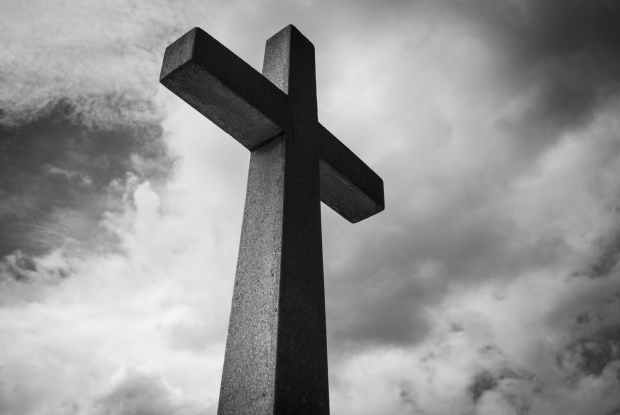
The Death…

black and white cemetery christ church

Photo by Pixabay on Pexels.com

“For the wages of sin is death; but the gift of God is eternal life through Jesus Christ our Lord.” – Romans 6:23

The circle of life used to be a straight line, and the daily struggle didn’t exist. Such was life in the Garden of Eden, as God prepared a perfect place for man to dwell with a plentiful food supply, an automatic sprinkler system, no bad weather, and no problems. Adam and his wife, who would later be named Eve, were to enjoy the garden to its fullest, eat as much of the fruit as they wanted, and to do light gardening work as they desired. (Irrigation was covered, and there were no weeds, thorns or pests, so all work was recreational.)

In this perfect world, there was no death. Adam would not die. He would be allowed to live to see what his children, grandchildren, etc, would become. He would live to see what his work would produce. He would live to see the society he would build. It was perfect.

There was one stipulation. The tree in the midst of the garden, the tree of knowledge of good and evil, was off limits. This was for two reasons. (1) God wanted man to obey, love and worship Him by choice, and (2) God did not want man to experience the evil he knew Satan already had planned for His creation.

Therefore, God warned Adam, “But of the tree of the knowledge of good and evil, thou shalt not eat of it: for in the day that thou eatest thereof thou shalt surely die.”

Adam likely did not have any concept of death. Prior to his sin in the garden, there was no death. Adam had never mourned for his dog who died, had never suffered that separation from a close loved one, and had never experienced lost fellowship with God. He had no concept of death. However, if God warned against it, it must be bad, and therefore the tree of knowledge of good and evil must be avoided.

The Biblical meaning of death is separation. Separation of soul from body. Separation of man from God. The day that Adam ate the fruit, his soul wasn’t separated from his body, but he was separated from God. Death happened. And death, both the separation of the soul from the body, and the separation of man from God, happened the day Adam and Eve sinned against God by eating of the fruit of knowledge of good and evil.

Since that time, man has sinned, and his sin has become progressively worse. Man has become ever estranged from God. Man rebels against God, His word, His law, His design. As man does this, things on earth get progressively worse. Adam didn’t live to see a great society built. He lived to see the world become so bad that God decided to destroy it with the flood. (Adam didn’t live to see the flood, but he did live to see the conditions that led to it.)

Sin separated man from God, therefore man died, and sin reigned. And so it was.

The wages of sin is death, but the gift of God is eternal life through Jesus Christ our Lord.”

The death prescribed by God in Genesis 2 went beyond physical death. It also meant an eternal death, an eternal separation of man from God, where God was no longer man’s Father and Provider, but rather man’s judge, jury and executioner. Sin brings death. Death brings judgment.

Yet, God loves us too much to leave it at that. Romans 5:8 says “God commendeth His love toward us in that while we were yet sinners, Christ died for us.”

The death Christ died was the death brought on by our sin. The death Christ died was the death we deserved. The death of Christ on the cross was not a mere physical death, from which the Lord could easily heal Himself. It was a separation… His Spirit from His body, but moreover, His separation from His beloved Father.

As Jesus hung on the cross, saying, “My God, My God, Why hast thou forsaken Me?” He was not merely shouting out in agony. Neither was He sad that God “turned His back on Him.” Jesus cried, “My God, My God, Why hast thou forsaken Me?” because the relationship had changed.

The perfect union between God the Father and God the Son had been converted to the relationship of judge and executioner. Instead of lovingly comforting His Son, God was now judging His Son, and pouring out His wrath on Christ for all the sin of the world. This was done to satisfy the requirement for death, so that man could be saved from God’s wrath, if man repents and believes.

Out of all the cruelties that Christ endured on the cross, the hardest part was enduring the wrath of God.

Pastor Bobby Sparks of Emmanuel Baptist Church in Greenville, Tex., who also heads up the Tabernacle ministries, says that on the day of the crucifixion of Christ, man was given one “hour” to do unto God has he pleased. Pastor Sparks then points out how man treated Christ with more cruelty and shame than has ever been dealt to any other human being in history.

The cruelty of the Romans, the scourgings and beatings, the mocking of the crowds, merely demonstrated the evil and sin within man’s heart. It was the wrath of God poured out onto Jesus that settled our sin-debt, cleared us from guilt, and makes reconciliation with God possible.

Jesus Christ died that death, so we don’t have to. Yes, we will one day close our eyes as our soul leaves our body. However, we do not have to suffer an eternity separated from God. Are you willing to trust what Jesus Christ did on the cross for your salvation? Do you trust the Lord? Then turn from your sin and follow Him.

May God bless you.

Gospel Week: Celebrating the Central Theme of Christianity

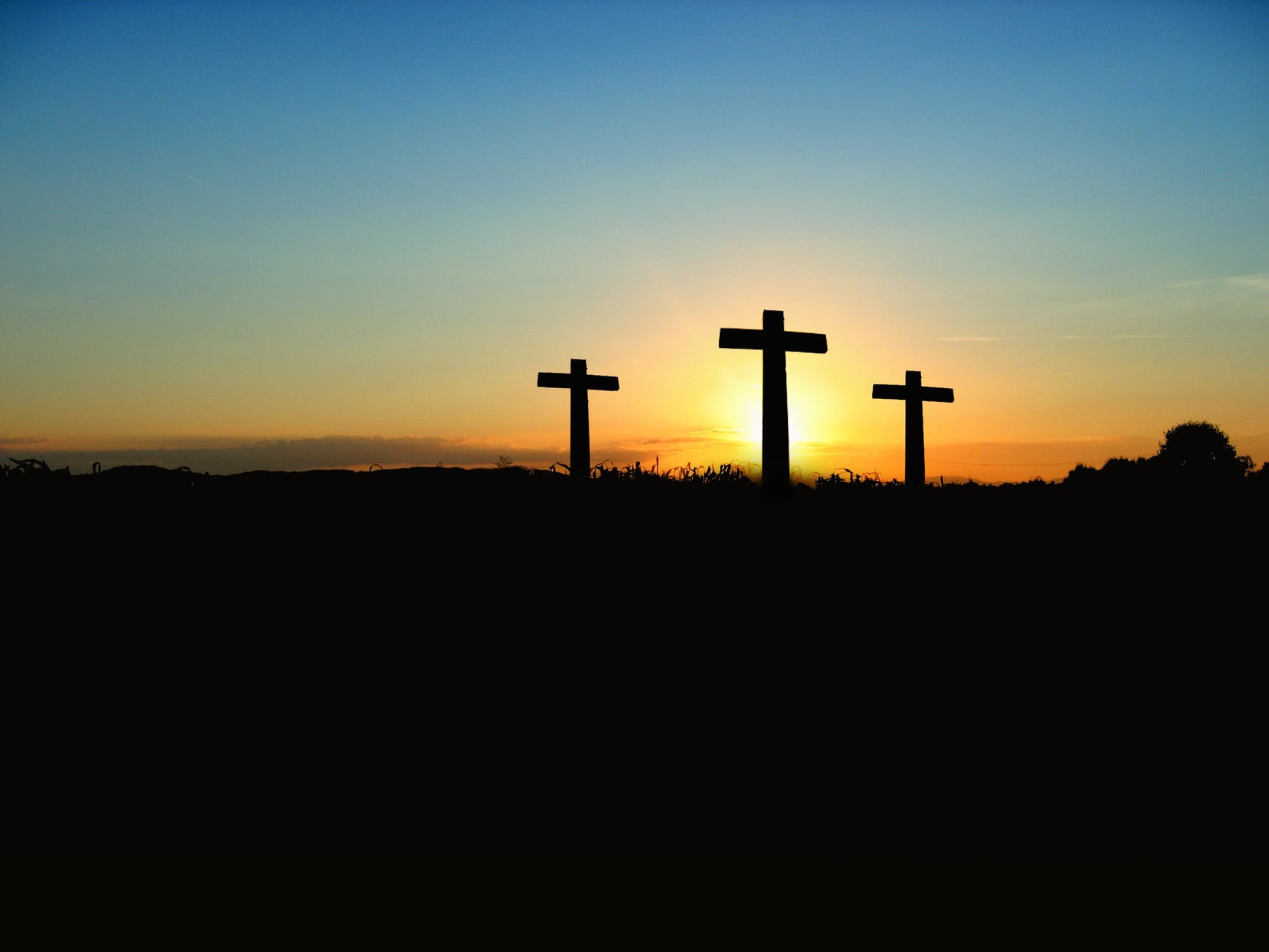
cross-sunset-sunrise-hill-70847.jpeg

Photo by Pixabay on Pexels.com

Redemption.

This is the one thing that all people seek. Redemption.

It is romanticized in literature, sought through accomplishments, and desired for lifetimes. Redemption.

Redemption is often called by different names: liberation, validation, triumph. At the heart of these desires, however, is redemption.

Last weekend, millions across America celebrated Tiger Woods’ victory at the Masters. Woods’ first Masters victory in 11 years, coupled with his recovery from injury, personal failures, and controversy, prompted many in the media to hail his “redemption.”

Redemption was a theme interwoven into the NFL careers of Carson Palmer and Bruce Arians, whose careers had been sidelined due to firings and trades, then re-ignited when they were signed by the Arizona Cardinals, before making it to the NFC Finals.

The word, “redemption,” may not be used, but it has captured the hearts of writers, poets and artists. Redemption is celebrated in songs, such as Aerosmith’s “Amazing,” fairy tales such as “Cinderella,” and countless movies and TV shows. Every story about the aging athlete seeking one last championship, every story about a child seeking a long-lost parent, every story about a businessman seeking one last deal, or the advocate seeking one more victory over Wall Street, is a story about a protagonist seeking redemption. Redemption is a theme of every rags-to-riches story, and every story about overcoming loss.

We frame it in so many ways, but at the end of the day, all we are really after is redemption. And true redemption cannot be found in one last championship, one last victory, or in a dream come true. No matter what victories we score in life, we will never receive the fulfillment we seek, unless our redemption is a Spiritual one.

And that’s what Christ purchased on the cross for us.

In 1 Corinthians 15, Paul lays out the Gospel of Jesus Christ. He reminds the Corinthians in verse 1 that they have received the Gospel, and it is the reason they have standing in God’s Kingdom. He then reminds them that the Gospel is the basis for their salvation. Essentially for them, and for us, the Gospel is the source of our hope for the future, our hope for eternal prosperity in God’s Kingdom, and our hope that all that is wrong will be made right.

Then, in one of the most important things ever written, Paul defined the Gospel. In 1 Corinthians 15:3-4, Paul wrote:

For I delivered unto you first of all that which I also received, how that Christ died for our sins according to the scriptures; 4 And that he was buried, and that he rose again the third day according to the scriptures:

How did Christ purchase our redemption? He died for our sins, He was buried, and He rose again the third day in fulfillment of the Old Testament scriptures.

The death of Jesus Christ on the cross paid the price for our sin. 1 John 2:2 says that He is the propitiation for our sins. A propitiation is a payment made to God to atone for sin. A propitiation cancels a debt owed as a result of sin. To make this payment on our behalf, Christ gave Himself, and was nailed to the cross, and gave up His life.

In doing this, Christ not only paid our debt, but He also removed the stain and guilt sin left on our lives (Isaiah 1:18, “Though your sins be as scarlet, they shall be white as snow.”) Essentially, the old has been washed away, and all things have been made new. New life, new Spirit, new us, new hope. (Isaiah 43:18-19, Revelation 21:5, Ephesians 2:15, Ephesians 4:24, 2 Corinthians 5:17).

Historically, churches have commemorated the death of Jesus Christ on the cross on “Good Friday.” (In all actuality, He was likely crucified on a Wednesday, but that’s a story for another day.) On Easter Sunday, we celebrate His resurrection.

In 1 Corinthians 14:3-4, Paul wrote that the Gospel is how Christ died for our sins, according to the scriptures, that he was buried, and that He rose again the third day according to the scriptures. He then spends the rest of the chapter defending, and advocating, that Christ rose again from the dead. When you see how adamantly Paul argued that the resurrection happened, you will understand not only how important this doctrine is to Christianity, but also how much hope it gives us.

As Phil Robertson once said, “A dead savior can’t do much for you.” However, a living Savior advocates for you and opens the doors of Heaven for you.

The resurrection of Jesus Christ shows us His victory over death, which will also be our victory if we know Him as Savior. And that’s true redemption. To be rescued from the pain of this life into an eternal life with no pain, to be transformed from the old you into a gloriously new version of you, and to be cleansed from all unrighteousness is the ultimate redemption, and that is truly what we celebrate, not just every Easter, but every Sunday as well.

Come join us for Sunrise Service, 7 a.m. Sunday, April 21, 2019, at the Early Visitors and Events Center at 419 Garmon Dr. in Early, TX.

The Power to Forgive (Mark 2:1-17)

In Mark 2, Jesus is in a house teaching the people about the coming Kingdom of God, their need to repent, and how salvation comes by faith. Many were bringing their sick and disabled loved ones to Jesus for healing, and a crowd had gathered to the point that no one could enter the house.

Then, four men show up carrying their friend who is “sick of the palsy.” Being unable to get him in the door, the men carry him up on the roof, break a hole in the roof, and lower him down in front of Jesus. It is at that moment that the Lord says something peculiar, “Son, thy sins be forgiven thee.”

Seeing this man disabled and in pain, the first thing Jesus said was, “Your sins are forgiven.” Why?

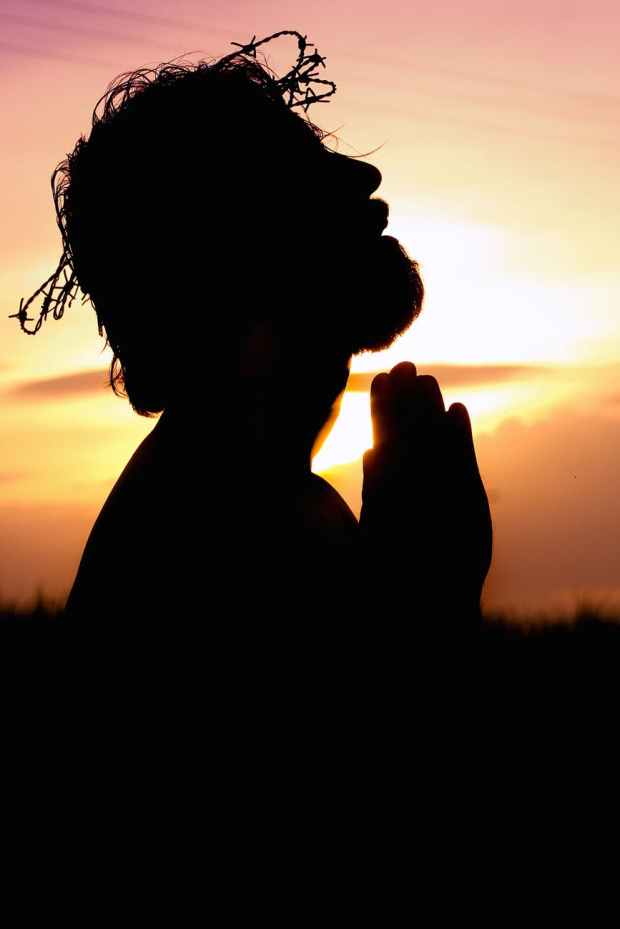
silhouette image of person praying

Photo by Rodolfo Clix on Pexels.com

Because whether or not we realize it, forgiveness of sin is our greatest need. We need forgiveness more than we need anything else. In this life, we face problems, and there are times we are not sure whether we will make it. Sometimes, our finances are in the tank. Sometimes, our relationships struggle. Sometimes, we suffer health problems. However, no cure to these problems will bring us the peace that comes through the forgiveness of sin.

If we suddenly obtain wealth, we still face the problem of future expenses. If our relationships are healed, there are still the scars of former hurt. Our health will progressively get worse as we get older. Yet, forgiveness of sin is not only an eternal blessing, it removes the fear of the next life from us. Forgiveness of sin will give us an eternal blessing that no earthly blessing can give.

Has God forgiven your sin? Has He forgiven your neighbor?

Take a listen to the above-posted sermon, and give God the glory for forgiven sin.

The Fishers of Men Sermon (Audio)

The Gospel according to Mark was written to record Peter’s teachings about Jesus, so it should come as no surprise that the Lord’s call to the disciples to “come, and I’ll make you to become fishers of men,” had a profound impact on Peter. A fisherman by trade, and one who found balance on the water, Peter understood life best when he was casting a net, which is likely one reason he returned to fishing in John 21.

When Jesus called the disciples to follow Him, and become fishers of men, He was not only calling them to be His apostles. He was telling them what they would be doing.

grayscale photo of man throwing a fishing net

Photo by DoDo PHANTHAMALY on Pexels.com

Being fishers of men, the disciples would cast a proverbial net to bring people into the Lord’s presence. They would labor to bring people to salvation in Christ.

Likewise, we are called to be fishers of men. Our call mirrors that of the disciples. Jesus has called us to follow Him, to cast a wide net, and to work together.

We are called to follow Jesus. The disciples were called to follow. When Jesus said, “Come ye after me,” in Mark 1:17, He was telling them, “Fall in behind me and follow Me where I go.” Jesus led. They followed.

For us, following Jesus means that we should hear His teaching, we should follow His teaching, and we need to realize that the miracles and work are His. In Mark 1, it was Jesus who cast out the unclean spirits. It was Jesus who healed Peter’s mother-in-law of her fever. It was Jesus who cleansed the lepers.

For us, it’s Jesus who saves, changes/transforms lives, who hears our prayers and intercedes for us before the Father. We don’t accomplish these things through our own wisdom or innovation. It’s Christ, working in us through the Holy Spirit with the blessing of the Father. We merely follow and obey, ministering, praying and serving as the Lord leads.

Jesus called, and in Mark 1:18-20, the disciples left their nets, boats, fathers and employees, and followed Christ. They left it all behind. To follow Christ, we, too, must leave it all behind. While some are called to leave the life they’ve built in order to become missionaries overseas, not every one receives that order from the Lord.

Being called to leave it all does not always mean that you have to leave here. However, being called to leave it all behind does mean that you will have to leave your unscriptural beliefs behind in order to follow Jesus. You will also have to leave the friends who hinder your walk with Christ. While it is good to have lost friends to whom you can witness, if that friend is openly rejecting the Gospel and discouraging you from following Christ, that friendship is detrimental to your Spirituality. We also have to leave behind our sin and rebellion against God.

Following Jesus meant starting over for the disciples. For us, it means starting over by allowing Christ to transform us from the inside out.

The question then becomes, “Are you following Christ? Or are you wanting Him to fill the gaps in your life?”

May God bless you in your Spiritual journey.

See also:

The Futility of Fishing Alone

Let’s Go Fishing

When It Happens…

On Sunday, Sept. 16, 2001, there were very few empty seats in the churches across America. Over the prior week, Americans had seen the worst terrorist attack executed on the homeland in history. In the following days, we learned that the 9/11 attacks were orchestrated by a Middle-Eastern terrorist group called Al-Qaeda, and that we were almost certain to go to war in the Middle East.

Middle Eastern wars and world wars have a way of shaking us from our slumber, because they have the potential to fulfill Bible prophecy, which means the end times could be near, and judgment is coming.

Believing the end may have been near, and that judgment was coming, Americans flocked to their local churches to learn whether the attacks of the prior week had prophetic significance, and to learn how close we were to the end.

Within two weeks, fears of the end had subsided, and church attendance slipped back to normal.

There is something about seeing prophecy fulfilled, or believing that the Lord’s return is imminent, that drives people to sudden repentance and religion.

Such was the case in Mark 1:1-15. Mark opens his account of the Gospel by quoting Old Testament prophecies about the forerunner to Christ. In verses 2-3, he writes:

As it is written in the prophets, Behold, I send my messenger before thy face, which shall prepare thy way before thee.The voice of one crying in the wilderness, Prepare ye the way of the Lord, make his paths straight.

These verses, taken from Isaiah 40:3 and Malachi 3:1, promised that before Christ came, His messenger would arrive and call the nation to repentance. Mark then went on to discuss how John the Baptist fulfilled this scripture:

John did baptize in the wilderness, and preach the baptism of repentance for the remission of sins.And there went out unto him all the land of Judaea, and they of Jerusalem, and were all baptized of him in the river of Jordan, confessing their sins.

-Mark 1:4-5

Seeing the messenger promised in the scriptures, the people flocked to John the Baptist to be baptized with the baptism of repentance in preparation of the coming of the Lord. Not long after that, Jesus came, was baptized of John, went into the wilderness, and re-emerged preaching repentance and belief in the Gospel.

In recording these events, Mark makes two observations. (1) Those events indicated that the Kingdom of God was about to arrive, and (2) with those events having happened years prior to his writing, we are even closer to the day of judgment than we were before.

Thus, Mark writes his Gospel with urgency, quoting Jesus Christ as He called the nation to repentance.

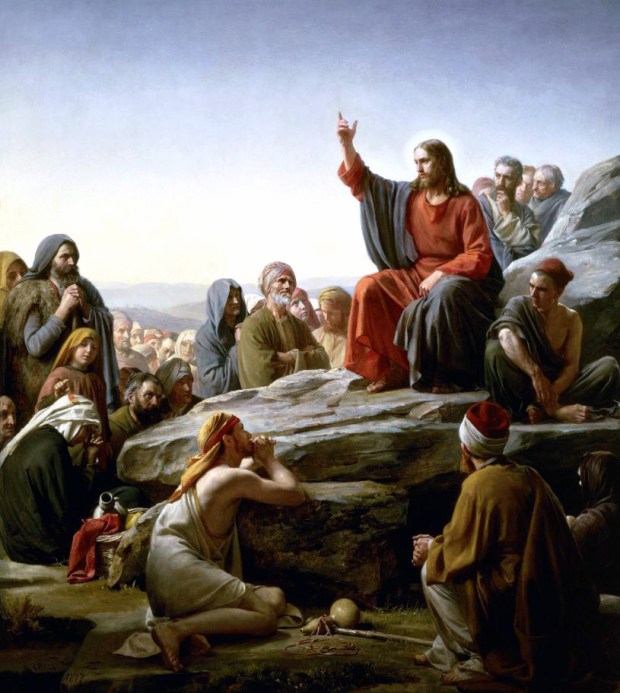
Bloch-SermonOnTheMount

The words of Jesus in Mark 1:15 are not only the theme of the Gospel of Mark, but they are the sum of the Lord’s teaching. “The time is fulfilled, and the kingdom of God is at hand: repent ye, and believe the gospel.”

The Lord warns us that the time is fulfilled, and the Kingdom of God is at hand.

What does it mean, “The time is fulfilled?”

If you have ever baked cookies, or even heated a frozen pizza in the oven, you have likely set a timer according to the instructions on the box. When that timer goes off, the time has been fulfilled, and your cookies or pizza is now ready.

When Jesus said, “The time is fulfilled,” He essentially said, “Time’s up! Time to repent. The Kingdom is here.”

We tend to live life as if we have all the time in the world to straighten out our Spiritual matters. Within two weeks after 9/11, we collectively decided that Jesus was not coming back, yet, and thus we quit going to church. We tend to put off Spiritual decisions, commitments to Christ, and resolve to take on those decisions on a more convenient day, which somehow never seems to come.

However, the day will come when our time will be up. And that day is closer than you think.

Whether Jesus comes back tomorrow, or whether he comes back next century, you are still closer than you think to judgment day, for scripture tells us, “It is appointed unto man once to die, and then the judgment (Hebrews 9:27).” While I could tell you stories of people who passed away unexpectedly before their time, the truth is, even if you live to be 100, the end of your life will arrive faster than you think. Consider how fast your life has passed by up until now.

Therefore, we need to place urgency upon our Spiritual lives, and bring ourselves into alignment with the will of God sooner rather than later.

After pointing out the time-sensitive nature of our Spiritual lives, Jesus then called us to repent.

To repent means to change your mind regarding your sin, abhorring the sins of the past, and making the changes in your life so that you never go back into that life of sin. This goes beyond sorrow for sin. It includes a decision, and a change to never allow yourself to be owned by that sin again.

This practice is commonly seen by alcoholics and recovering drug addicts. Sorrowful for the way they’ve destroyed their lives with drug/alcohol abuse, they resolve to never allow that to happen again. Therefore, they avoid certain places, people and things that could trigger a relapse. The repentant sinner would do well to follow this pattern.

Jesus then called us to believe the Gospel.

The Gospel is defined as how Christ died for our sin, according to the scriptures, was buried, and rose again, according to the scriptures (1 Corinthians 15:3-4).

Our hope, our confident expectation of salvation and heaven comes not from anything we’ve done, or overcome, but rather what Christ did on the cross. His death on the cross paid our sin debt and cleansed us from all unrighteousness. Being willing to completely trust that, we place our faith in Jesus Christ for salvation.

Christ called us to repent and believe, and so we should. Our salvation experience is not only a life-changing event, it is a total life change.

Seeing then that our time is short, and Christ called us to repent and believe, we should do a self-assessment. Have you repented and believed? Are you saved? Are you different now than you were before?

If the answer to any of those questions is “no,” then it is time to get right with the Lord. Go to Him in prayer. Confess your sins to Him. Ask forgiveness. Trust Him to save you based on His work on the cross. Then, as you arise from that prayer, make the changes in your life to leave sin behind.

If you need encouragers to rally around you during this time, we’d love to help at Life Point Baptist Church. Contact us, or come visit our services. We’d love to be there for you during this important time.

Encountering the Resurrected, Glorified Christ (Revelation 1)

If Jesus were to appear to you today, what would He look like? What would He be like? How would He speak to you, and would you be intimidated to be in His presence?

Such was the case as the Apostle John worshiped on the Lord’s day in Revelation 1. John, who was imprisoned on the Isle of Patmos for preaching the Gospel, was in the Spirit when Christ appeared to Him. He wrote about this experience on Revelation 1:10-17:

I was in the Spirit on the Lord’s day, and heard behind me a great voice, as of a trumpet, Saying, I am Alpha and Omega, the first and the last: and, What thou seest, write in a book, and send it unto the seven churches which are in Asia; unto Ephesus, and unto Smyrna, and unto Pergamos, and unto Thyatira, and unto Sardis, and unto Philadelphia, and unto Laodicea.

And I turned to see the voice that spake with me. And being turned, I saw seven golden candlesticks; And in the midst of the seven candlesticks one like unto the Son of man, clothed with a garment down to the foot, and girt about the paps with a golden girdle.

His head and his hairs were white like wool, as white as snow; and his eyes were as a flame of fire; And his feet like unto fine brass, as if they burned in a furnace; and his voice as the sound of many waters. And he had in his right hand seven stars: and out of his mouth went a sharp twoedged sword: and his countenance was as the sun shineth in his strength.

And when I saw him, I fell at his feet as dead.

Bloch-SermonOnTheMountThis glorious appearance of Jesus Christ is a far-cry from the happy-hippy image of Jesus made popular by Renaissance paintings.  Instead of a gentle looking man with long, brown hair and a most excellent beard, John saw Christ as bright as the sun, with white hair, eyes of fire, and brazen feet. The fact that He had a two-edged sword as a tongue is even more intimidating.
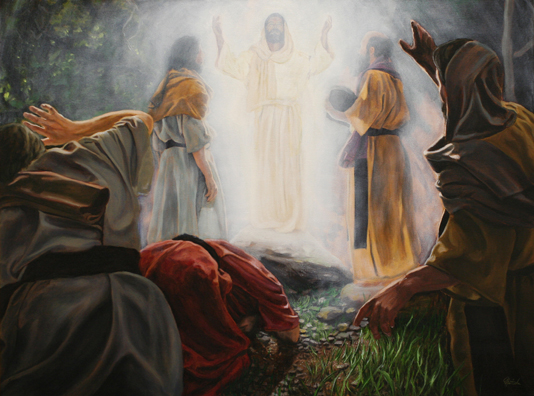
Upon seeing Christ, the Apostle John, the disciple whom Jesus loved, who was the closest of all the disciples to Christ, who walked and talked with Christ three and a half years, fell at His feet as dead.

This experience reminds us of the glory of Christ. No longer is He the suffering Savior nailed to the cross. No longer is He meek and lowly, submitting Himself to self-sacrifice for mankind. His sacrifice has been completed, and our salvation is paid. Now, the resurrected Christ sits in His glorified form at the right hand of the throne of God.

It would do us well to remember that our Lord and Savior Jesus Christ is not merely a “buddy” or companion. He is our creator, God in flesh, Who loved us and gave Himself for us. We should revere Him as such.

Yet, as intimidating as this encounter was for John, the mission of Christ is redemption and restoration, not judgment and wrath. Therefore, when John fell on his face as dead, Christ told Him to fear not, and lifted Him up.

Indeed, the risen Christ is a comfort, not a condemnation to those of us who believe.

In the above posted episode of “The Point,” we study Revelation 1, exploring the things Christ did for us, the power of His resurrected form, and we explore how Christ sees us. It’s well worth the listen.

Revealing Christ

the-transfigurationOn Sunday, Life Point Baptist Church began a study into the book of Revelation.
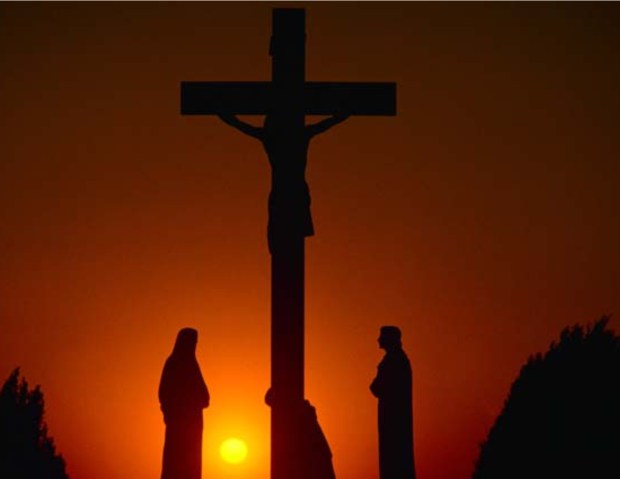
This book is known by many names. Some call it “Revelations,” and others call it “The Revelation of St. John the Divine.” However, neither of these titles are accurate.

The title of the book is given in the opening line of Chapter 1, verse 1, “The Revelation of Jesus Christ.”

That title more aptly describes the book of Revelation, as the book describes the revelation, or the unveiling, of Jesus Christ to the entire world at the end time. The book is not a series of revelations, rather, it records a series of events that reveal Christ Himself.

Furthermore, the book is not “the Revelation of St. John the Divine,” as St. John was neither divine, nor is he the one being revealed. While the revelation was revealed to John, John was not the object of the revelation. Christ was.

This is an important detail as we embark on a multi-week journey through the book of Revelation. We will study how the book reveals the character of the risen, glorified Christ, and how one day He will return to Earth to establish His Kingdom and judge the living and the dead.

We will continue this study during worship service Sunday Morning at 11 a.m. at the Early Chamber of Commerce Small Business Incubator facility at 104 E. Industrial Dr. in Early. Come see us.

The Art of Redemption

Crucifixion Sunset

Giving thanks unto the Father, which hath made us meet to be partakers of the inheritance of the saints in light: Who hath delivered us from the power of darkness, and hath translated us into the kingdom of his dear Son: In whom we have redemption through his blood, even the forgiveness of sins:

-Colossians 1:12-14

Redemption.

For some, it means validation. For others, it means to be set free. For others, it is the chance to go back and correct a wrong, or to try again after a failure and achieve success.

Redemption.

While these elements can accompany the Biblical meaning of redemption, true redemption goes much further. When the Bible tells us that God redeemed us through Jesus Christ, it tells us that he did more than validate us, set us free, or give us a second chance.

Biblical redemption carries with it the meaning of restoration.

In Old Testament times, slavery was a practice used to settle debt. If a man was in debt without any hope of being able to repay it, he could be sold into slavery. In order to make this dark practice more humane, and in order to teach us about salvation, God wrote into His law several provisions that would free slaves, one of which was redemption.

If a man were sold into slavery for, say, $50,000, and his brother learned that he had been sold into slavery, his brother could go to his master and buy his brother back. The slave master was obligated to sell the slave back to his family at the price he paid, without collecting a profit.

That process was known as “redemption.” The man would return home, a free man, no longer a slave. He would be reunited with his family and be able to farm his land and work his vocation. He was redeemed. He was restored.

Notice that the redeemed man did not become a slave to his brother who had purchased his freedom. Notice also that the man no longer owed the debt. He was completely free, and his life was restored. What an amazing feeling that must have been.

Scripture teaches us that, just like Old Testament slaves were redeemed by their families, God has redeemed us.

Just as that man in the Old Testament was sold into slavery, owing a debt he could not repay, we begin life as slaves to sin, owing a debt we cannot repay. Just as the brother of that man in the Old Testament purchased his brother out of slavery, Christ purchased us from sin, paying our sin-debt by giving His life on the cross.

And just as that man in the Old Testament was reunited with his family and set free, Christ has restored our lives and set us free. Restoration. Without it, there is no true redemption. Freedom. Without that, there is no redemption, for if you have not been freed, you have not been redeemed. You’ve merely been sold.

Therefore, when Christ redeems us, He has made us free indeed! Then, He begins the process of restoring our lives by transforming us into the persons He intended on being.

This concept is illustrated in countless ways in scripture. The redemption Christ offers us teaches us a few things.

First, we should accept the redemption. A man in the Old Testament who was set free could choose to remain a slave. Or, he could take his freedom and return to his family. Have you accepted the redemption offered by Jesus Christ? Have you turned from your sins and trusted Him for salvation? Or do you cling to your sins and trust your servitude?

Secondly, the Biblical concept of redemption rules out the notion that any works are necessary to achieve salvation. The Old Testament slave who was redeemed by his brother owed his brother nothing for his redemption. Nothing. Obviously, he should have been grateful and expressed his gratitude, but as a matter of obligation, owed his brother nothing.

When Christ redeems us, we owe Him nothing for our redemption. Obviously, we should be grateful and express that gratitude in obedience and service, but we have no contractual obligation to Christ in exchange for our redemption. This means that any religion that teaches that one has to live holy, be baptized, speak in tongues, be a faithful church member or give tithes in order to enter Heaven has no understanding of true redemption.

Any religion that teaches that salvation can be lost does not understand redemption.

When Christ redeems you, He sets you free, and you have eternal peace and security from Him that cannot be revoked. Learn to rest in that assurance, and serve the Lord with gladness and not fear.

And finally, this redemption teaches us about how much God loves us, and how priceless we are to Him. A man in the Old Testament would have to love his brother very much to make the financial sacrifice to redeem him from slavery. God loves us so much that He gave His only begotten Son to redeem us from the slavery of sin.

The world may have rejected you. Others criticize and judge you. You may feel like society has marginalized you and cast you out of the gates of the city. However, God loves you, sees the things which make you unique, gave His Son to redeem you, and has a place for you at His table. Will you turn to Him?

God paid the price for your redemption. That redemption becomes effective when you trust Jesus Christ as your Savior.

May God bless you today.

The Altar (Ezra 3)

It is significant that when the people began to rebuild the Temple in Ezra 3, they began with the building of the altar, because it was the altar that symbolized their redemption and peace with God.

In “The Altar,” we discuss how the altar symbolized redemption, what that entailed, and how we should respond.