Kingdom Parables

And the Soul Felt its Worth

What is the value of a human soul? How much are you worth to God?

As Jesus concluded His teaching of the Kingdom Parables, He shared two parables that answer those questions. Two parables, one message, told in such a way to remove any doubt as to the preciousness of the human soul to God.

In the first of these two parables, Jesus told the story of a man who found a treasure in a field. This man found a treasure hidden that was so precious, he found it necessary to buy the entire field so that the treasure could be his. He went and sold everything that he had to raise the funds to purchase the field, so he could have the treasure.

While there may have been value to the field, the driving force behind the man’s purchase was the treasure. The result was the man bought an entire field, but his only interest was the treasure.

Employing the symbols and rules of interpreting the Kingdom Parables we’ve previously discussed, we find that the man represents the Son of Man, our Lord and Savior Jesus Christ. The field represents the world. Thus, the man, Jesus Christ, purchased the entire world (the field), to obtain the treasure He truly wanted, which are those of us who believe.

This concept is proven in scripture. 1 John 2:2 says that Jesus is “the propitiation for our sins, and not for ours only, but for the sins of the whole world.” In essence, 1 John 2:2 says that the Lord paid for everyone’s sins so that He could save those who repent and believe.

That concept offends some who hold to the doctrines of Calvinism, because they believe that it would paint the Lord as wasteful, having wasted a payment on the sins of those who would never come to salvation. However, not one of those Calvinists would feel that they wasted any money purchasing a barn that contained an all-original 1962 in showroom condition. Though the Calvinist had no use for the barn, in that transaction, he would receive what he was truly paying for, and that would be the Corvette.

The beauty of this concept is not only that we are so precious to the Lord that He paid for the sins of the world so that we can be saved, but also that, with all sins having been paid for, anyone can be saved. Anyone can be redeemed. Anyone can be transformed. As long as there is the breath of life in the individual, there is hope that he can be saved, no matter how far he has drifted.

As for the treasure, scripture clearly teaches that God’s love for us motivated the Gospel. Hebrews 12:2 states, “Looking unto Jesus the author and finisher of our faith; who for the joy that was set before him endured the cross, despising the shame, and is set down at the right hand of the throne of God.”

It was for the joy set before Him that Christ endured the cross. That joy was not the glories of Heaven, nor the ownership of the universe. He already possessed those. The joy set before Christ was His people. To redeem His people, He went to the cross to pay for the sins of all people. With the sins of all people being paid for, there would be no limitations on the redemption of His people.

He truly purchased the entire field so that He could have the treasure.

In Matthew 13:45-46, Jesus followed that parable up with the Parable of the Pearl of Great Price.

In this parable, we find a merchant man seeking good pearls. He finds one, the greatest, most beautiful pearl he has ever seen. Needing to add this pearl to his portfolio, he goes and sells everything he has so that he may purchase the pearl.

Once again, employing our rules of decoding the Kingdom Parables, we find that the man represents Christ. However, what about the pearl?

If the treasure in the field represents all of the saved, then the pearl represents an individual who has been saved. Whereas the treasure in the field shows us the big picture, the pearl of great price shows us how precious each individual is to the Lord.

Notice how Jesus described the man. He is a merchant man looking for goodly pearls. Pearls are his business, and he depends on that business to thrive.

For the Lord, 1 Timothy 1:15 says that “Christ Jesus came into the world to save sinners, of whom I am chief.” The Lord’s business was saving souls, individual souls. And in 1 Timothy 1:15, Paul said that out of all of those individual souls, he was the worst, and he was saved.

In Luke 19:10, Jesus Himself said, “The Son of Man is come to seek and save that which is lost.”

Jesus is in the business of saving souls, and each individual is precious to Him. The Lord did not merely go to the cross to save the mass of humanity, but He went to the cross to save you as an individual.

This idea is backed up by the parables of the lost sheep and the lost coin.

So, what is the value of a human soul? How precious are you to God? So valuable and precious that the creator of the universe willingly and steadfastly laid down his life for you. And if you truly grasp that idea, then your soul has felt its worth.

Why Scandal and Conflict Seem to Follow the Church: Decoding the Parables of the Mustard Seed and Leaven

How many high profile preachers have been marred by scandal? How many have been caught in extra-marital affairs, embezzling church funds, or manipulating the faithful into funding their lavish lifestyles?

How many churches have split, been embroiled in conflict over doctrinal differences, or divided over conflict among the leadership?

And why are there so many hypocrites in the church?

We could write endlessly about the problems plaguing modern American Christianity. We could wring our hands in righteous indignation and disillusionment, lamenting the blight of these scandals on the testimony of Christ.

However, once we understand the Kingdom Parables, we should be no more surprised by these problems than we are the trials and temptations that come with the Christian life… for scripture foretells all of it.

In the Parable of the Mustard Seed (Matthew 13:31-32), Jesus said the Kingdom was like a mustard seed, which despite bring small, would grow into a tree so large that the birds of the air would lodge in its branches.

While many see this as a prophecy of Christianity infiltrating and influencing the world, once we apply the proper interpretation using the symbols Christ gave in the Parable of the Sower, we’ll learn that the problems of today’s church do not surprise our Lord. In fact, He planned for these problems.

In the Parable of the Sower, we find that the seed represents the Gospel, and the birds represent the evil one (Satan and his demons).

Utilizing that imagery, we find that as the Gospel spreads and the church grows, Satan will send his forces to disrupt and pollute the work of the church. Hence, we find high profile Christian leaders falling to temptation, and we find great churches descending into conflict.

Where the Gospel is being advanced, Satan will work to disrupt. So, Spiritual conflict is actually a sign that God is working.

In the Parable of the Leaven (Matthew 13:33) we find that a woman has taken leaven and hidden it in three measures of meal. That leaven permeated that meal until the whole lump was leavened.

Leaven symbolizes sin in scripture. It’s why the Lord’s Supper is observed with unleavened bread. The bread represents the body of Christ, and Christ was sinless.

Thus, in the Parable of the Leaven, we see a woman who has placed leaven in a lump of meal, resulting in the whole lump being leavened. Leaven is basically yeast that causes bread to rise. That leaven infiltrates everything it is infused into.

Thus, when the leaven is placed in the lump, the whole lump is leavened. Likewise, when sin enters the equation, it infiltrates everything.

So, when scripture says that by one man sin entered into the world (Romans 5:12), sin infiltrated all aspects of human life. As a result, everything we do is touched by sin, even the things that we do for good.

That’s why the Apostle Paul wrote in Romans 7:21 that “I find a law, that even when I would do good, evil is present with me.”

So, even when people are volunteering for charity, serving in the church, spreading the word of God, and helping the poor, sin is still present, and has a tendency to taint the good that has been done.

A good depiction of this can be found in the classic DC Talk song, “What if I Stumble,” where the singer wonders, “Is this one for the people, or is this one for the Lord? Or do I simply serenade for things I must afford,” before lamenting, “You can jumble them together, the conflict still remains, holiness is calling in the midst of courting fame.”

With sin ever present even in the best of our behaviors, we can see how problems could arise in even the most Spiritual circumstances. Thus, we find conflict, moral and spiritual failure, and hypocrisy within even the strongest churches.

This might be a little disturbing, and may cause some to become disillusioned. However, Christ knew we would have these struggles, and He planned for them.

God has a way of taking that which is bad and using it for good. He takes that which disrupts and creates order. He takes that which is broken and creates beauty. He redeems the good from the bad, the diamonds from the coal, the smooth from the rough.

So, do not be disillusioned when you see failure in the church, and don’t be too hard on yourself when the failure is yours. The Lord understands the frailties of humanity, and has planned for them.

Trust Him, and praise Him for His gracious and amazing redemption of us.

Decoding the Parable of the Wheat and Tares: Satan’s Disruptive Antics

Photo by DESPIERRES Cu00e9cile on Pexels.com

Satan holds no power with God. He is not a divine opponent to our Heavenly Father, and he has no strength to truly battle with God. Satan was expelled from Heaven on God’s command, Satan is only allowed to operate within God’s permissive will, and Satan will ultimately be condemned to Hell for eternity by God’s divine order.

This is plainly seen in scripture as Satan had to obtain God’s permission before testing Job, as Satan had to obey the command of Christ to leave His presence in the wilderness, and as the demons cried out to Christ “Have you come to torment us before our time?”

Satan knows he has a limited time on this earth before his judgment is carried out and he is condemned to Hell for eternity. He knows he cannot win. So, his only recourse is to cause as much disruption as possible in an attempt to blunt God’s glory and to cause the Lord loss.

In God’s infinite power, Satan will find that to be an exercise in futility, because God takes all adversity and converts it to good, thus bringing Him glory.

In Matthew 13, Jesus gives the parables of the Wheat and Tares, the Leaven, and the Mustard Seed to foretell of Satan’s disruptive tactics among God’s people.

In the Parable of the Wheat and Tares, Jesus tells the story of a man who sowed good seed in his field. However, while men slept, his enemy came and sowed tares among the good seed. When it was discovered, the man recognized the tares as the work of his enemy.

Prioritizing the safety of the wheat (the good seed), the man instructs his servants to allow all of it to grow, and that the tares would be separated out at the harvest. In Matthew 13:36-43, Jesus gives the interpretation of this parable, which enhances the interpretation of the parable of the sower and provides a greater framework for interpreting the other Kingdom Parables (Leaven, Mustard Seed, Pearl of Great Price, and Treasure in a Field). Further framework in interpreting the parables can be found here.

In the Parable of the Wheat and Tares, we find that the man that sowed the good seed is the Son of Man. The good seed is the word, the Gospel. The field is the world.

As we learned in the Parable of the Sower, Christ sowed the Gospel to the entire world indiscriminately. He made the word available to everyone regardless of whether they would accept the word or not.

However, in the Parable of the Wheat and the Tares, we find that an enemy (identified in Matthew 13:39 as the devil, Satan), sowed a false gospel. He sowed a false word. As a result, true believers (wheat) and fake believers (tares) grow alongside one another in this world waiting for the day of the harvest, when the Lord will separate the believers from the non-believers, condemning the non-believers to Hell while gathering the believers into His Heaven.

The result is that the “righteous shall shine forth as the sun in the Kingdom of their Father.”

The reason Christ shared this parable was to prepare us for the inevitable conflict and disruptions that will come from having believers and non-believers living side-by-side. He prepared us for such disruptions so that we would not be discouraged or disillusioned by them.

The presence of Spiritual conflict is evidence that God is working. The presence of moral and Spiritual failures validates the predictions made by Christ in the parables, and thus lend even more credence to His words. Neither of these things, Spiritual conflict or Spiritual failures on the part of the people should discredit the Gospel. Quite the opposite.

In this parable, there are a few other lessons we should learn.

First, we ARE NOT to try to figure out who the non-believers and false believers are. This is a very clear point to this parable. The man in the story said that if the servants tried to dig up the tares, they may accidentally dig up the wheat also.

Our efforts to identify the “tares” among us will result in an atmosphere of constant scrutiny, and will create a culture of judgment. Often, we will misjudge a true believer to be a false believer, and destroy the faith or testimony of the true believer thinking they were false.

For the safety and sake of the true believers, Jesus taught us not to judge, not to scrutinize each other, and to allow Him to sort it all out on the day of judgment. This lesson from this parable holds true to the teachings of Christ in the Sermon on the Mount to “judge not lest ye be judged,” and the writings of Paul in Romans 14:4, “Who art thou that judgest another man’s servant? to his own master he standeth or falleth. Yea, he shall be holden up: for God is able to make him stand.”

Secondly, there is a dire warning to confirm whether you are a wheat or a tare. The wheat is gathered into barns. This is a picture of the saved being gathered and taken into God’s eternal Kingdom. The tares are gathered and burned in a picture of the eternal condemnation of Hell.

When I read the Lord’s interpretation of that part of the parable, it motivates me to check my faith and make sure my faith is in the true Gospel. It should be the same for you.

And thirdly, there is a message of hope. In that day, when the wheat and tares are separated, the “righteous shall shine forth as the sun in the Kingdom of their Father. (Matthew 13:43). The day is coming when the Lord will glorify us, and will give us the eternal blessing that He has promised.

We know for sure that we will inherit that promise, if we know Him as Savior.

Does Your Faith Have Roots? Decoding the Parable of the Sower

Photo by Karolina Grabowska on Pexels.com

Why do scandals rock the church? Why does Christianity seem to struggle to stay relevant? Why do church members seem so apathetic?

The state of 21st century Christianity does not surprise the Lord, Who not only foresaw it, but planned for it, and foretold it to us so that we would understand it and be able to function within it. That’s why Christ gave us the Kingdom parables in Matthew 13.

The Kingdom parables present the spread, rapid growth of, and far-reaching impact of Christianity, but they also chronicle the struggles that would accompany the growth of the faith. To paint the picture of this growth, and the growing pains that would come with it, He gave us the parables.

As with anything regarding the Christian faith, we must first begin with examining ourselves. Jesus told us in the Sermon on the Mount that before we try to remove the speck from our brother’s eye, we should first remove the beam from our own.

In 1 Corinthians 11, the Apostle Paul instructed each man to examine himself to see whether he were observing the Lord’s supper properly and for the right reasons, adding that if we judge ourselves, we should not be judged (1 Corinthians 11:28, 31).

The premise is that instead of being preoccupied with what everyone else is doing, we should be focusing on what we’re doing, and examining our own hearts and motivations. Only through that exercise can we find the sin from which we need repentance, and align ourselves with the Lord’s will.

Thus, it’s fitting that the Lord began His series of Kingdom parables with the Parable of the Sower, for the Parable of the Sower is a warning to pay attention to how we receive the Gospel, and whether we have truly allowed the Gospel to take root in our hearts.

In the Parable of the Sower, as recorded in Matthew 13, Jesus told of a man who went forth to sow seed in his field. As he sowed, some of the seed fell by the wayside, and the birds (fowl of the air) came and devoured them up. Some fell on stony places, and sprung up quickly, but withered when the sun came up because they had no root.

Some fell among thorns, which choked the seed out before it could grow. Still, others fell on the good ground, spring up, grew, and bore fruit.

The trick to understanding this parable, and all parables, is to understand the imagery, and where we fit in the story. In Matthew 13, Mark 4 and Luke 8, Jesus gives us the key to interpret the Parable of the Sower. For a full look at the Kingdom Parable Decoder Ring, click here.

In interpreting this parable, Jesus tells us that the sower is the Son of Man. The seed is the word of God (the Gospel). The field is the world. And by necessary inference, we understand that the different types of ground are the different people who hear the Gospel.

The seed sown by the wayside that is devoured by the birds is the seed that is intercepted by Satan’s messengers. As we will learn in the Parable of the Mustard Seed, where the Gospel is being spread, Satan will send his messengers to disrupt things. That’s also a lesson learned from the Parable of the Wheat and the Tares.

Basically, the seed (the word, the Gospel) is sown, but before the hearers can let it take root, Satan (the birds) steals it away so that it doesn’t convert the soul.

The seed sown on the stony ground are those who gladly receive the Gospel, and show a great amount of enthusiasm early after professing faith, but they never allow the faith to truly take root in their heart. They possess a surface-level faith only, and it never really attains any depth in their heart.

The rising of the sun in this parable symbolizes trial, tribulation and persecution that arise as part of the Christian life, and when that happens, the surface-level believer withers, because he lacks the deep-rooted faith needed to endure.

The seed sown among the thorns are those who hear the word, but are so preoccupied with the cares of the world, that the Gospel never takes root in their lives. These are those that are too busy, have other priorities, and seem to always be overwhelmed with responsibility. Because of their busyness, they miss out on the Gospel.

But when the seed is sown on the good ground, the ground that is prepared to receive the Gospel, it bears fruit. These are people who have opened their hearts to the Gospel, are ready to receive it, and allow it to take root in their hearts and their lives. These are the ones who have a great impact on the Kingdom.

In demonstrating the results of the sowing, Jesus has warned us to look within ourselves to see if we have allowed the Gospel to take root. Have we truly listened to it? Have we truly believed in it?

As He explains in His parables, there’s nothing wrong with the seed. The same seed that produced nothing among the stones or the thorns is the same seed that produced much fruit in the good ground. The issue isn’t with the seed, it’s with the soil.

Likewise, there’s nothing wrong with the Gospel. The Gospel is the power of God unto salvation, and it has the power to convert the soul. The effectiveness of the Gospel has more to do with the hearer than it does with the message itself.

Furthermore, we find that the sower sowed the seed throughout the field, to the good ground and to the bad. He sowed the seed indiscriminately.

Likewise, Christ sowed the Gospel to everyone, to those who would hear, and those who would not. He sowed it to the believer and the one who would not believe. He spread the Gospel indiscriminately.

With that, we understand that the responsibility for how we receive the Gospel falls completely upon us, and if we leave this world without having believed the Gospel, then we “are without excuse” (Romans 1).

Therefore, before we examine the big picture surrounding the Christian faith, we must first examine the small one of our hearts. We must begin with a self-assessment. This is what Christ was teaching us in the Parable of the Sower.

So, before we continue further into our studies into the Kingdom Parables, ask yourself….

“When and How did I hear the Word?”

“How did I receive it?”

“Have I allowed the Gospel to take root in my life?”

Or, as Peter wrote, we need to make our “calling and election sure.”

So, heed the Lord’s warning. Assess your Spirituality. Believe the Gospel and let it take root. And watch how the Lord works wonders in your life.

Decoding the Kingdom Parables

Photo by Pixabay on Pexels.com

Never underestimate the power of storytelling. Through storytelling, theological truths and basic precepts become richer, and are more thoroughly understood by the human mind.

Which is one reason the Lord Himself used the power of story as He taught the disciples.

The Kingdom Parables in Matthew 13 were taught to the disciples so that they could understand the mysteries of the Kingdom. Those mysteries involved the future of the Kingdom, and the impact that Christianity would have on the world, as well as the challenges that lie ahead.

Nothing catches the Lord by surprise, and everything happening in the world today is not only being leveraged in His divine plan, but it was foretold to us by the Lord Himself 2,000 years ago.

From the infiltration of sin and apathy in local churches, to scandals involving high profile pastors, to conflict and division among Christians, all was foreseen, and all was foretold by the Lord. Furthermore, the Lord told us through the Kingdom Parables what our response should be.

In understanding these parables, we will understand the trajectory of the Christian faith, and the future of the churches. However, to understand these parables, we must know how to properly interpret them. To properly interpret them, we need the Lord’s special decoder ring, which He gave us in the first parable, the Parable of the Sower.

In the Parable of the Sower (Matthew 13:1-9), Jesus tells the story of a man who sowed seed in his field. Some of the seed fell by the wayside and were gobbled up by the fowl of the air. Some fell on stony places and dried up for lack of roots, some fell among thorns and were choked out, and some fell on good ground and sprang up, bearing fruit.

When the disciples asked why He was speaking in parables, He asked them, “Do you not understand this parable? How then will you understand all parables?” (Mark 4:13)

In asking that question, Jesus essentially declared that understanding the Parable of the Sower was the key to understanding all parables. This means that the symbolism used in the Parable of the Sower carries over into all the other Kingdom parables.

Jesus then told His disciples what everything symbolized.

The man (the sower) represents the Son of Man, Jesus Christ (Matthew 13:37).

The seed (also referred to as the good seed) is the word of God, the Gospel (Luke 8:11).

The field is the world (Matthew 13:38).

The fowl of the air (birds) are the wicked one, demons, or evil spirits (Matthew 13:19).

The thorns are the cares of the world (Matthew 13:22).

Not specifically mentioned in the Parable of the Sower, but consistent throughout all scripture, is that the leaven represents sin. That is why the Passover and the Lord’s Supper were both celebrated with unleavened bread, because the bread symbolized the body of Christ, and Christ was sinless. Furthermore, the Jews were required to sweep all leaven out of their house at the start of Passover.

There are other symbols used in the Parable of the Sower, but these will resurface in the other Kingdom Parables. Using these symbols, and this interpretation, we will seek to gain an understanding of the current state of Christianity through the Lord’s teaching in the days ahead. In the meantime, read the parables of Matthew 13 using these keys to interpretation, and comment below what you think these parables are teaching us today.

If a farmer plants his seed, he plans to harvest

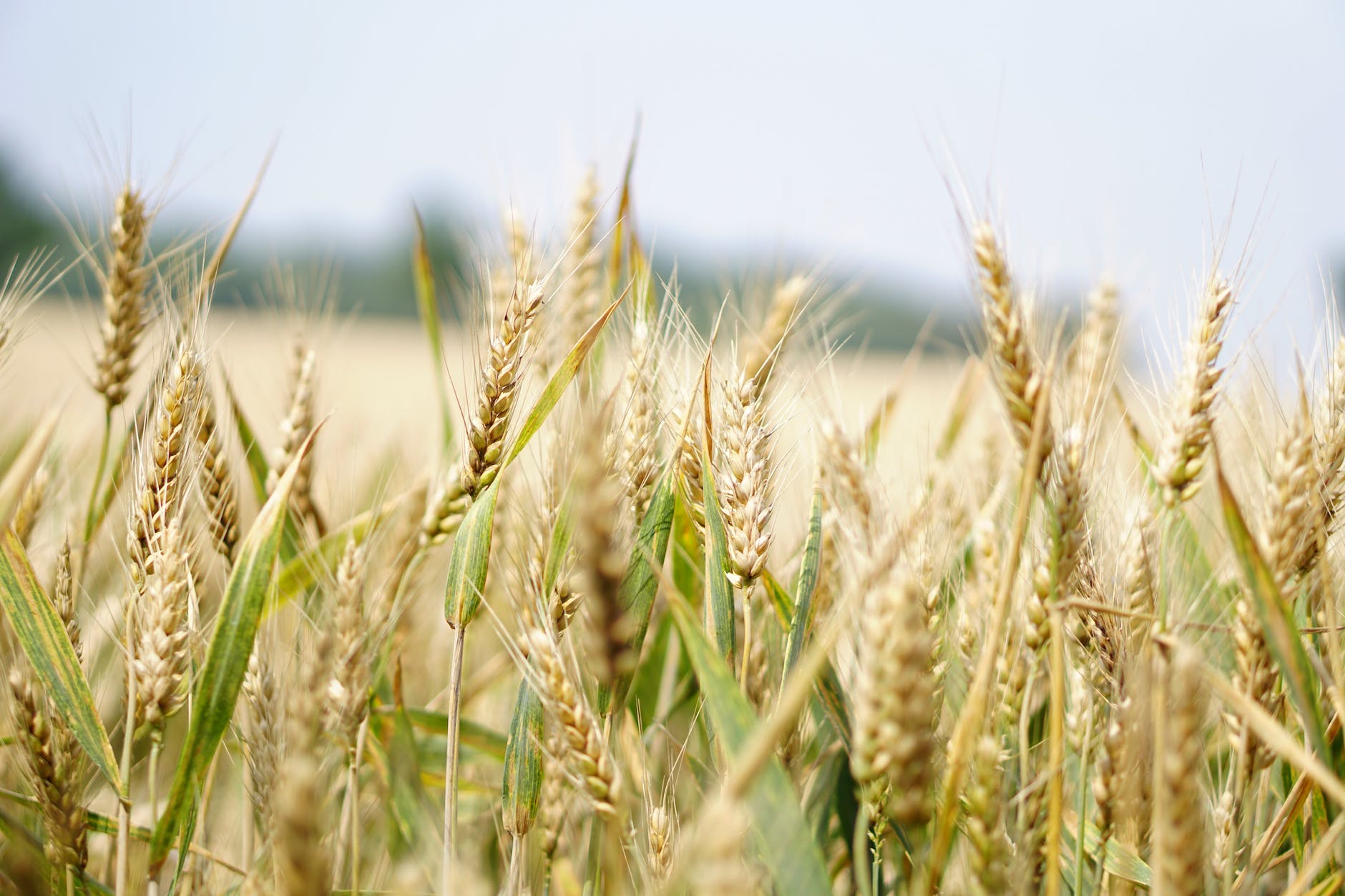
golden grain

Photo by Kaboompics .com on Pexels.com

In agricultural operations, seed is planted for survival. For many, farming is not a recreational hobby, it is a means of providing for oneself and one’s family. It’s also a risky proposition. Seed planted may grow, or may be wiped out by drought, catastrophic weather events (like hail or windstorms), or by pests.

A farmer’s income is also subject to the whims of the market, with sudden drops in commodity prices cutting into his bottom line. Therefore, when a farmer plants seed, he prepares his field, and he sows in such a way to maximize the yield from his field. Efficiency is a matter of life and death. And if the farmer has made the investment of purchasing seed, then planting it in the field, he has every intention of reaping that harvest, and getting a return on his investment. It’s the only way he keeps the farm, and provides for his family.

The idea of planting a seed without harvesting is not only foolish, but unheard of in the agricultural community. If a farmer plants a seed, he intends to harvest that seed, and he will.

It’s this concept that Jesus teaches in Mark 4:26-29:

And he said, So is the kingdom of God, as if a man should cast seed into the ground; And should sleep, and rise night and day, and the seed should spring and grow up, he knoweth not how. For the earth bringeth forth fruit of herself; first the blade, then the ear, after that the full corn in the ear.But when the fruit is brought forth, immediately he putteth in the sickle, because the harvest is come.

In those verses, Jesus likens the Kingdom of God to a man who plants his seed into the ground, and watches it grow. When it has fully developed, the man harvests his crop. Simple concept. So, what does that have to do with the Kingdom of God?

To answer that question, we need to go back and look at the pattern set forth in the other Kingdom Parables, namely, the parables of the sower and the wheat and tares. In those parables, Jesus explained that the field is the world, the man is the Son of Man, and the seed is the Word, the Gospel.

The man in the story plants, and harvests. Likewise, Jesus Christ sowed the seed of the Gospel, and He will harvest His believers.

You see, 2,000 years ago, Christ came, preached the Gospel of His Kingdom, called the world to repentance, and then was crucified for our sins, thus taking the punishment of God for those sins, thus freeing us to be able to enter His Kingdom if we repent and believe.

Over the centuries, the Gospel has spread throughout the entire world, with billions being saved over the history of Christianity. As time moves forward, prophecies are fulfilled, and we see that the time of the return of Christ draws closer.

The day is coming that the time will be fulfilled, “the full corn in the ear,” and it will be time to harvest, that is, it will be time for Christ to return to Earth and establish His Kingdom.

What the parable of the growing corn teaches us is that as certain as a farmer will harvest his crop, you can depend upon the Lord to return and establish His Kingdom. Are you ready for that day?

Judgment Day’s a’ Comin’

Jesus continues His teachings of the Kingdom Parables in Mark 4:21-29, where He warns us to be ready for Judgment Day. In these verses, Jesus warns us that all will be revealed in the parable of the candlestick. Therefore, we need to hear (listen, learn, believe and apply) His word. He also warns us to be careful what we believe, then He teaches that Judgment Day is certain in the Parable of the Corn. For more, listen to the sermon posted above.

The Kingdom Parables (Sermon Audio)

For more background on this message, check out The Most Misinterpreted Parable Ever, The Counterfeiters, and Understanding Why Things Happen.

The Most Misinterpreted Parable Ever

black crow bird

Photo by Pixabay on Pexels.com

In Matthew 13:31-33, Jesus gave the parable of the Mustard Seed, which goes as follows:

Another parable put he forth unto them, saying, The kingdom of heaven is like to a grain of mustard seed, which a man took, and sowed in his field:Which indeed is the least of all seeds: but when it is grown, it is the greatest among herbs, and becometh a tree, so that the birds of the air come and lodge in the branches thereof.

The Parable of the Mustard Seed is one of the most misinterpreted parables in the Bible. Because of the beauty of the songbirds that line our trees, and possibly even the portrayal of birds in Disney princess movies, we tend to think of birds as good, beautiful creatures. However, the birds that Jesus referred to were nothing like the mockingbirds, parakeets and robins we see today. The birds who inhabited Israel during Jesus day were more like vultures, buzzards and crows.

That explains why these birds were symbolic of demonic forces. In explaining the Parable of the Sower, Jesus said the fowl of the air symbolized the evil one which snatches up the seed of the Gospel before it takes root. Since the symbols of the parables remain consistent throughout them all, then the fowl of the air in the Parable of the Sower symbolize the same thing as the birds of the air in the Parable of the Mustard Seed.

So, to interpret the Parable of the Mustard Seed, let’s put the symbols to work. The man who sowed the mustard seed in his field is the Son of Man, our Lord and Savior Jesus Christ. The field is the world. The seed is the word, the Gospel.

In the Parable of the Mustard Seed, the man, (Jesus Christ), sows the seed (the Gospel) into His field (The world), and it grows into a mighty tree. Good story… now what does it mean? To answer that question, we must remember the reason Jesus gave us the parables. In Matthew 13:11, Jesus said, “It is given unto you to know the mysteries of the Kingdom.” The Lord wants us to understand what will happen with the Christian movement as we get closer to His return, and as we get closer to His establishing His Kingdom on earth.

Each of these parables follows a common theme. Things start out pure, then corrupt as time moves forward. The same can be said for the Christian movement. It started pure, with Christ preaching with His disciples on the shores of Galilee. Over the past two millennia, we’ve seen false doctrines, sin, and impure motives infiltrate Christianity to the point that there have been massive splits within the movement, with some denominations following heretical teachings, and others following scripture, but being marred with sin and scandal.

Seeing these things develop would most certainly be discouraging, if we did not understand how they fulfill the prophecies of Christ. Jesus told us 2,000 years ago that this is the way things would be, and that things would progressively get worse until His return. Thus, we have the Parable of the Mustard Seed.

In the parable, the man (Jesus) sows the seed (the Gospel) in the world. The seed is the least of all the seeds. Likewise, the Gospel is regarded as the least of all the philosophies in the world. Think about it. In academia, we study the philosophies of Aristotle, Plato, Thoreau, Mark Twain, Jefferson, and many others. How much time is spent in academia studying and parsing the Gospel? Very little. Christianity is often criticized, with little attention paid to its central theme, redeeming love.

Yet, as disregarded as the Gospel is, it has transformed the world. Christianity spread rapidly in the Roman Empire, and even influenced people at the highest level of government. As disregarded as the Gospel is, Christianity has been extremely influential in western literature and culture.

With that in mind, let’s continue to follow the Parable of the Mustard Seed. Jesus said that the mustard seed is the least of all seeds, but when it is grown, it is the greatest of all herbs, and becomes a tree. Thus, we see the words of Christ fulfilled.

So far, so good. All who interpret the Parable of the Mustard seed agree on the interpretation I’ve given so far. It’s when the birds enter that we have controversy.

Most people interpret these scriptures to say that the kingdom started out small, but grew in power and influence into a huge, beautiful tree until the birds of the air came and built nests and sang beautiful songs from the branches. It’s a beautiful vision, but not one based on reality, and even more importantly, not one based on the prophecies of Christ.

Given the true symbolism of the birds of the air, and what a bird was to the people of Israel in the 1st century, we see that birds are not a good thing. It’s why Christ used them as symbols of demons. They pollute. They ruin. Don’t believe me? Have you ever seen what a group of buzzards will do to a tree? Furthermore, would you park under a tree in the Walmart parking lot that was inhabited by grackles?

When Jesus said, “the birds of the air come and lodge in the branches thereof,” He was predicting that as the Gospel influenced the world more, and as it spread throughout the world, Satan would seek to pollute its presence and influence. Satan does this through inserting false doctrines into church teaching, by placing false Christians, teachers and pastors among the Lord’s churches, and by tempting Christians to sin in very public and profane ways.

That’s why there are so many scandals surrounding churches and Christian denominations today. Satan’s birds have roosted in the tree of the Lord’s Kingdom. Christ predicted it. And with the tree coming to near maturity, we know that the return of the Lord must be near, so we can take comfort in that. The Lord will return, and correct everything. And He will heal us.

So, when you see sin in the church, or you see a church rocked by scandal, don’t be discouraged, and don’t let your faith be shaken. The Lord told us these spiritual attacks would come. Keep looking to the sky, for your redemption draweth nigh.

The Counterfeiters

pexels-photo-2068975.jpeg

Photo by Alexander Mils on Pexels.com

It’s Superbowl Sunday, Feb. 2, 2020, and you’ve got tickets! How exciting!

You’ve spent the weekend in Miami, and now you are waiting in line, eager to enter Hard Rock Stadium for one of the biggest sporting events in the world. For once, you are going to be a part of sports history.

Then it happens. The gate attendant tells you that your tickets are counterfeit. You had bought them on a ticket exchange site, and you fell victim to a scam artist. There is no recourse. They will not let you into the stadium. You’ve lost your money, and you are dealing with massive disappointment.

Such is not only common with tickets to sporting goods, it also happens with currency. Working as a cashier at a local truck stop, I have on more than one occasion broken the news to a customer that the $20 bill they handed me was counterfeit. Their faces showed expressions of deep betrayal, as the bill had been given to them as a payment for a service rendered.

These situations are extremely disappointing and sometimes tragic. But nothing is as horrible as spending a life believing a counterfeit gospel. In Matthew 13:24-30, Jesus tells the Parable of the Wheat and the Tares.

The Parable of the Wheat and the Tares goes as follows:

Another parable put he forth unto them, saying, The kingdom of heaven is likened unto a man which sowed good seed in his field: But while men slept, his enemy came and sowed tares among the wheat, and went his way. But when the blade was sprung up, and brought forth fruit, then appeared the tares also. So the servants of the householder came and said unto him, Sir, didst not thou sow good seed in thy field? from whence then hath it tares? He said unto them, An enemy hath done this. The servants said unto him, Wilt thou then that we go and gather them up?But he said, Nay; lest while ye gather up the tares, ye root up also the wheat with them.Let both grow together until the harvest: and in the time of harvest I will say to the reapers, Gather ye together first the tares, and bind them in bundles to burn them: but gather the wheat into my barn.

Remembering the rules for interpreting the Kingdom Parables from our last post, which concurs with Jesus’ explanation of this parable in Matthew 13:37-40, we see the following symbols at work:

  • The man – the Son of Man, Jesus Christ.
  • The good seed – the Word of God, the Gospel.
  • The field – the world.
  • The wheat – the children of the Kingdom.
  • The tares – The children of the wicked one.

While the primary message of this parable is that Satan will place false converts and false believers among the children of God to derail the Lord’s work, the implied warning of the spread of a counterfeit Gospel cannot be ignored.

The tares, the children of the wicked one, were sown into the field as seed. Bad seed. Counterfeit seed. If the good seed is the Gospel, then it follows that the bad seed is a counterfeit gospel.

Counterfeit gospels take on many forms. Some teach that you must perform certain works, are take part in certain rituals to be saved. Some teach that you can lose your salvation. Some teach that God loves all people and all will be welcomed into Heaven. Some teach that salvation is so simple, one does not even have to repent to obtain it.

The counterfeit gospels and false doctrines being taught are so rampant, we cannot possible address them all in one blog post, neither do we have to. To identify a counterfeit Gospel, one need only know the true Gospel.

Interestingly enough, this is also how the U.S. Secret Service learns to spot counterfeit currency. They don’t study counterfeit currency. They study the true currency to the point that if anything on that bill is out of place, they instantly identify the error, and thus conclude the currency is counterfeit.

So, with that in mind, let’s be reminded of the true Gospel, summarized in 1 Corinthians 15:3-4 as how “Christ died for our sins, according to the scriptures, was buried, and rose again the third day according to the scriptures.”

Christ died for our sins. In dying for our sins, He took the punishment for our sins, thus shielding us from the wrath of God. This payment for our sins cost Him His life. Thus, He died for our sins, and was buried. However, on the third day, He took His life back, and rose from the grave.

So now, Christ has not only cleared our sin-debt by giving His life for our sins, but He rose again, and ever lives to intercede for us. In other words, Christ rose again to advocate for us and to open the gates of Heaven for us. This is salvation.

Scripture is clear on how to access that salvation, how to accept it. Romans 5:1 says “Therefore being justified by faith, we have peace with God through Jesus Christ our Lord.” Isaiah 45:22 says, “Look unto Me, and be ye saved, all the ends of the earth. For I am the LORD, there is none else.”

And the verses that drive it all home, Ephesians 2:8-9, “For it is by grace that you are saved through faith, and that not of yourselves. It is the gift of God. Not of works lest any man should boast.”

Based on these verses, we see that the true Gospel:

  • Is how Christ paid for our sins by dying on the cross.
  • That Christ rose again to save us and give us eternal life.
  • That salvation is gained by repenting of sin and trusting (believing) in Jesus Christ.

Deviations, additions or subtractions from that Gospel are counterfeit. What a tragedy it would be to live a good, religious life, only to realize that you never believed the true Gospel. What a tragedy it would be to live life believing a lie. If you have never placed your faith in Christ for salvation, make that decision now.

The implied warning of a counterfeit gospel is only a small sideline to the Parable of the Wheat and Tares. The real point to this parable is that Satan uses false believers and counterfeit Christians to derail the cause of Christ.

Imagine the huge inconvenience for the farmer who had to go through the process of separating the wheat from the tares at harvest time.

Likewise, the cause of Christ can be frustrated by the antics of those who claim to be Christian, but are not. This is one reason bad things happen in good churches. Understanding this can help prevent discouragement and disillusionment when the unthinkable happens. Satan is working to derail, discourage and discredit the Lord’s churches.

Notice, however, what the parable says about the man’s reaction to finding tares in his wheat field. The man told his servants not to root out the tares, because the wheat would be uprooted and damaged in the process. Instead, the wheat and the tares would be allowed to come to full maturity before being separated at the harvest.

As the wheat and the tares mature, you can tell which is which by the fruit they bear. Likewise, Jesus said you could tell the true believers from the false believers by their fruit.

The application to this passage is that we, as Christians, need not be concerned with identifying and distinguishing the true believers from the false believers. Instead, we are to grow and bear fruit, and allow the Lord to judge in the end time.

At the core of this parable is the instruction to believe the true Gospel, and trust the Lord to judge righteously on the day of judgment. If we do this, we will not be discouraged by the antics of the tares, for we will have the understanding of why they do what they do.

The tares have been sowed to frustrate our purpose. The more they frustrate our purpose, the closer we grow to harvest day. At harvest time, we will be gathered in the Lord’s presence. Be encouraged. Satan’s attacks are evidence that you are being effective for the Lord.

May God bless you as you continue your walk with Him.