Parable of the Mustard Seed

Why Scandal and Conflict Seem to Follow the Church: Decoding the Parables of the Mustard Seed and Leaven

How many high profile preachers have been marred by scandal? How many have been caught in extra-marital affairs, embezzling church funds, or manipulating the faithful into funding their lavish lifestyles?

How many churches have split, been embroiled in conflict over doctrinal differences, or divided over conflict among the leadership?

And why are there so many hypocrites in the church?

We could write endlessly about the problems plaguing modern American Christianity. We could wring our hands in righteous indignation and disillusionment, lamenting the blight of these scandals on the testimony of Christ.

However, once we understand the Kingdom Parables, we should be no more surprised by these problems than we are the trials and temptations that come with the Christian life… for scripture foretells all of it.

In the Parable of the Mustard Seed (Matthew 13:31-32), Jesus said the Kingdom was like a mustard seed, which despite bring small, would grow into a tree so large that the birds of the air would lodge in its branches.

While many see this as a prophecy of Christianity infiltrating and influencing the world, once we apply the proper interpretation using the symbols Christ gave in the Parable of the Sower, we’ll learn that the problems of today’s church do not surprise our Lord. In fact, He planned for these problems.

In the Parable of the Sower, we find that the seed represents the Gospel, and the birds represent the evil one (Satan and his demons).

Utilizing that imagery, we find that as the Gospel spreads and the church grows, Satan will send his forces to disrupt and pollute the work of the church. Hence, we find high profile Christian leaders falling to temptation, and we find great churches descending into conflict.

Where the Gospel is being advanced, Satan will work to disrupt. So, Spiritual conflict is actually a sign that God is working.

In the Parable of the Leaven (Matthew 13:33) we find that a woman has taken leaven and hidden it in three measures of meal. That leaven permeated that meal until the whole lump was leavened.

Leaven symbolizes sin in scripture. It’s why the Lord’s Supper is observed with unleavened bread. The bread represents the body of Christ, and Christ was sinless.

Thus, in the Parable of the Leaven, we see a woman who has placed leaven in a lump of meal, resulting in the whole lump being leavened. Leaven is basically yeast that causes bread to rise. That leaven infiltrates everything it is infused into.

Thus, when the leaven is placed in the lump, the whole lump is leavened. Likewise, when sin enters the equation, it infiltrates everything.

So, when scripture says that by one man sin entered into the world (Romans 5:12), sin infiltrated all aspects of human life. As a result, everything we do is touched by sin, even the things that we do for good.

That’s why the Apostle Paul wrote in Romans 7:21 that “I find a law, that even when I would do good, evil is present with me.”

So, even when people are volunteering for charity, serving in the church, spreading the word of God, and helping the poor, sin is still present, and has a tendency to taint the good that has been done.

A good depiction of this can be found in the classic DC Talk song, “What if I Stumble,” where the singer wonders, “Is this one for the people, or is this one for the Lord? Or do I simply serenade for things I must afford,” before lamenting, “You can jumble them together, the conflict still remains, holiness is calling in the midst of courting fame.”

With sin ever present even in the best of our behaviors, we can see how problems could arise in even the most Spiritual circumstances. Thus, we find conflict, moral and spiritual failure, and hypocrisy within even the strongest churches.

This might be a little disturbing, and may cause some to become disillusioned. However, Christ knew we would have these struggles, and He planned for them.

God has a way of taking that which is bad and using it for good. He takes that which disrupts and creates order. He takes that which is broken and creates beauty. He redeems the good from the bad, the diamonds from the coal, the smooth from the rough.

So, do not be disillusioned when you see failure in the church, and don’t be too hard on yourself when the failure is yours. The Lord understands the frailties of humanity, and has planned for them.

Trust Him, and praise Him for His gracious and amazing redemption of us.
The Kingdom Parables (Sermon Audio)

For more background on this message, check out The Most Misinterpreted Parable Ever, The Counterfeiters, and Understanding Why Things Happen.

The Most Misinterpreted Parable Ever

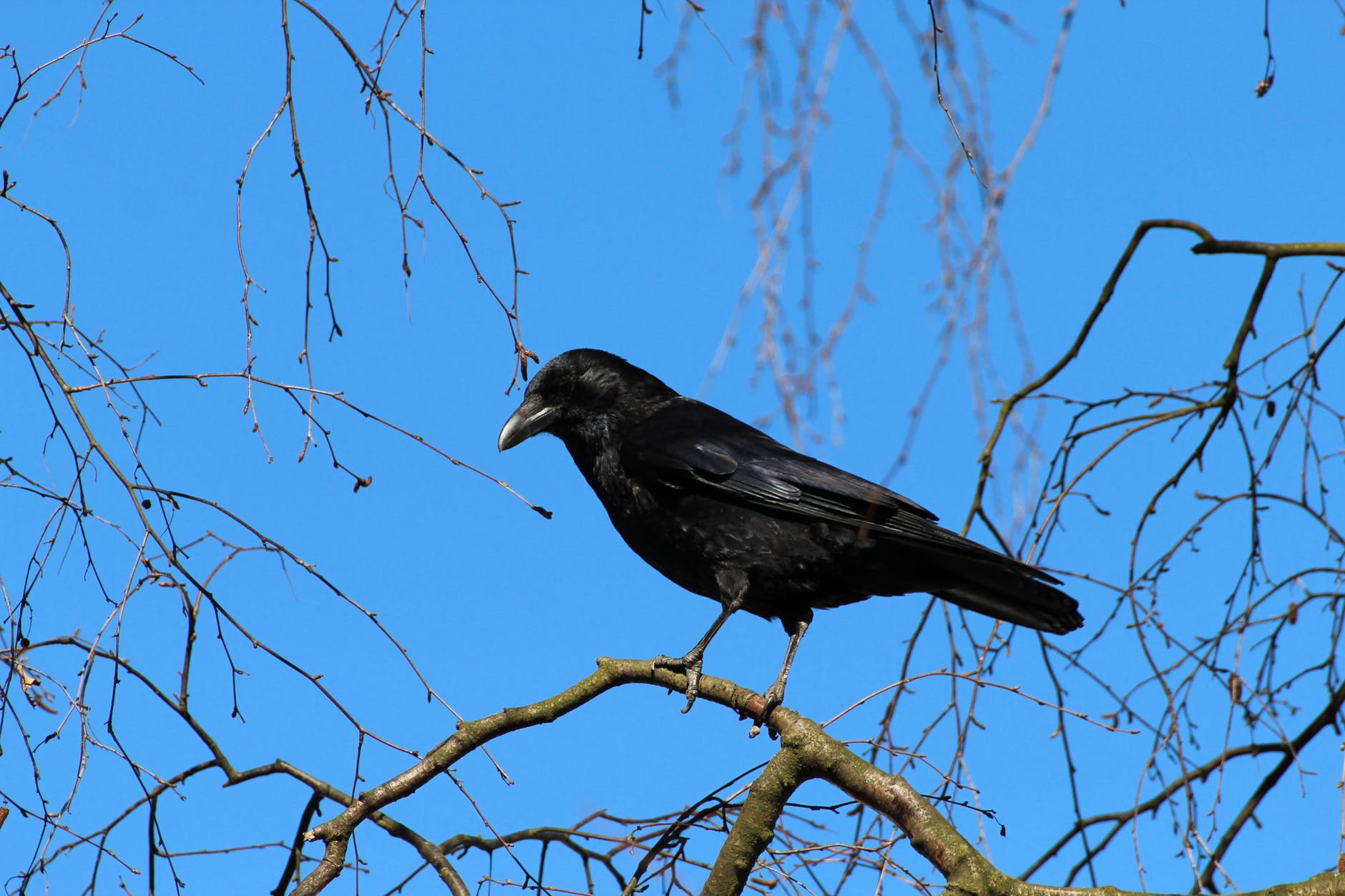
black crow bird

Photo by Pixabay on Pexels.com

In Matthew 13:31-33, Jesus gave the parable of the Mustard Seed, which goes as follows:

Another parable put he forth unto them, saying, The kingdom of heaven is like to a grain of mustard seed, which a man took, and sowed in his field:Which indeed is the least of all seeds: but when it is grown, it is the greatest among herbs, and becometh a tree, so that the birds of the air come and lodge in the branches thereof.

The Parable of the Mustard Seed is one of the most misinterpreted parables in the Bible. Because of the beauty of the songbirds that line our trees, and possibly even the portrayal of birds in Disney princess movies, we tend to think of birds as good, beautiful creatures. However, the birds that Jesus referred to were nothing like the mockingbirds, parakeets and robins we see today. The birds who inhabited Israel during Jesus day were more like vultures, buzzards and crows.

That explains why these birds were symbolic of demonic forces. In explaining the Parable of the Sower, Jesus said the fowl of the air symbolized the evil one which snatches up the seed of the Gospel before it takes root. Since the symbols of the parables remain consistent throughout them all, then the fowl of the air in the Parable of the Sower symbolize the same thing as the birds of the air in the Parable of the Mustard Seed.

So, to interpret the Parable of the Mustard Seed, let’s put the symbols to work. The man who sowed the mustard seed in his field is the Son of Man, our Lord and Savior Jesus Christ. The field is the world. The seed is the word, the Gospel.

In the Parable of the Mustard Seed, the man, (Jesus Christ), sows the seed (the Gospel) into His field (The world), and it grows into a mighty tree. Good story… now what does it mean? To answer that question, we must remember the reason Jesus gave us the parables. In Matthew 13:11, Jesus said, “It is given unto you to know the mysteries of the Kingdom.” The Lord wants us to understand what will happen with the Christian movement as we get closer to His return, and as we get closer to His establishing His Kingdom on earth.

Each of these parables follows a common theme. Things start out pure, then corrupt as time moves forward. The same can be said for the Christian movement. It started pure, with Christ preaching with His disciples on the shores of Galilee. Over the past two millennia, we’ve seen false doctrines, sin, and impure motives infiltrate Christianity to the point that there have been massive splits within the movement, with some denominations following heretical teachings, and others following scripture, but being marred with sin and scandal.

Seeing these things develop would most certainly be discouraging, if we did not understand how they fulfill the prophecies of Christ. Jesus told us 2,000 years ago that this is the way things would be, and that things would progressively get worse until His return. Thus, we have the Parable of the Mustard Seed.

In the parable, the man (Jesus) sows the seed (the Gospel) in the world. The seed is the least of all the seeds. Likewise, the Gospel is regarded as the least of all the philosophies in the world. Think about it. In academia, we study the philosophies of Aristotle, Plato, Thoreau, Mark Twain, Jefferson, and many others. How much time is spent in academia studying and parsing the Gospel? Very little. Christianity is often criticized, with little attention paid to its central theme, redeeming love.

Yet, as disregarded as the Gospel is, it has transformed the world. Christianity spread rapidly in the Roman Empire, and even influenced people at the highest level of government. As disregarded as the Gospel is, Christianity has been extremely influential in western literature and culture.

With that in mind, let’s continue to follow the Parable of the Mustard Seed. Jesus said that the mustard seed is the least of all seeds, but when it is grown, it is the greatest of all herbs, and becomes a tree. Thus, we see the words of Christ fulfilled.

So far, so good. All who interpret the Parable of the Mustard seed agree on the interpretation I’ve given so far. It’s when the birds enter that we have controversy.

Most people interpret these scriptures to say that the kingdom started out small, but grew in power and influence into a huge, beautiful tree until the birds of the air came and built nests and sang beautiful songs from the branches. It’s a beautiful vision, but not one based on reality, and even more importantly, not one based on the prophecies of Christ.

Given the true symbolism of the birds of the air, and what a bird was to the people of Israel in the 1st century, we see that birds are not a good thing. It’s why Christ used them as symbols of demons. They pollute. They ruin. Don’t believe me? Have you ever seen what a group of buzzards will do to a tree? Furthermore, would you park under a tree in the Walmart parking lot that was inhabited by grackles?

When Jesus said, “the birds of the air come and lodge in the branches thereof,” He was predicting that as the Gospel influenced the world more, and as it spread throughout the world, Satan would seek to pollute its presence and influence. Satan does this through inserting false doctrines into church teaching, by placing false Christians, teachers and pastors among the Lord’s churches, and by tempting Christians to sin in very public and profane ways.

That’s why there are so many scandals surrounding churches and Christian denominations today. Satan’s birds have roosted in the tree of the Lord’s Kingdom. Christ predicted it. And with the tree coming to near maturity, we know that the return of the Lord must be near, so we can take comfort in that. The Lord will return, and correct everything. And He will heal us.

So, when you see sin in the church, or you see a church rocked by scandal, don’t be discouraged, and don’t let your faith be shaken. The Lord told us these spiritual attacks would come. Keep looking to the sky, for your redemption draweth nigh.